Garments & Apparel · Woven Garments
Woven Garment Manufacturing and Sourcing in India
Woven garments are made from fabric woven on looms, with warp and weft yarns crossing at right angles. Shirts, blouses, dresses, trousers, skirts, chinos, jackets and most tailored clothing are wovens. India has a strong woven sector, built on its cotton and linen weaving mills, handloom traditions and printing industry.
This page focuses on woven garment manufacturing: the fabrics, factories and quality points that matter for buyers.
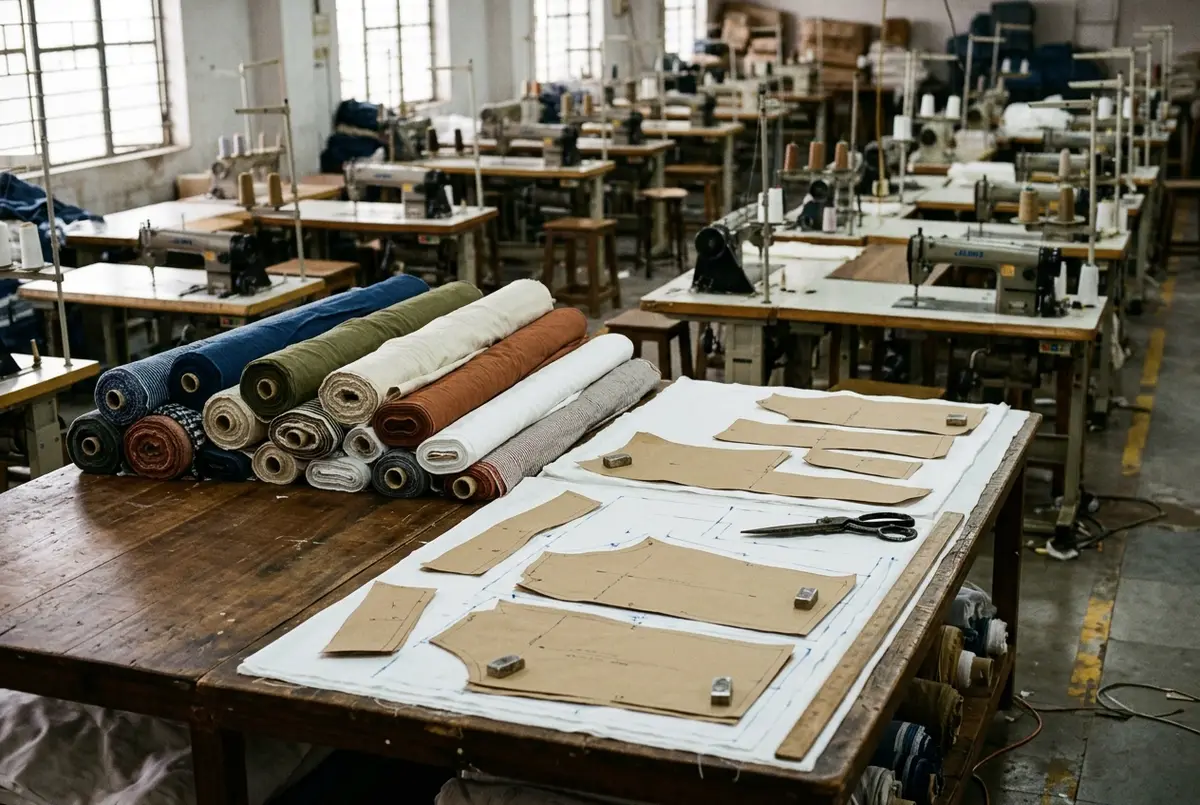
Woven products made in India
Men's and women's shirts, blouses and tops, dresses, skirts, trousers, chinos, shorts, co-ord sets, kurtas and tunics, kaftans, overshirts, lightweight jackets, children's woven sets and workwear. Fashion woven factories are often organised by product group, so a shirt specialist may not be the right choice for structured trousers.
Woven fabrics available
Cotton poplin, cambric, voile, mulmul, oxford, twill, canvas and chambray; yarn-dyed checks and stripes; linen and linen-cotton blends; viscose rayon, crepe, challis and twill; modal and lyocell blends; denim; and handloom fabrics such as khadi. Many fabrics can be printed by screen, rotary, digital or hand-block methods. Mill minimums vary widely, so we check stock-fabric options before proposing custom developments.
Woven garment regions
Bengaluru has large woven factories making shirts, trousers and denim for international brands. Delhi NCR (Noida, Gurgaon, Okhla) is strong in fashion wovens and embellished womenswear. Jaipur specialises in printed and ethnic-inspired wovens, Mumbai in fashion and occasionwear, and Kolkata and Chennai in shirting and basic wovens. Fabric sourcing is often national: a Bengaluru factory may use yarn-dyed fabric from Tamil Nadu and linen from Maharashtra.
Pattern, fit and construction
Woven fabrics do not stretch like knits, so fit and pattern accuracy matter more. Provide graded specs with tolerances and approve fit on the production fabric. Specify seam types (single-needle, flat-felled, French seams on sheer fabrics), interlinings, stitch density, button and buttonhole details, pocket construction and hem finishes. Directional fabrics, checks and stripes need pattern-matching rules for centre fronts, pockets and yokes.
Washing and finishing
Many woven garments are garment-washed for softness and to pre-shrink them: enzyme, silicone, stone and pigment washes are common. Washing changes measurements and shade, so wash standards should be approved on samples, and shrinkage allowances built into the pattern. Pressing, folding and packing methods should be agreed for each style.
Quality risks
Seam puckering on lightweight fabrics, slippage at seams in viscose, shade variation between panels from different fabric rolls, pattern mismatch on checks, uneven hems, weak buttonholes and shrinkage after washing are the most common issues. Four-point fabric inspection, shade banding (sorting rolls by shade) and shrinkage testing before cutting prevent most of them.
Testing and compliance
Plan tests for dimensional stability, colour-fastness, seam slippage, tear strength and pilling as relevant, plus chemical compliance under REACH, azo-dye limits and your restricted-substances list. Fibre-composition and care labelling must follow the rules of each destination market.
Minimums, lead times and costing
With stock fabric, many woven factories accept moderate quantities per style and colour. Custom prints and yarn-dyed fabrics carry mill minimums. Lead time after approvals is commonly six to ten weeks, depending on fabric development. Fabric, trims, cut-make-trim, washing and embellishment are the main cost drivers, and we provide a line-by-line breakdown for comparison.
Our role for woven buyers
We match your product to factories with the right machinery, verify them on site, source and approve fabrics, manage sampling rounds and costings, and follow production through cutting, sewing, washing and finishing with inline and final inspections.
Fabric sourcing strategy
Using mill-ready or stock fabrics shortens development and lowers minimums, while custom-woven or yarn-dyed fabrics give exclusivity but need more time and volume. Many brands combine both: stock bases for core styles and custom developments for hero pieces.
Who woven factories suit
Large woven factories suit retailers with high volumes and strict compliance; mid-sized fashion units suit brands with varied collections; small workshops suit sampling and premium short runs. We match you to the scale that fits your order profile.
How a woven garments sourcing programme runs
- Brief review. We review your tech pack or reference sample, target price, quantity and timeline, and confirm what is realistic in India.
- Factory shortlist. We shortlist factories in the right cluster and verify them on site: legal entity, in-house processes, capacity and compliance.
- Sampling and costing. We manage proto, fit and size-set samples and collect costings broken down by fabric, trims, labour and finishing.
- Pre-production approval. Fabric tests, lab dips, trims and a pre-production sample are approved in writing before bulk cutting.
- Production follow-up. We track cutting, sewing and finishing against the agreed calendar and run inline quality checks.
- Final inspection and shipment. A final random inspection to your AQL, carton and label checks, then handover of documents to your forwarder.
What to include in your woven garments brief
- Tech pack with graded specs
- Fabric quality, weight and composition
- Seam types and stitch density
- Pattern-matching rules for checks and stripes
- Wash standard and shrinkage allowance
- Trims and labels
- Testing requirements
- Target price, quantities and delivery date
Common mistakes when sourcing woven garments
- Not defining pattern-matching rules for checks and stripes before cutting.
- Cutting bulk without shade-banding fabric rolls, causing shade differences between panels.
- Ignoring seam slippage risk on viscose and lightweight fabrics.
- Approving washed samples without recording the exact wash recipe.
- Choosing custom fabrics for every style, which multiplies minimums and delays.
- Leaving interlining and fusing choices to the factory without testing.
Other apparel categories
Garment sourcing services and guides
Garment sourcing by buyer market
Back to Garments & Apparel sourcing
Buyer questions
What is the difference between woven and knit garments?
Wovens are made from loom-woven fabric with little stretch; knits are made from looped knitted fabric that stretches.
Where are woven garments made in India?
Bengaluru, Delhi NCR, Jaipur, Mumbai, Kolkata and Chennai are major centres.
Can Indian factories pattern-match checks?
Yes, if matching rules are specified and checked on samples and at inline inspection.
Do woven garments need washing?
Often, for softness and shrinkage control; wash standards are approved on samples.
Which woven fabrics is India best known for?
Cotton shirting, voile and cambric, yarn-dyed fabrics, linen, viscose prints and handloom textiles.
Submit your product requirements
Submit your product requirement
Share a photo, reference product or tech pack. We will identify suitable verified manufacturers and explain the next steps — no obligation.
- Phone & WhatsApp
- +91 93684 37527