Garments & Apparel · Loungewear
Loungewear Manufacturing and Sourcing in India
Loungewear is about comfort that still looks considered: relaxed sets, joggers, wide-leg trousers, oversized sweatshirts and knit co-ords worn at home, for travel or for casual days. India's cotton and modal knit industry makes it a natural source for loungewear with a soft hand-feel.
We help lifestyle brands, retailers and direct-to-consumer labels develop loungewear with factories that understand soft fabrics, garment washes and consistent relaxed fits.
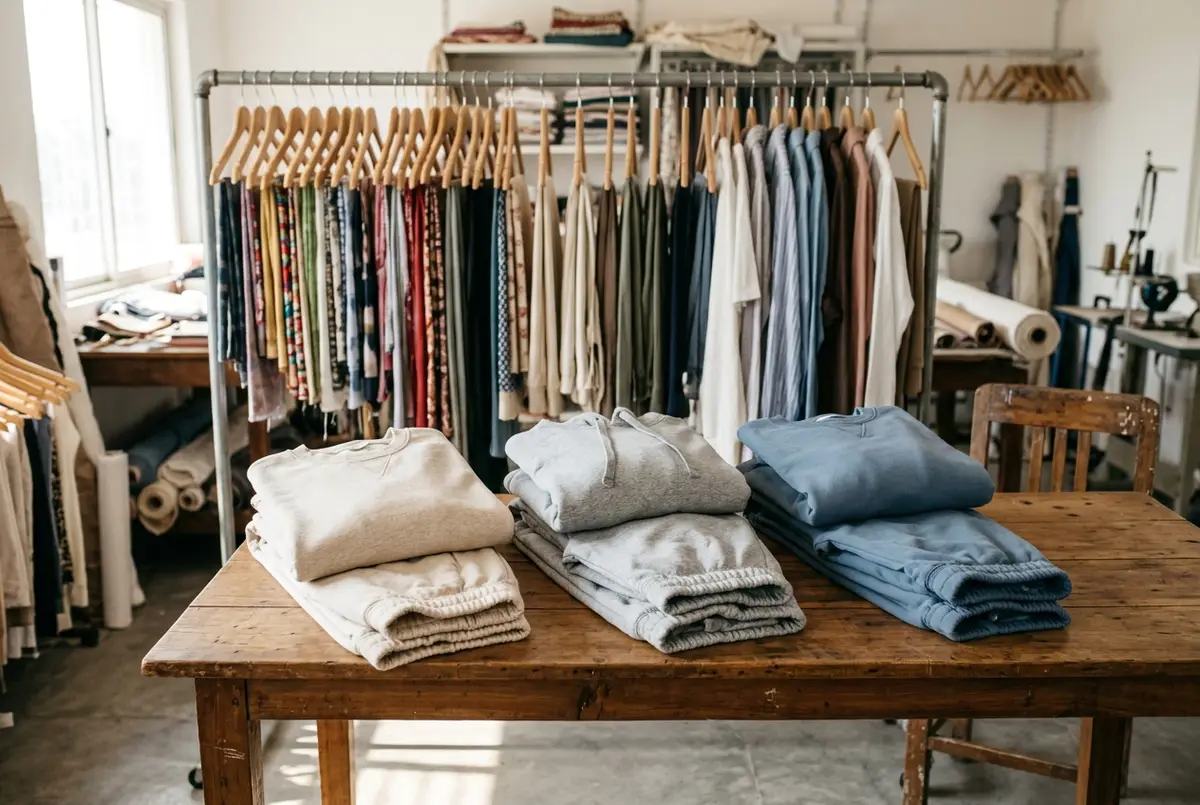
Loungewear products
Matching top-and-bottom lounge sets, joggers and sweatpants, wide-leg and drawstring trousers, oversized and cropped sweatshirts, hoodies, ribbed knit co-ords, cardigans, lounge dresses, shorts sets, and travel sets with pouches. Woven lounge pieces in gauze, flannel or linen are also popular and are sometimes made in separate woven units.
Fabrics
Cotton and organic cotton jersey, French terry and loopback, brushed fleece, ribbed modal, cotton-modal and cotton-Tencel blends, waffle knit, velour, and viscose-elastane for drape. Hand-feel is the deciding factor, so approve physical swatches after washing and finishing, not just from mill headers. Peaching, brushing, enzyme washing and silicone softening all change the feel and should be specified.
Where loungewear is made
Tiruppur makes most cotton and blended knit loungewear in India, with knitting, dyeing and garmenting nearby. Delhi NCR and Bengaluru produce fashion loungewear and woven pieces, and Ludhiana supplies fleece and winter lounge styles.
Garment dyeing and washes
Garment-dyed and pigment-washed loungewear gives a lived-in look and rich colour, but adds shrinkage and shade-variation risk. Garment-dyed pieces need patterns that allow for shrinkage, and shade tolerances should be agreed with physical standards. Vintage and acid washes vary by batch and should be presented as such in your product descriptions.
Fit and design details
Relaxed fits still need precise grading, especially for drop shoulders, wide legs and cropped lengths. Specify drawcord type and finish, elastic width, rib proportions, pocket construction and seam finishes. For sets sold together, the top and bottom should be cut from the same fabric lot to avoid shade differences.
Quality and testing
Pilling on soft fabrics, shrinkage, spirality, rib recovery, seam strength at crotch and pockets, print or embroidery durability and shade matching between set pieces are the main checks. Tests for pilling, dimensional stability and colour-fastness to washing and rubbing are recommended, plus chemical compliance for your market.
Packaging
Loungewear is often sold as a gift or premium item, so folding, tissue, reusable pouches, swing tags and recycled or plastic-free packaging may be part of the brief. Packaging materials should be confirmed with the factory early because they can affect lead time.
Minimums, timelines and cost
Stock fabrics in core shades support smaller quantities; custom dyes and garment-dyed programmes usually have higher minimums per colour. Production time after approvals is typically four to seven weeks. Fabric quality, weight, finishing and packaging are the main cost drivers.
How we help
We find factories with soft-fabric and washing expertise, source and approve fabrics, manage set-matching and fit samples, and inspect for pilling, shade and measurement accuracy before shipment.
Who loungewear factories suit
Direct-to-consumer brands often need moderate quantities across several colours; retailers want larger runs with replenishment. Many Tiruppur units handle both, but garment-dyed and premium soft-hand programmes are best placed with factories that have in-house or close partner washing.
Comfort details
Flat, soft seams, covered elastics, brushed interiors and tagless labels make loungewear feel premium. Specify them in the tech pack and check them on samples worn for a full day.
How a loungewear sourcing programme runs
- Brief review. We review your tech pack or reference sample, target price, quantity and timeline, and confirm what is realistic in India.
- Factory shortlist. We shortlist factories in the right cluster and verify them on site: legal entity, in-house processes, capacity and compliance.
- Sampling and costing. We manage proto, fit and size-set samples and collect costings broken down by fabric, trims, labour and finishing.
- Pre-production approval. Fabric tests, lab dips, trims and a pre-production sample are approved in writing before bulk cutting.
- Production follow-up. We track cutting, sewing and finishing against the agreed calendar and run inline quality checks.
- Final inspection and shipment. A final random inspection to your AQL, carton and label checks, then handover of documents to your forwarder.
What to include in your loungewear brief
- Fabric, weight and hand-feel reference
- Finish or garment-dye method
- Graded specs and fit references
- Drawcords, elastics and trims
- Set-matching requirements
- Packaging and pouches
- Testing requirements
- Target price, quantities and delivery date
Common mistakes when sourcing loungewear
- Approving hand-feel on an unfinished swatch instead of the final washed fabric.
- Cutting set tops and bottoms from different fabric lots.
- Under-estimating shrinkage on garment-dyed programmes.
- Ignoring pilling on soft blends until customer reviews mention it.
- Leaving premium packaging decisions until the end of production.
- Using exposed elastics where covered elastics were expected.
Other apparel categories
Garment sourcing services and guides
Garment sourcing by buyer market
Back to Garments & Apparel sourcing
Buyer questions
What fabric is best for loungewear?
Cotton or cotton-modal jersey, French terry and brushed fleece are most popular for softness and comfort.
Can loungewear be garment-dyed?
Yes; patterns must allow for shrinkage and shade tolerances should be agreed.
Are matching sets cut from the same fabric?
They should be, to avoid shade differences between top and bottom.
Where is loungewear made in India?
Mostly Tiruppur for knits, with Delhi NCR and Bengaluru for fashion and woven pieces.
Can you source plastic-free packaging?
Yes, many factories can supply paper or reusable fabric packaging if planned early.
Submit your product requirements
Submit your product requirement
Share a photo, reference product or tech pack. We will identify suitable verified manufacturers and explain the next steps — no obligation.
- Phone & WhatsApp
- +91 93684 37527