Garments & Apparel · Organic Cotton
Organic Cotton Clothing Manufacturing in India
India is one of the world's largest producers of organic cotton fibre, and many Indian spinners, knitters, dyers and garment factories hold organic certifications. That makes it a strong source for organic cotton T-shirts, basics, babywear, dresses and loungewear.
This page covers organic cotton garments as a product category. For a wider view of recycled fibres, chemical management and environmental programmes, see our sustainable apparel sourcing guide.
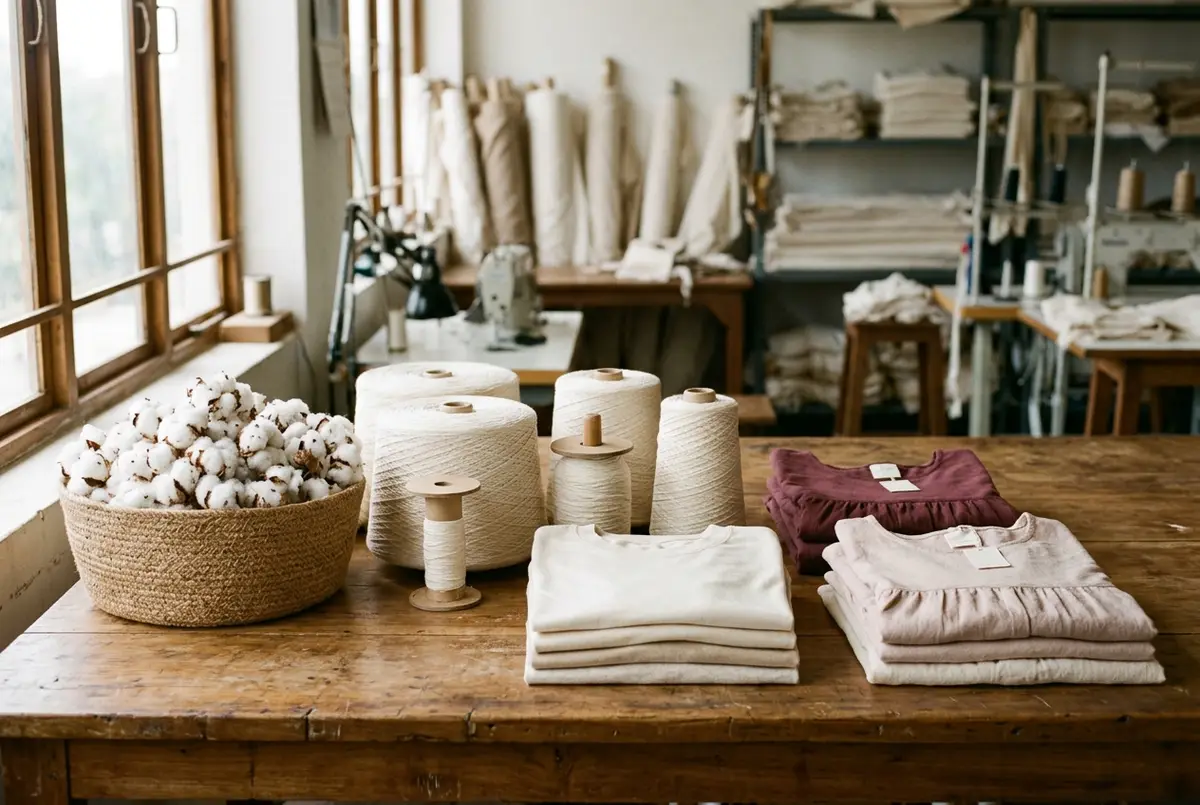
Organic cotton products
T-shirts and tops, sweatshirts and hoodies, leggings and loungewear, babywear and kidswear, dresses and shirts, sleepwear, innerwear, tote bags and home textiles. Both knit and woven organic fabrics are available, including jersey, rib, fleece, poplin, voile, twill and denim.
GOTS and OCS explained
The Global Organic Textile Standard (GOTS) covers organic fibre content and also environmental and social criteria at every processing stage: spinning, knitting or weaving, wet processing and garmenting. The Organic Content Standard (OCS) verifies the amount of organic material through the supply chain but does not cover chemical or social criteria. Which you need depends on your claim and market.
Certificate scope and transaction certificates
Each company in the chain must be certified for the processes it performs. A garment factory holding a GOTS certificate does not certify its dyer or knitter, so every stage must be covered. For each shipment, a transaction certificate (TC) traces the certified goods from seller to buyer. We check certificates and scope in the public databases of the certification bodies before production.
Labelling and claims
Using the GOTS label on products requires the final seller or brand to follow the standard's labelling rules. Claims such as '100% organic cotton' must match the certified composition. Many markets have rules against misleading environmental claims, so wording should be reviewed carefully.
Fabric and colour
Organic cotton behaves like conventional cotton in sewing, but dyeing must use GOTS-approved chemicals when GOTS certification is required. Undyed, natural and pastel shades are common, and most standard colours can be achieved. Shrinkage and hand-feel should be approved on finished swatches.
Where organic garments are made
Tiruppur is the leading cluster for certified organic cotton knitwear. Organic woven garments are produced in Bengaluru, Delhi NCR, Jaipur and Kolkata. Organic cotton farming is concentrated in states such as Madhya Pradesh, Odisha, Maharashtra and Gujarat.
Quality and testing
Standard quality tests apply: dimensional stability, spirality for knits, colour-fastness, pilling and seam strength. Chemical testing confirms compliance with GOTS limits, REACH and your restricted-substances list. Some buyers also ask for GMO screening of raw fibre.
Cost and minimums
Organic cotton fabric usually costs more than conventional cotton, and certified dyeing may restrict which dye houses can be used. Stock organic jersey and poplin allow smaller runs; custom colours have dye-lot minimums. Certification and TC fees are part of the cost.
How we help
We identify certified suppliers, verify certificate scope for every stage, coordinate transaction certificates, manage sampling and testing, and inspect garments and labels before shipment.
Which standard for which claim
If you want to call a product 'organic' and use an on-product logo, GOTS is the usual choice. If you blend organic and conventional cotton or only want to verify organic content, OCS may be enough. In-conversion cotton has its own labelling rules. We help you match the certification to the claim you plan to make.
Avoiding common certification mistakes
The most common problems are expired certificates, certificates that do not cover the producing site or process, and missing transaction certificates. Checking these before production avoids goods that cannot be sold with the intended claim.
How a organic cotton clothing sourcing programme runs
- Brief review. We review your tech pack or reference sample, target price, quantity and timeline, and confirm what is realistic in India.
- Factory shortlist. We shortlist factories in the right cluster and verify them on site: legal entity, in-house processes, capacity and compliance.
- Sampling and costing. We manage proto, fit and size-set samples and collect costings broken down by fabric, trims, labour and finishing.
- Pre-production approval. Fabric tests, lab dips, trims and a pre-production sample are approved in writing before bulk cutting.
- Production follow-up. We track cutting, sewing and finishing against the agreed calendar and run inline quality checks.
- Final inspection and shipment. A final random inspection to your AQL, carton and label checks, then handover of documents to your forwarder.
What to include in your organic cotton clothing brief
- Products and fabric types
- Certification needed: GOTS or OCS
- Intended on-product claim and logo
- Colours and dye restrictions
- Measurement chart and fit
- Testing requirements
- Transaction certificate process
- Target price, quantities and delivery date
Common mistakes when sourcing organic cotton clothing
- Relying on a single certificate when every processing stage must be certified.
- Missing transaction certificates for shipments.
- Using organic logos or claims that do not match the certification held.
- Dyeing with chemicals not approved under GOTS.
- Not checking certificate validity dates before production.
- Confusing in-conversion cotton with certified organic in product labelling.
Other apparel categories
Garment sourcing services and guides
Garment sourcing by buyer market
Back to Garments & Apparel sourcing
Buyer questions
What is the difference between GOTS and OCS?
GOTS covers organic content plus environmental and social criteria; OCS only verifies organic content through the chain.
Does every supplier need to be certified?
Yes, every stage that handles the goods must be certified for its processes.
What is a transaction certificate?
A certificate issued per shipment that traces certified goods from seller to buyer.
Is organic cotton clothing more expensive?
Usually somewhat more, due to fibre cost, certified processing and certification fees.
Where is organic cotton clothing made in India?
Mainly Tiruppur for knits, with woven production in several regions.
Submit your product requirements
Submit your product requirement
Share a photo, reference product or tech pack. We will identify suitable verified manufacturers and explain the next steps — no obligation.
- Phone & WhatsApp
- +91 93684 37527