Garments & Apparel · Shirts
Shirt Manufacturing and Sourcing in India
Shirts are one of India's most established export products. The country produces excellent cotton and linen shirting, a wide range of yarn-dyed checks and stripes, and has factories that specialise in shirt construction for both men and women.
We help shirt brands, menswear and womenswear labels and corporate buyers source shirts with the right fabric, collar and fit quality. For broader menswear ranges, see our menswear page.
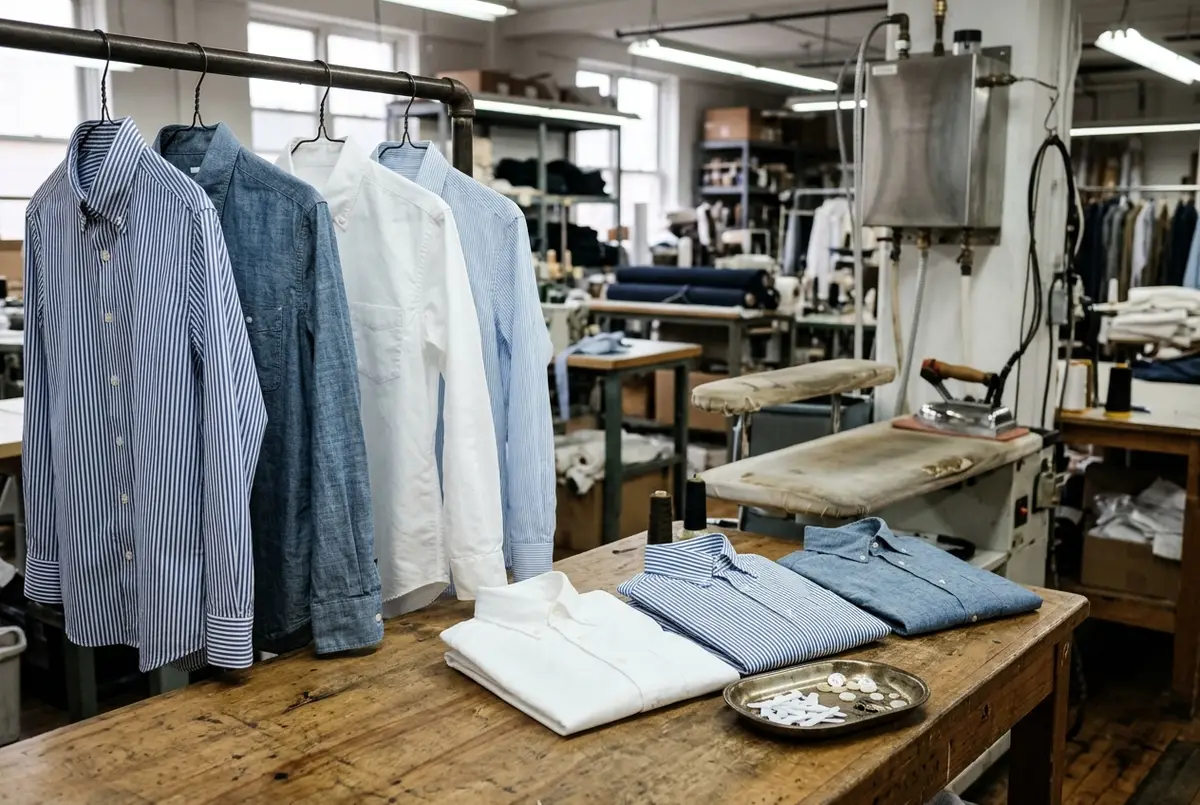
Shirt styles
Formal and business shirts, button-down oxfords, casual poplin and twill shirts, linen and linen-blend shirts, flannel and brushed shirts, camp-collar and resort shirts, overshirts and shackets, chambray and denim shirts, women's tailored shirts and oversized boyfriend shirts, tunics, and corporate uniform shirts.
Shirting fabrics
Two-ply and single-ply cotton poplins, oxfords, pinpoint, twill, herringbone and dobby; yarn-dyed checks and stripes; chambray; linen and linen-cotton; flannel; seersucker; cotton-Tencel and stretch shirting. Thread count, ply and finish (non-iron, easy-care, mercerised, enzyme wash) define quality and price.
Where shirts are made
Bengaluru has large shirt factories serving global brands, Delhi NCR makes fashion and womenswear shirts, Mumbai, Kolkata and Chennai produce formal and casual shirting, and Tamil Nadu and Maharashtra supply much of the yarn-dyed and linen fabric.
Collar, cuff and placket quality
The collar is the first thing customers notice. Specify collar style (spread, cutaway, button-down, band, camp), fusing type, collar-stay pockets, point length and band height. Cuffs, plackets and yokes should be specified in the tech pack, including button spacing and whether the yoke is split for pattern matching.
Construction quality
Stitches per inch (premium shirts often use 16–20), single-needle or flat-felled side seams, clean buttonholes with no fraying, cross-stitched or shanked buttons, curved hems with narrow rolls, and pattern matching at the front placket, pockets, sleeves and yoke for checks and stripes.
Fit and sizing
Shirts can be sized by collar and sleeve (formal) or S–XXL (casual), with fits such as classic, slim and relaxed. Women's shirts need separate patterns rather than adapted men's blocks. Approve size sets on bulk fabric after wash.
Testing and inspection
Recommended tests include dimensional stability, colour-fastness to washing and rubbing, seam slippage, tear strength, pilling for brushed fabrics, and durable-press rating for non-iron shirts. Inspection covers collar symmetry, fusing bubbles, pattern matching, measurements, buttons, pressing, folding and packing.
Minimums, timelines and cost
Factories often accept moderate minimums using stock or mill-ready fabrics; yarn-dyed custom developments carry mill minimums. Typical lead times are five to nine weeks after approvals. Fabric quality, ply, finish, buttons and packaging drive cost.
How we help
We shortlist shirt specialists, source shirting, manage collar and fit approvals, inspect inline for pattern matching and fusing, and complete a final inspection before shipment.
Costing shirts
The main cost drivers are the shirting fabric (ply, yarn count and finish), the complexity of the collar and cuffs, the stitch density, buttons and interlinings, and any washing. Two-ply poplin and mother-of-pearl buttons, for example, raise the price compared with single-ply fabric and polyester buttons. We prepare comparable cost breakdowns from shortlisted factories so you can see where quality matters most for your customers.
Formal versus casual shirt factories
Formal shirt factories invest in collar and cuff automation and fine stitching for business shirts; casual shirt factories handle washes, overshirts and fashion details. Matching your range to the right type of factory avoids quality problems and cost surprises.
Corporate shirt programmes
Uniform and corporate shirts need colour and fit consistency over repeat orders, often in wide size ranges. Keep master fabric references and approved size sets with the factory.
How a shirts sourcing programme runs
- Brief review. We review your tech pack or reference sample, target price, quantity and timeline, and confirm what is realistic in India.
- Factory shortlist. We shortlist factories in the right cluster and verify them on site: legal entity, in-house processes, capacity and compliance.
- Sampling and costing. We manage proto, fit and size-set samples and collect costings broken down by fabric, trims, labour and finishing.
- Pre-production approval. Fabric tests, lab dips, trims and a pre-production sample are approved in writing before bulk cutting.
- Production follow-up. We track cutting, sewing and finishing against the agreed calendar and run inline quality checks.
- Final inspection and shipment. A final random inspection to your AQL, carton and label checks, then handover of documents to your forwarder.
What to include in your shirts brief
- Shirt style and collar type
- Shirting fabric and finish
- Stitch density and seam types
- Buttons and interlinings
- Pattern-matching rules
- Fit and size range
- Testing requirements
- Target price, quantities and delivery date
Common mistakes when sourcing shirts
- Leaving collar fusing, stays and band height unspecified.
- Not defining pattern-matching for checks and stripes at yoke, pockets and plackets.
- Approving women's shirts built on adjusted men's patterns.
- Ignoring durable-press testing on non-iron claims.
- Choosing buttons on appearance only, without attachment tests.
- Using a formal-shirt factory for heavily washed casual shirts.
Other apparel categories
Garment sourcing services and guides
Garment sourcing by buyer market
Back to Garments & Apparel sourcing
Buyer questions
Is India good for shirt manufacturing?
Yes, especially cotton, linen and yarn-dyed shirts.
What stitch density do premium shirts use?
Often 16–20 stitches per inch.
Can factories pattern-match checks?
Yes, when matching rules are specified and checked.
Can you source non-iron shirts?
Yes, with durable-press finishes and appropriate testing.
Do you source women's shirts?
Yes, on women's-specific patterns.
What is two-ply shirting?
Fabric woven from yarns made of two twisted strands, giving a smoother, stronger and more premium shirt.
What is the minimum order for custom shirts?
With stock fabric it can be moderate per style and colour; custom yarn-dyed fabric needs mill minimums.
Submit your product requirements
Submit your product requirement
Share a photo, reference product or tech pack. We will identify suitable verified manufacturers and explain the next steps — no obligation.
- Phone & WhatsApp
- +91 93684 37527