Garments & Apparel · Ethnic Wear
Ethnic Wear Manufacturing and Sourcing in India
India is the natural home of ethnic and Indo-western clothing. From everyday cotton kurtas to embroidered festive wear, Indian manufacturers combine traditional techniques such as hand-block printing, chikankari, zari and mirror work with modern fits.
We help international retailers, diaspora brands and boutiques source ethnic wear that is authentic in technique and consistent in quality and sizing.
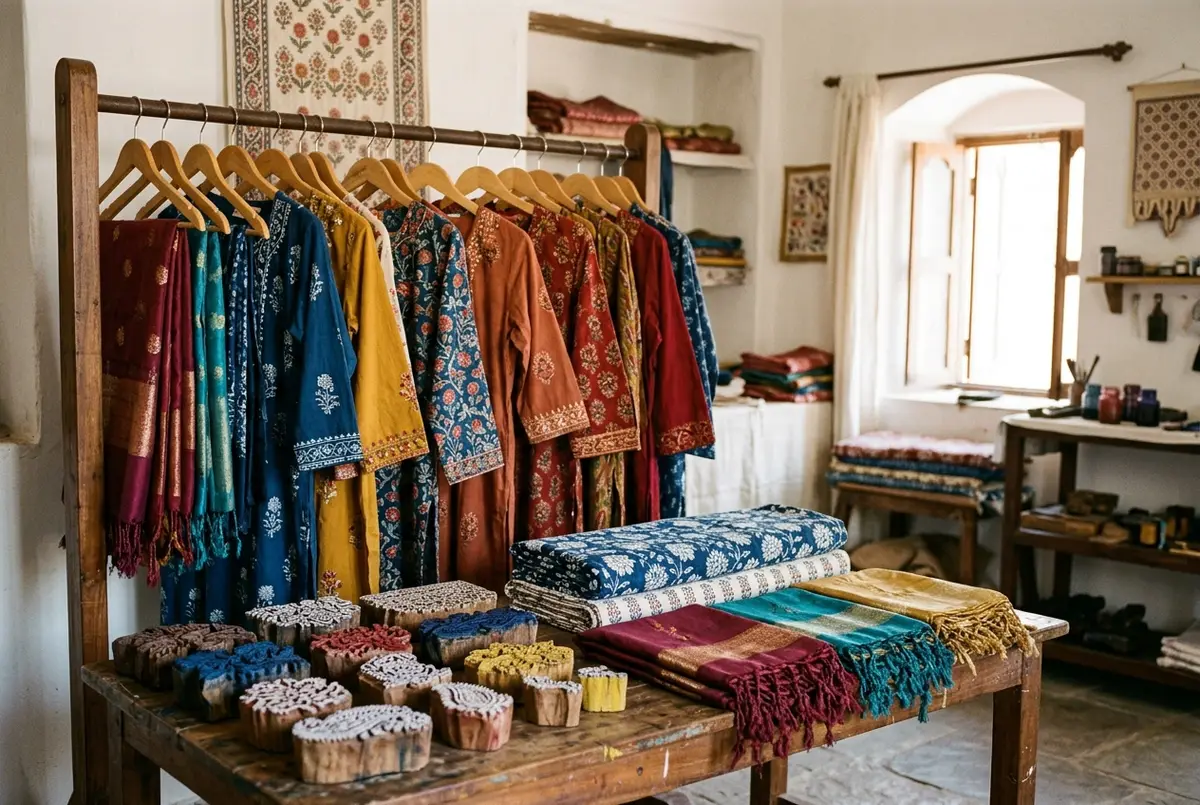
Ethnic and Indo-western products
Kurtas and kurtis, kurta-and-trouser sets, salwar suits, anarkalis, tunics, palazzos, dupattas and stoles, lehengas and festive skirts, men's kurtas and Nehru jackets, sherwanis, kaftans, and Indo-western dresses and co-ords that adapt Indian prints and embroidery to Western silhouettes.
Textile crafts
Hand-block printing (Jaipur, Bagru, Sanganer), ajrakh and dabu printing, bandhani and leheriya tie-dye, ikat and handloom weaves, chikankari embroidery from Lucknow, zari, gota and zardozi metallic work, mirror work and kantha. Each craft has natural variation, which is part of its character; buyers should approve reference samples and communicate this to customers.
Fabrics
Cotton cambric, voile, mulmul and slub; rayon and viscose; chanderi, maheshwari and other handloom silks and blends; georgette, chiffon and crepe for festive styles; khadi; and linen blends. Lining choices matter for sheer fabrics.
Ethnic wear regions
Jaipur and the surrounding area for block prints and everyday ethnic wear; Delhi NCR for fashion ethnic wear and embellishment; Lucknow for chikankari; Surat for synthetic fabrics and festive wear; Mumbai for premium designer production; Kolkata and West Bengal for kantha and handloom; and Varanasi for silk brocades.
Sizing for international markets
Indian brands often size garments differently from Western retailers. Provide your size chart and fit preferences, and approve fit on the production fabric. Kurta lengths, sleeve lengths, side slits and trouser rises should be specified clearly.
Quality points
Print alignment and colour, embroidery density, loose threads at the back of embroidery, mirror and bead security, colour bleeding on dyed and printed cottons, lining fit, hem finishing and shrinkage. Hand-craft variations should be within an agreed range rather than treated as defects.
Compliance and responsible sourcing
Much hand embroidery and block printing takes place in small workshops or homes. Responsible sourcing means mapping these subcontractors, confirming fair wages and no child labour, and making sure azo-free dyes and safe chemicals are used. Fibre labelling and care instructions must meet each market's rules, and natural-dye claims should be evidenced.
Minimums, timelines and costing
Hand-block printed and embroidered garments often allow modest minimums, but take longer: block carving, printing and hand embroidery add weeks. Festive seasons such as Diwali and the wedding season compete for capacity, so book early. Costs depend on fabric, craft technique and embellishment density.
Our role
We connect you with workshops and factories matched to your craft and price level, document approved standards, map subcontracted work, and inspect garments for quality and compliance before shipment.
Costing ethnic wear
Cost depends on the fabric, the craft and the embellishment density. Hand-block printing costs more per metre than screen printing; hand embroidery more than machine embroidery; and zari or mirror work more than thread embroidery. We break down costs by fabric, printing, embellishment, stitching, finishing and packaging, so you can decide which crafts deliver the most value for your customers.
Indo-western and fusion ranges
Fusion collections adapt Indian textiles and embroidery to Western silhouettes: shirt dresses in block print, embroidered blouses, kaftans and co-ords. They suit international retailers who want Indian craft without traditional sizing. Fit should follow your standard size chart.
Telling the craft story
Customers increasingly value knowing how a garment was made. Craft details, cluster names and maker stories can support your product pages, provided the claims are accurate and documented.
How a ethnic wear sourcing programme runs
- Brief review. We review your tech pack or reference sample, target price, quantity and timeline, and confirm what is realistic in India.
- Factory shortlist. We shortlist factories in the right cluster and verify them on site: legal entity, in-house processes, capacity and compliance.
- Sampling and costing. We manage proto, fit and size-set samples and collect costings broken down by fabric, trims, labour and finishing.
- Pre-production approval. Fabric tests, lab dips, trims and a pre-production sample are approved in writing before bulk cutting.
- Production follow-up. We track cutting, sewing and finishing against the agreed calendar and run inline quality checks.
- Final inspection and shipment. A final random inspection to your AQL, carton and label checks, then handover of documents to your forwarder.
What to include in your ethnic wear brief
- Style list and silhouettes
- Craft technique and reference sample
- Fabric base and composition
- Size chart and fit preferences
- Embellishment placement and density
- Compliance and subcontractor mapping
- Testing requirements
- Target price, quantities and delivery date
Common mistakes when sourcing ethnic wear
- Using Indian domestic sizing for international customers without adjustment.
- Treating craft variation as defects instead of agreeing tolerances.
- Not mapping home-based embroidery and printing subcontractors.
- Booking production during festival season without early capacity reservation.
- Ignoring colour bleeding on hand-dyed and block-printed cottons.
- Making natural-dye claims without evidence.
Other apparel categories
Garment sourcing services and guides
Garment sourcing by buyer market
Back to Garments & Apparel sourcing
Buyer questions
Can you source kurtas for Western retailers?
Yes, with adapted sizing and fits, and compliance labelling for your market.
Is hand-block printing consistent?
It has natural variation; we agree acceptable ranges using approved reference samples.
Where is chikankari made?
Mainly in and around Lucknow, Uttar Pradesh.
Are festive pieces available in small quantities?
Often yes, but embellished styles take longer and capacity is tight before festivals.
How do you handle home-based embroidery?
By mapping subcontractors and checking wages, working conditions and chemical safety.
Submit your product requirements
Submit your product requirement
Share a photo, reference product or tech pack. We will identify suitable verified manufacturers and explain the next steps — no obligation.
- Phone & WhatsApp
- +91 93684 37527