Garments & Apparel · Uniforms & Workwear
Uniform and Workwear Manufacturing in India
Uniforms and workwear need durability, comfort over long shifts, consistent colour across repeat orders and, for some sectors, certified protective performance. India has many factories that supply corporate, hospitality, healthcare, school and industrial uniforms for domestic and export customers.
We help uniform suppliers, distributors and corporate buyers source garments that stay consistent over years of reorders.
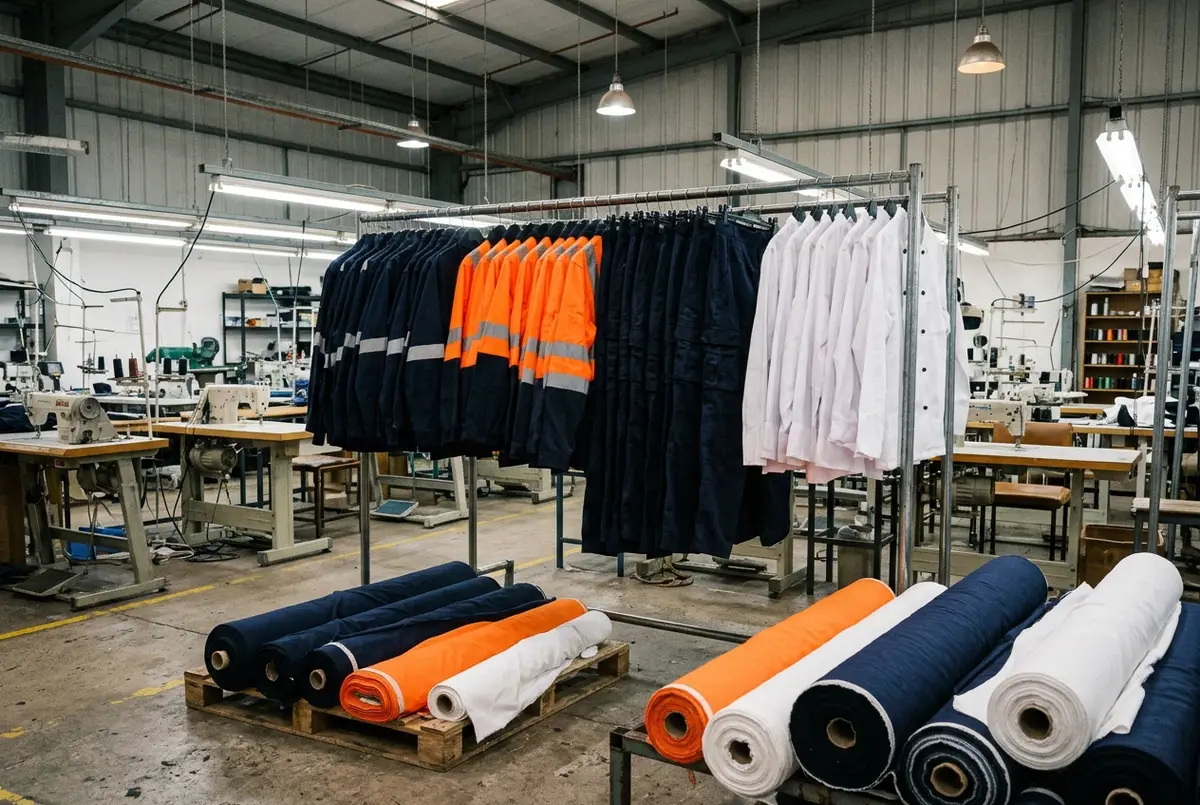
Uniform and workwear range
Corporate shirts, blouses, trousers and blazers; hospitality wear such as chef jackets, aprons, waiter waistcoats and housekeeping tunics; healthcare scrubs, lab coats and patient gowns; school uniforms; industrial coveralls, work trousers, jackets and shirts; hi-visibility garments; security and facility-services uniforms; and branded polos and fleeces.
Fabrics for workwear
Polyester-cotton twills and poplins (for example 65/35) are common for durability and easy care; 100% cotton drill and canvas for heavier workwear; ripstop for strength; stretch blends for mobility; and recycled polyester blends for sustainability targets. Industrial laundering resistance is often more important than first-wear appearance, so specify wash temperature and expected wash cycles.
Protective and certified workwear
Hi-visibility garments in Europe and the UK must meet EN ISO 20471, and in the US ANSI/ISEA 107, which set requirements for fluorescent background material, retro-reflective tape and design. Flame-resistant and arc-rated garments require certified fabrics and testing. Not every uniform factory is set up for certified PPE, so we confirm certification scope and test reports before recommending a supplier.
Sizing and fit
Uniform programmes often cover very wide size ranges, including tall and short fits and gender-specific patterns. Clear size charts, fit samples on real wearers and a size-mix forecast help reduce returns. Some programmes need made-to-measure options for executives or front-of-house staff.
Colour consistency and reorders
Corporate colours must match across years of reorders. Approve lab dips against a reference such as a Pantone or physical standard, keep master swatches with the factory and buyer, and check shade at every reorder. Using standard mill colours where possible makes long-term consistency easier.
Branding
Logos can be embroidered, screen printed, heat-transferred or applied as woven badges. Position, size and thread colours should be documented in a branding guide. For multi-site programmes, name tapes or personalisation may be added.
Quality and testing
Inspection checks seam strength, bar-tacks at pockets and belt loops, zip and button durability, reflective tape placement, logo accuracy, measurements and colour. Recommended tests include tensile and tear strength, colour-fastness to industrial washing and light, shrinkage after repeated washing and pilling.
Minimums, lead times and stock programmes
Large uniform contracts often combine an initial roll-out with replenishment. Factories can hold greige or finished fabric for reorders if agreed. Lead times depend on fabric availability, typically six to ten weeks for first orders.
How we help
We shortlist uniform and workwear factories with relevant experience, verify any protective certifications, manage colour and fit approvals, set up reorder standards and inspect each delivery.
Tender and contract support
Corporate and public-sector uniform buyers often run tenders with detailed specifications. We help prepare sample sets, fabric test reports and capacity evidence, and later manage roll-outs across multiple sites with clear packing by location or employee.
Sustainability in uniforms
Recycled polyester blends, longer-lasting fabrics, take-back schemes and repair-friendly designs reduce the footprint of uniform programmes. Durability testing is the most effective sustainability measure for workwear.
How a uniforms & workwear sourcing programme runs
- Brief review. We review your tech pack or reference sample, target price, quantity and timeline, and confirm what is realistic in India.
- Factory shortlist. We shortlist factories in the right cluster and verify them on site: legal entity, in-house processes, capacity and compliance.
- Sampling and costing. We manage proto, fit and size-set samples and collect costings broken down by fabric, trims, labour and finishing.
- Pre-production approval. Fabric tests, lab dips, trims and a pre-production sample are approved in writing before bulk cutting.
- Production follow-up. We track cutting, sewing and finishing against the agreed calendar and run inline quality checks.
- Final inspection and shipment. A final random inspection to your AQL, carton and label checks, then handover of documents to your forwarder.
What to include in your uniforms & workwear brief
- Sector and wearer roles
- Garment list and size range
- Fabric specification and wash conditions
- Protective standards if required
- Corporate colours and master standards
- Logo positions and methods
- Testing requirements
- Roll-out and replenishment plan
Common mistakes when sourcing uniforms & workwear
- Changing fabric supplier between orders without re-approving colour.
- Specifying domestic wash tests for garments that will be industrially laundered.
- Assuming a factory can make certified hi-vis or flame-resistant garments without checking certificates.
- Forecasting sizes poorly, leading to shortages in common sizes.
- Not documenting logo positions and thread colours in a branding guide.
- Ignoring tall and short fits in wide-range programmes.
Other apparel categories
Garment sourcing services and guides
Garment sourcing by buyer market
Back to Garments & Apparel sourcing
Buyer questions
Can you source hi-vis workwear from India?
Yes, from factories using certified fluorescent and reflective materials to EN ISO 20471 or ANSI/ISEA 107.
What fabric is best for uniforms?
Polyester-cotton blends are common for durability and easy care; cotton and stretch blends suit comfort.
How do you keep colours consistent on reorders?
With approved master standards, shade checks at each order and standard mill colours where possible.
Do you source scrubs and chef wear?
Yes, including healthcare scrubs, lab coats, chef jackets and aprons.
Can logos be added?
Yes, by embroidery, printing, transfers or woven badges, documented in a branding guide.
Submit your product requirements
Submit your product requirement
Share a photo, reference product or tech pack. We will identify suitable verified manufacturers and explain the next steps — no obligation.
- Phone & WhatsApp
- +91 93684 37527