01
Brief
Design, size, material and colour references.
Home & Living · Durries and floor coverings
Durries (dhurries) are flat-woven rugs with no pile, traditionally woven in cotton or wool on pit or frame looms. Panipat is India's largest centre for durries, flatweaves and recycled-fibre rugs, while Jaipur and other centres produce durries in hand-woven and printed designs.
We help retailers and home brands source durries, kilims, flatweaves, chindi and recycled-fibre rugs, as well as outdoor flatweaves, with clear specifications and colour control.
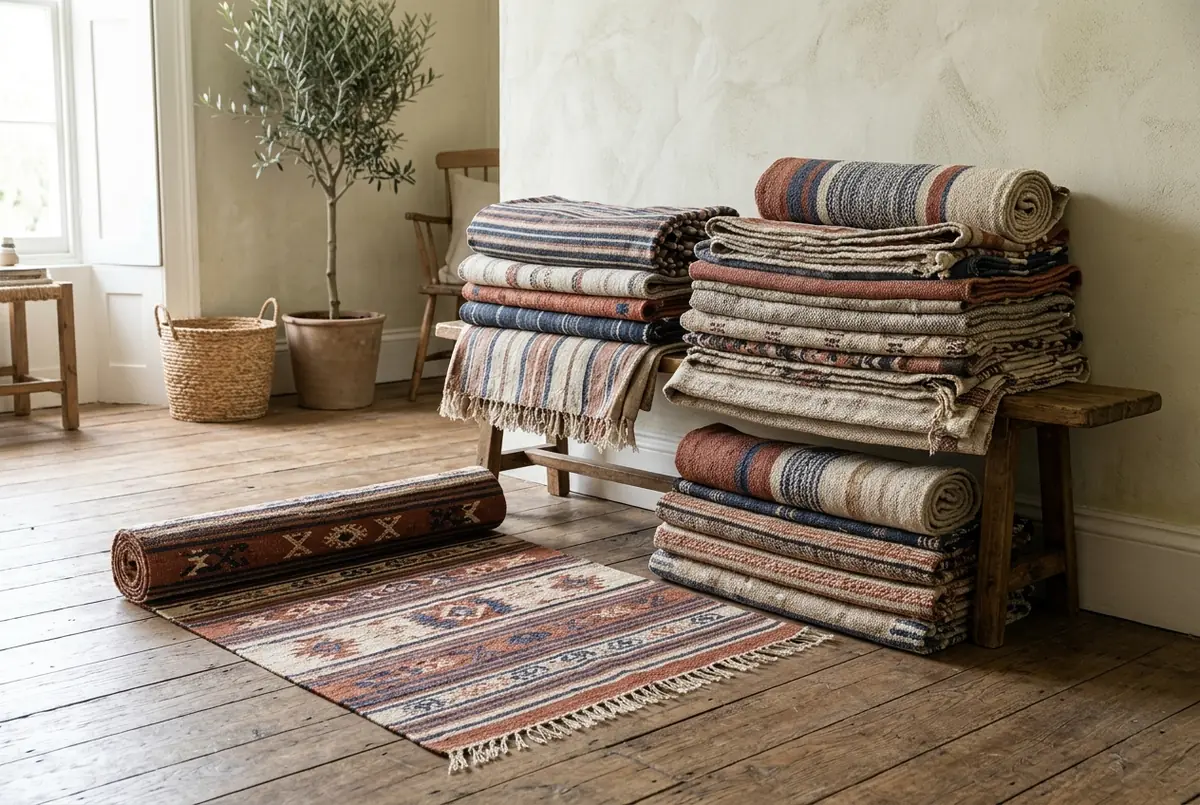
Durries are woven on handlooms, frame looms and power looms. Hand-woven durries allow complex designs and natural texture; power looms suit large repeat programmes. Many units also dye yarn in-house or with nearby dye houses.
Designs, colours and sizes can be developed to your brief, with strike-offs before bulk. Labels, tags and packaging can be branded.
Design, size, material and colour references.
Sample to confirm design, weave and colour.
Colour-fastness and dimensional stability where required.
Bulk weaving, finishing and washing.
Size, weight, colour and finishing checks.
Minimums are usually set per colourway and size. Hand-woven durries take longer than power-loom flatweaves, and dyeing adds time for custom colours.
Durries are rolled or folded in polybags and cartons; compressed packing reduces freight volume for light flatweaves.
We are a buyer-side sourcing company. We find and verify independent Indian manufacturers, manage development and production, and inspect goods before shipment. The factory is your supplier of record; we do not own factories or sell from stock.
Plain, twill, slit-tapestry and pit-loom weaves create stripes, geometrics and kilim-style designs.
Cotton, wool, jute, chindi fabric strips and recycled PET.
Fringes, whipped edges, washing and printed designs.
Panipat is the largest centre for durries and recycled flatweaves, with hand-woven durries also made in Rajasthan and other states. Yarns are dyed, woven on handlooms or power looms, washed, finished and packed.
Fibre composition labels per market.
Recycled-content claims need certificates such as GRS and transaction records.
Outdoor rugs should be tested for UV fading and water resistance where claimed.
Requirements change and depend on the product and destination, so confirm them with your compliance adviser or customs broker.
Durries are light and fold well, so compressed packing cuts freight cost for e-commerce sellers.
Ranges with many colourways should share yarn colours where possible to keep minimums workable.
Keep durrie ranges efficient by sharing yarn colours across designs. Each custom colour needs its own dye lot, so a tight palette across many designs keeps minimums low and colours consistent.
For e-commerce, specify fold and pack method: durries can be folded or rolled, and compressed packing reduces shipping volume. Labels and care instructions should be sewn in or attached securely.
Outdoor flatweaves in recycled PET should be checked for UV fading and colour-fastness to water, and the recycled content should be documented if you will claim it.
Hospitality and contract buyers should confirm any flammability or slip-resistance requirements for floor coverings before sampling.
Many flat-woven durries are reversible.
Recycled PET flatweaves are made for outdoor use.
A rug woven from strips of fabric, often textile waste.
A flat-woven rug with no pile, traditionally woven in cotton or wool in India.
Panipat is the largest centre, with other hand-weaving centres such as Jaipur.
Yes. Recycled PET and textile-waste rugs are widely made, including outdoor ranges.
Many cotton durries are washable; agree care instructions and test dimensional stability.
Submit your product requirements
Share a photo, reference product or tech pack. We will identify suitable verified manufacturers and explain the next steps — no obligation.