Garments & Apparel · Innerwear
Innerwear Manufacturing and Sourcing in India
Innerwear, also called underwear or intimates basics, is a high-volume, repeat-order category where comfort, consistency and hygiene matter most. India has a large innerwear industry built on cotton knits, with major production in Tiruppur, Kolkata and Bengaluru.
We help retailers, basics brands and private-label programmes source innerwear with reliable elastic performance, consistent sizing and hygienic packing.
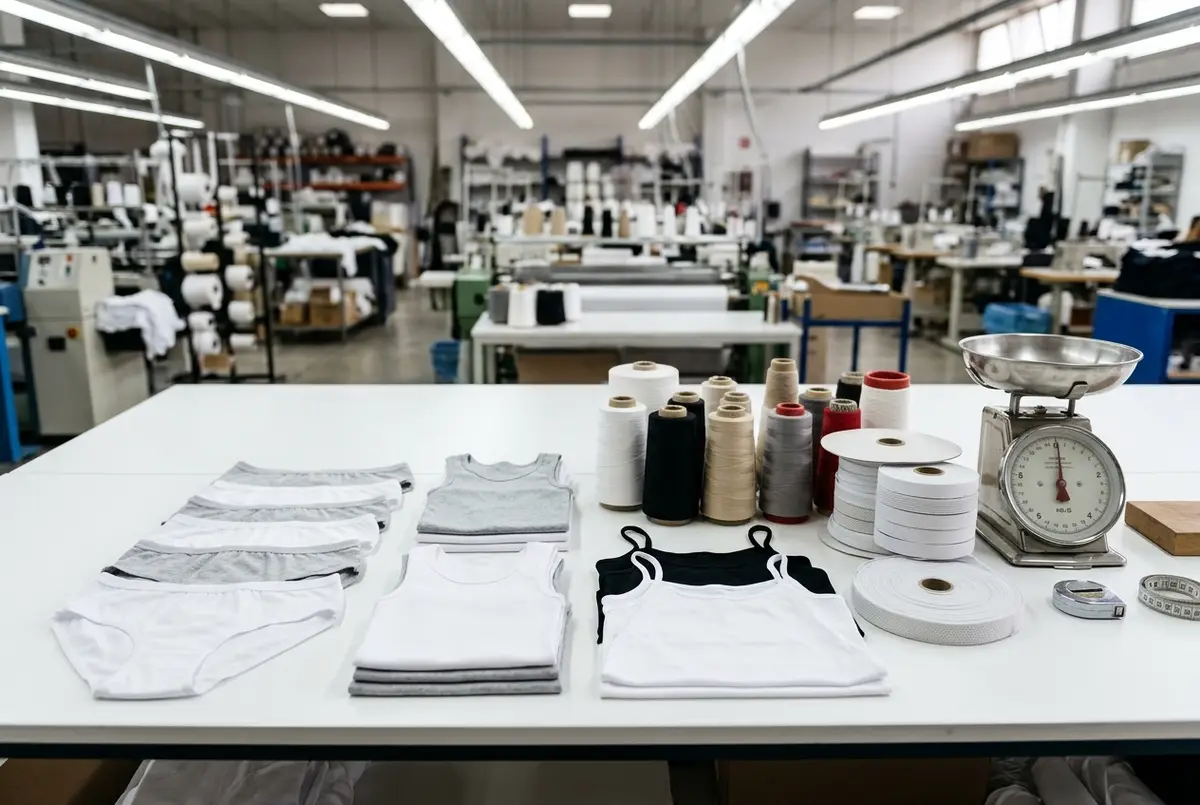
Innerwear products
Men's briefs, trunks, boxer briefs and woven boxers; vests and undershirts; women's briefs, hipsters and boy shorts; camisoles, slips and bralettes; children's underwear and vests; thermal tops and long johns; and multipacks. Moulded and wired bras are a specialised category made by fewer factories and are sourced separately.
Fabrics
Combed cotton and cotton-elastane single jersey and rib, modal and micro-modal blends, bamboo viscose, nylon-elastane microfibre for seamless-look styles, organic cotton, and brushed or thermal knits for winter. Gusset linings should be cotton for comfort and hygiene. Specify GSM, composition, stretch and recovery.
Elastics and trims
Elastic is the most important component of innerwear. Waistbands may be exposed jacquard elastic with a woven logo, covered elastic, or plush-back elastic; leg openings use picot or binding elastic. Elastics must keep their stretch after repeated washing, so recovery and wash tests are essential. Labels are often printed (tagless) to avoid irritation.
Where innerwear is made
Tiruppur supplies a large share of export cotton innerwear. Kolkata has a long-established domestic hosiery and innerwear industry. Bengaluru and Delhi NCR make fashion innerwear and loungewear crossovers. Several large Indian innerwear manufacturers also make private-label products for international retailers.
Quality points
Measurement consistency across sizes, elastic tension and recovery, waistband join quality, seam strength under stretch, gusset placement, print or logo quality on elastic, shade matching in multipacks and tagless label durability. Pilling and shrinkage are checked after washing.
Testing
Typical tests: dimensional stability, colour-fastness to washing, perspiration and rubbing, elastic stretch and recovery after washing, seam strength, pilling, pH and formaldehyde. Organic and recycled claims need GOTS, OCS or GRS certificates with transaction certificates.
Hygiene and packaging
Innerwear should be packed in clean, controlled areas, with needle-control and metal detection where required. Multipacks need consistent folding, packaging cards or boxes, and correct barcodes. Returns rules in many markets treat underwear as non-returnable once opened, so the packaging must protect the product well.
Minimums, lead times and cost
Innerwear is usually ordered in larger volumes with continuous replenishment, which helps price. Custom colours and branded elastics have minimums. After approvals, production often takes four to seven weeks; branded elastics may add time. Fabric, elastics and packaging are the main cost drivers.
How we help
We shortlist innerwear specialists, test elastics and fabrics before bulk, approve size sets, set up replenishment calendars and inspect for elastic performance, measurements and packaging.
Who innerwear factories suit
Large Indian innerwear manufacturers suit retailers and private-label programmes with high, steady volumes and strict compliance. Smaller specialist units suit premium and direct-to-consumer brands that need modal, organic or fashion styles in moderate quantities. We match the factory size to your forecast so that you get both capacity and attention.
Replenishment programmes
Innerwear sells continuously, so buyers benefit from fixed core styles and colours with regular reorders. Agree forecast quantities and reorder lead times, and let the factory hold greige fabric or elastic stock where volumes justify it.
Comfort and fit testing
Wear trials over several days and washes reveal issues that measurements miss: digging elastics, riding legs or rolling waistbands. Run wear trials on fit samples before approving bulk.
How a innerwear sourcing programme runs
- Brief review. We review your tech pack or reference sample, target price, quantity and timeline, and confirm what is realistic in India.
- Factory shortlist. We shortlist factories in the right cluster and verify them on site: legal entity, in-house processes, capacity and compliance.
- Sampling and costing. We manage proto, fit and size-set samples and collect costings broken down by fabric, trims, labour and finishing.
- Pre-production approval. Fabric tests, lab dips, trims and a pre-production sample are approved in writing before bulk cutting.
- Production follow-up. We track cutting, sewing and finishing against the agreed calendar and run inline quality checks.
- Final inspection and shipment. A final random inspection to your AQL, carton and label checks, then handover of documents to your forwarder.
What to include in your innerwear brief
- Style list and size range
- Fabric composition, GSM and stretch
- Elastic type, width and branding
- Gusset and seam construction
- Label method
- Multipack and packaging details
- Testing requirements
- Forecast, reorder plan and delivery date
Common mistakes when sourcing innerwear
- Approving elastics without stretch and recovery tests after washing.
- Ignoring wear trials, so comfort issues only appear in customer returns.
- Using synthetic gusset linings where cotton is expected.
- Leaving multipack shade matching unchecked.
- Not planning replenishment, which forces rushed reorders.
- Packing in areas without hygiene controls or metal detection.
Other apparel categories
Garment sourcing services and guides
Garment sourcing by buyer market
Back to Garments & Apparel sourcing
Buyer questions
Where is innerwear made in India?
Mainly Tiruppur, Kolkata and Bengaluru.
How do you make sure the elastic lasts?
Through stretch and recovery tests after repeated washing, before bulk approval.
Can you source branded jacquard waistbands?
Yes; they are developed with elastic mills and have their own minimums.
Do you source bras?
Bralettes and soft bras, yes; moulded and wired bras are sourced from specialist units.
Is organic cotton underwear available?
Yes, with GOTS-certified supply chains.
What is a typical innerwear lead time?
Around four to seven weeks after approvals; branded elastics can add time.
Can you source tagless underwear?
Yes, with heat-transfer or printed care labels instead of sewn tags.
Submit your product requirements
Submit your product requirement
Share a photo, reference product or tech pack. We will identify suitable verified manufacturers and explain the next steps — no obligation.
- Phone & WhatsApp
- +91 93684 37527