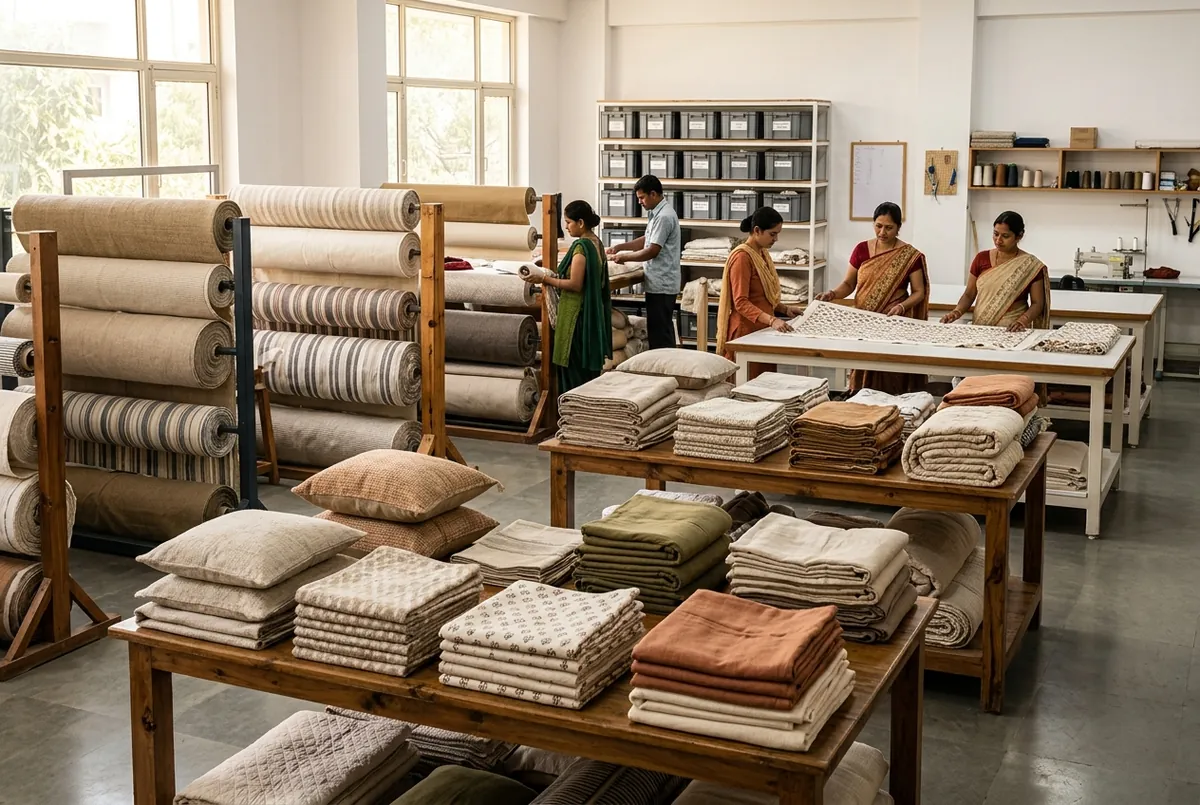
These are the parameters we define with the mill before a sample is made. Most quality disputes in home textiles come from one of them being left open.
- Fibre & yarn
- Fibre blend and yarn count — for example 100% cotton, 40s single or 2-ply. Organic or recycled claims require the supplier's certification scope, not just a logo.
- Construction
- Plain, percale, sateen, twill, dobby, jacquard, waffle or knitted. Construction decides hand-feel, drape and durability.
- GSM / thread count
- Fabric weight in grams per square metre, or thread count for bedding. Both must be measured on the finished fabric, not stated from the loom.
- Shrinkage
- Dimensional change after washing. Bedding and curtains need pre-shrunk fabric and a shrinkage allowance in the cut size.
- Colour fastness
- Fastness to washing, rubbing and light. Dark and bright shades, and reactive prints, need lab dips approved under the buyer's light source.
- Print & embellishment
- Screen, digital, rotary or hand block print; embroidery, appliqué or tufting. Each has different minimums, tolerances and lead times.
- Stitching & construction
- Stitches per inch, seam type, hem width, closure (zip, envelope, buttons) and corner finishing.
- Measurements
- Finished sizes with tolerances for every SKU, set per destination market — US, UK, EU and Nordic bedding sizes are all different.
- Labels & packaging
- Fibre, care and origin labels, swing tags, barcodes, inserts and retail or e-commerce packaging.