01
Manufacturer or trader?
We confirm whether a supplier owns its production or is a trading company, and visit the actual factory.
Global garment sourcing · China
China remains the world's largest apparel producer, and its biggest advantage is the ecosystem: fabric markets, trim suppliers, printers, laundries and factories of every size within reach of each other. That makes China the fastest place to develop complex, technical or trend-driven products, and to source trims and components for factories elsewhere.
Our team in China helps buyers navigate that choice, separate genuine manufacturers from trading companies, check cotton traceability and compliance, and inspect production before it ships.
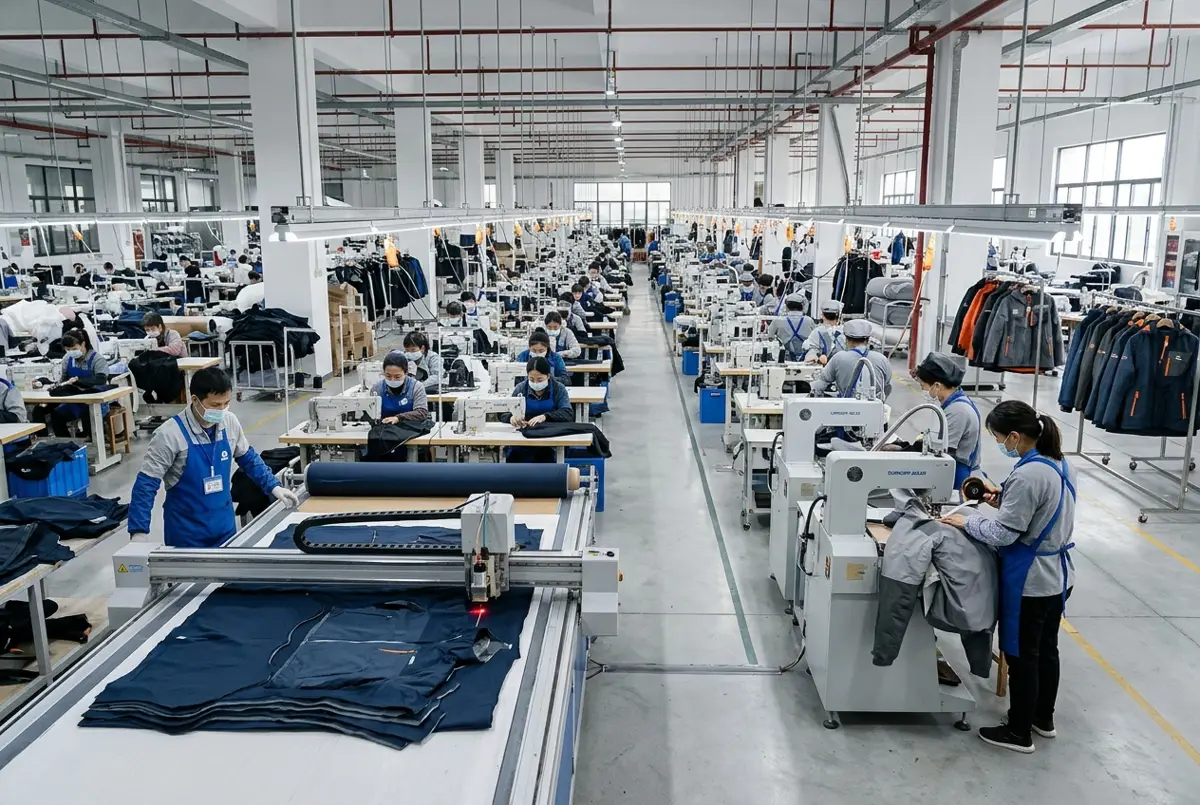
Chinese factories are strong at full-package production, where the factory sources fabric and trims, develops patterns and delivers finished garments. They lead in technical outerwear, seam-sealed and bonded construction, performance synthetics, and products that need many components. Small-batch quick-response factories, especially around Guangzhou, have also made China a source for online brands testing new styles.
Costs are higher than in South Asia for simple basics, and US tariffs on Chinese goods and cotton traceability rules have pushed many buyers to diversify. We help you decide which products still make sense in China and which can move to India, Bangladesh, Thailand or Vietnam.
China produces fabrics in almost every fibre and finish, from basic cotton and polyester to recycled synthetics, technical membranes and novelty knits. Fabric markets in Guangzhou and Keqiao let designers source quickly, while mills support custom development for larger programmes. Many factories in Vietnam, Bangladesh and Cambodia also buy their fabric and trims from China.
For cotton products sold in the US, fabric origin is a compliance issue as well as a quality issue (see below). We ask for yarn and fabric origin documents for every cotton order.
We confirm whether a supplier owns its production or is a trading company, and visit the actual factory.
Capacity, equipment, subcontracting, social audits and quality systems, checked on site.
We manage tech packs, samples and fabric approvals, using China's speed while keeping changes documented.
For cotton, we collect supply-chain documents back to fibre origin and support third-party testing where needed.
In-line, final AQL and loading inspections with photo reports.
Coordination with your forwarder at Shenzhen, Shanghai, Ningbo or Guangzhou.
Chinese factories are fast at sampling, often turning a tech pack into a first sample quickly because fabric and trims are close at hand. The risk is that fast changes are not documented, so we keep a single comment log and confirm every change in writing before the next round.
For technical products, we review construction details such as seam-taping, insulation weights and zip specifications, and request material test reports at the sample stage rather than after bulk.
Common issues we watch in China include material substitution between sample and bulk, seam-sealing failures on outerwear, and fill-weight variation in down and padded garments. We compare bulk materials with the approved sample, check taped seams and fill distribution, and verify that trims match the specification.
US Customs enforces the Uyghur Forced Labor Prevention Act, which presumes goods made wholly or partly in Xinjiang were made with forced labour. Cotton apparel from China needs strong evidence of fibre origin, and some buyers avoid Chinese cotton altogether. The EU's Forced Labour Regulation will apply from December 2027. Social audits such as amfori BSCI, SMETA and WRAP, and certifications such as OEKO-TEX, GRS and GOTS, are widely available.
US tariffs on Chinese apparel have changed many times since 2025, on top of existing Section 301 duties, so always check the current rate before costing. China no longer receives EU GSP preferences, and the US de minimis exemption for small parcels has been suspended, which affects direct-to-consumer models.
China offers the widest range of minimums. Large export factories need volume, while Guangzhou's small-batch factories may accept low quantities per style using market fabrics. Custom fabric development has its own mill minimums. We match your order size to factories set up for it, and explain the cost and quality trade-offs of low-MOQ production.
China's integrated supply chain means fabric and trims can often be sourced quickly, which shortens development and production compared with countries that import fabric. Small-batch factories can turn around simple styles quickly when they use market fabrics, while large factories book capacity well in advance.
Chinese New Year, in January or February, is the biggest disruption of the year. Factories close for one to several weeks and some workers do not return, so production before and after the holiday needs careful planning. Golden Week in early October is a shorter break.
Labour costs in China's coastal provinces are higher than in South and South-East Asia, but efficiency, fabric availability and fewer delays can offset part of the difference. Prices depend on fabric, trims, construction complexity, quantity and factory tier. For US buyers, tariffs now play a large role in the landed cost and must be added before comparing countries.
We compare full landed costs, including duty and freight, across countries so you can see when China remains the better option and when moving production makes sense.
Some suppliers present themselves as manufacturers but subcontract. Verify the production site.
A good FOB price can become uncompetitive after US tariffs. Compare landed costs.
US shipments of cotton apparel can be detained without fibre-origin evidence.
Fast sampling cycles can lead to changes nobody approved. Keep a written comment log.
Orders not completed before the holiday may be delayed by weeks.
Duty and compliance depend on where you sell as much as where you make. These notes summarise the main points; always confirm the current rate and rules for your HS code.
China's ports offer frequent direct sailings to the US, Europe and Australia, and air freight capacity is large. We agree packing, labelling and carton standards in advance, and check them at final inspection. For multi-country programmes, Chinese trims and packaging can be shipped to factories in other countries.
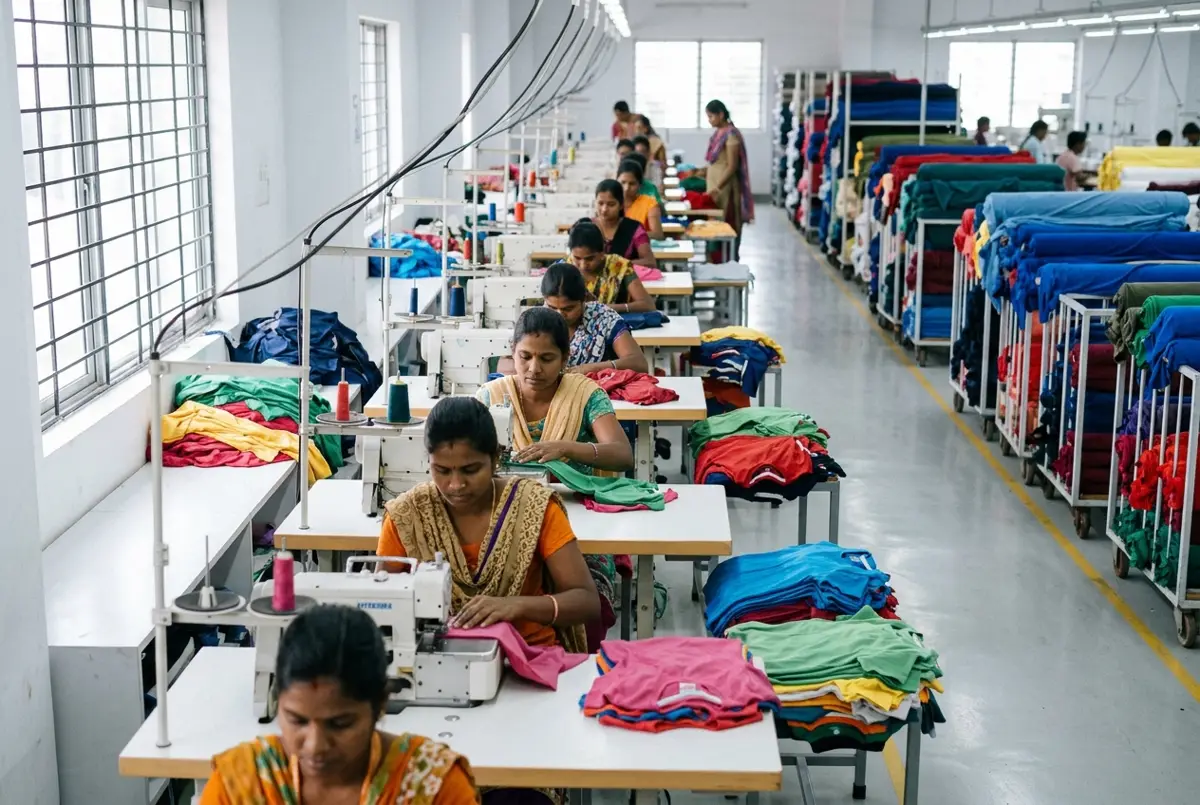
Deep cotton fabric base and handwork; strong for organic and printed programmes.
Garment sourcing in India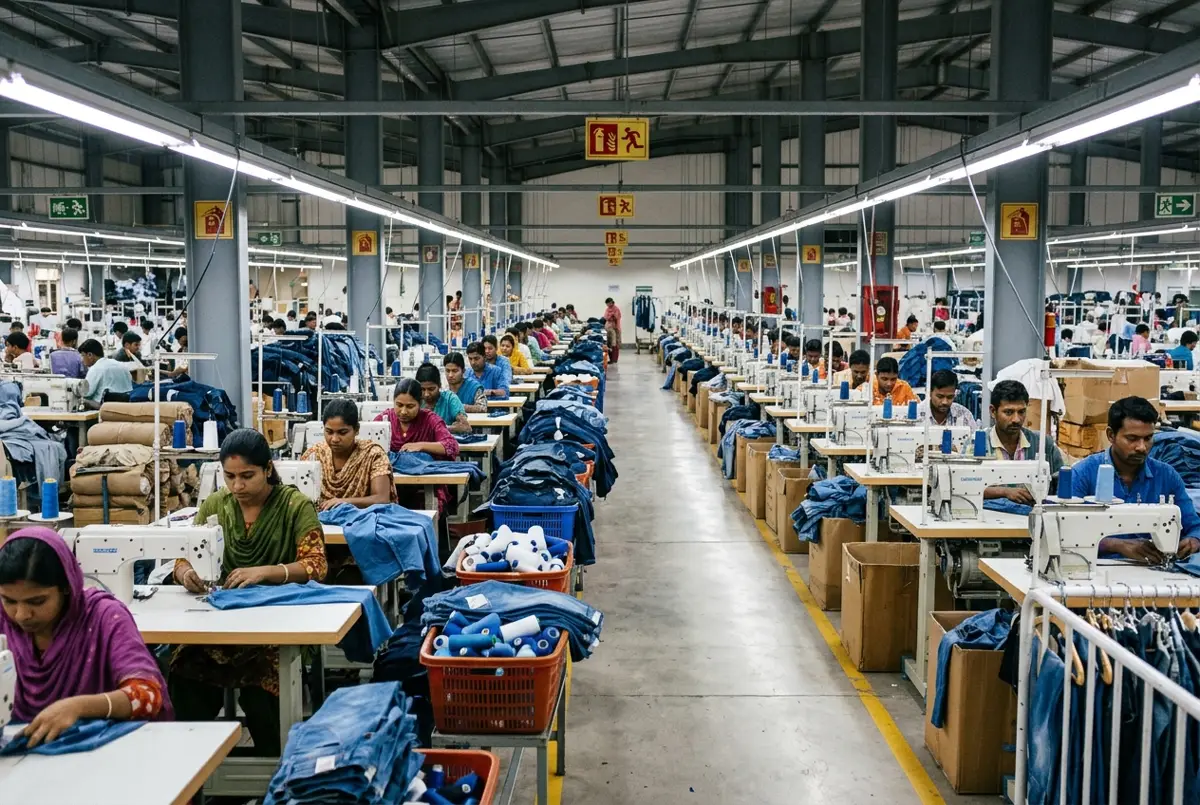
Best value at volume for cotton basics, denim and sweaters.
Garment sourcing in Bangladesh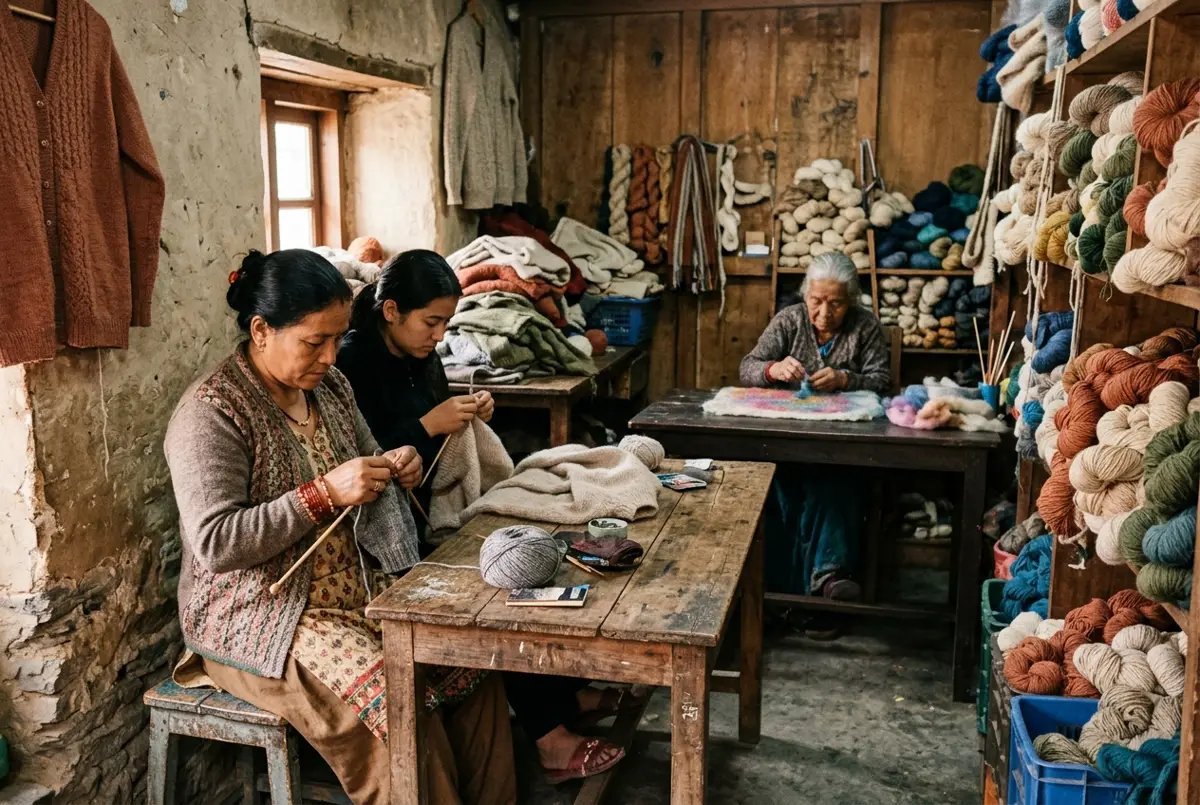
Handmade, small-batch cashmere, knitwear and felt; longer lead times.
Garment sourcing in Nepal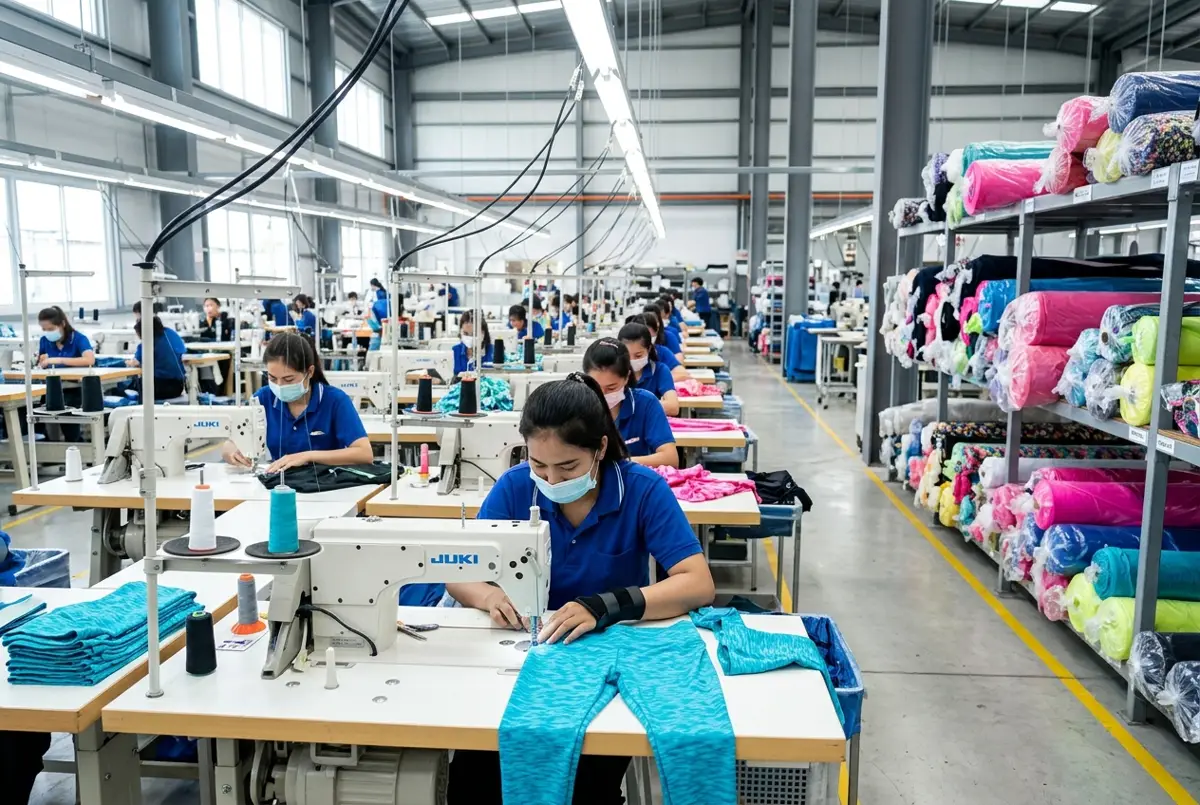
Specialist quality for activewear, swim and intimates; higher unit cost.
Garment sourcing in Thailand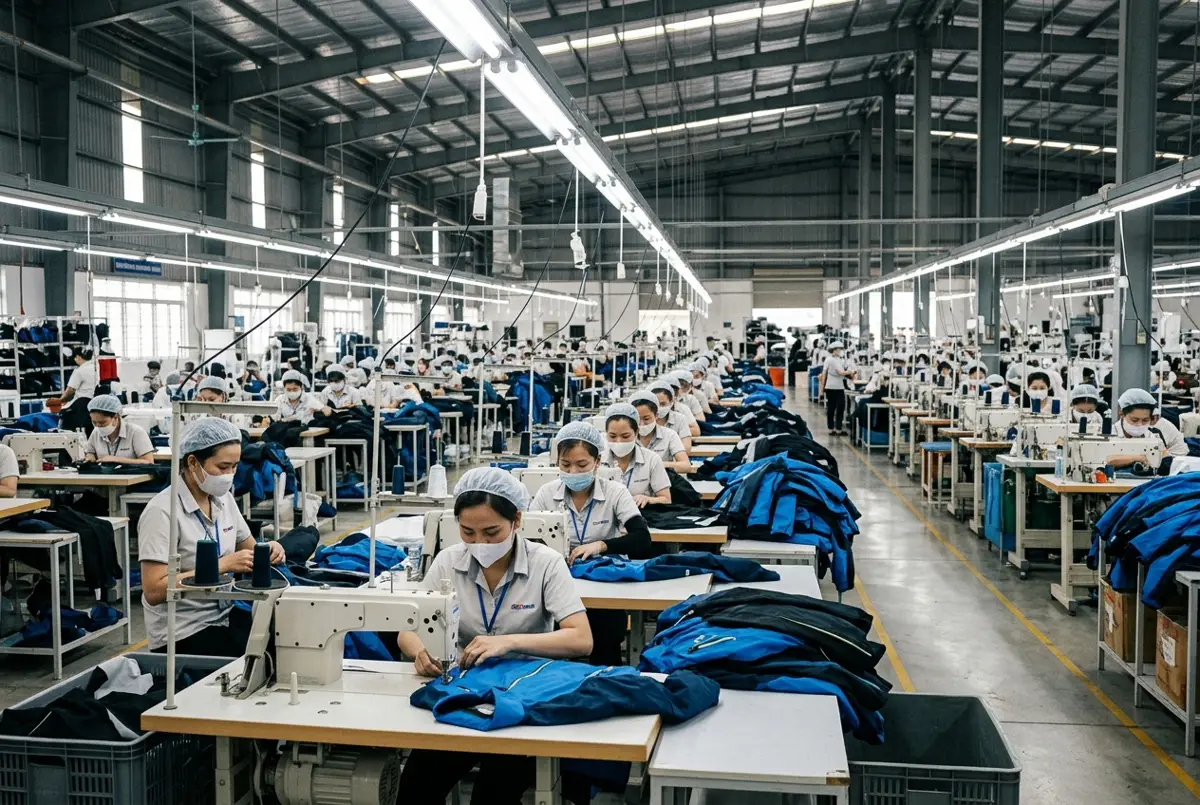
Strong for outerwear and sportswear; check fabric origin for FTA duty.
Garment sourcing in VietnamFor technical, complex and fast-developing products, often yes. For simple cotton basics, India, Bangladesh or Vietnam may cost less and avoid US tariff and traceability issues.
Check the business licence scope and visit the production site. Our team does this before we recommend any supplier.
Only with strong evidence that the cotton is not linked to Xinjiang, because of UFLPA. Many US buyers now source cotton products from other countries.
Some can, especially small-batch factories around Guangzhou using market fabrics. Large export factories need higher volumes.
Yes. Our China team handles factory verification, development follow-up and inspections.
Yes. We regularly help buyers compare and transfer programmes to India, Bangladesh, Thailand or Vietnam, using the original samples and specifications.
They are good for development and small runs. For bulk, we confirm that the same fabric quality is available in the full quantity and test it before cutting.
A deposit of around 30% with the balance before shipment is common, with letters of credit for some buyers.
Yes. Many programmes source zips, labels and packaging in China for production in Vietnam, Bangladesh or elsewhere.
Global garment sourcing enquiry
Tell us what you want to make and where you are considering. Our teams in India, Bangladesh, Nepal, China, Thailand and Vietnam will recommend the right country and factories, with no obligation.