Garments & Apparel · Denim
Denim Manufacturing and Sourcing in India
India is one of the world's largest producers of denim fabric, with major mills in Gujarat, Maharashtra and Karnataka. Many garment factories and laundries work closely with these mills, which allows buyers to develop fabric, fit and wash together.
We help denim brands and retailers source jeans, jackets, shirts, skirts and dresses from factories with in-house or partner laundries suited to their wash and sustainability standards.
Denim products
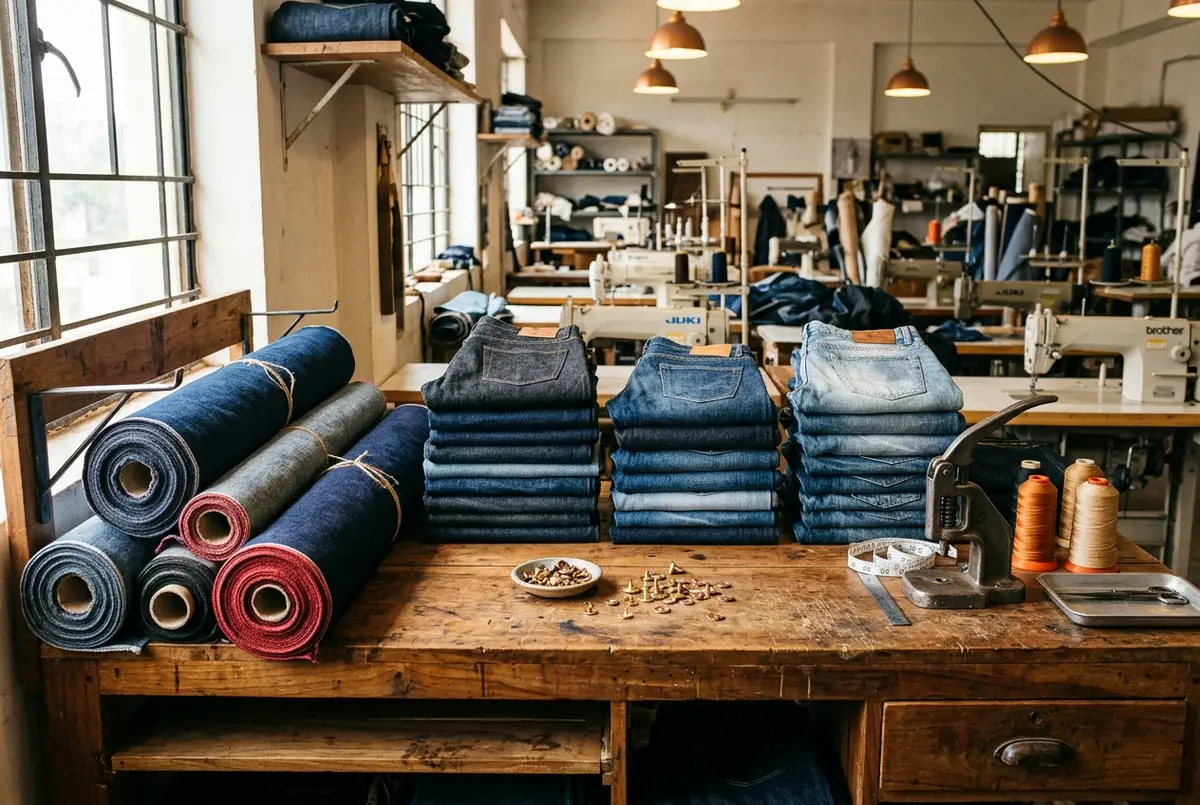
Five-pocket jeans in skinny, slim, straight, relaxed, wide-leg and bootcut fits; denim jackets and trucker jackets; shirts and overshirts; skirts, dresses, dungarees and shorts; children's denim; and denim-look knits. Accessories such as denim bags are usually made by separate suppliers.
Fabric: weight, stretch and composition
Denim is specified by weight (for example 8–10 oz for shirts, 11–14 oz for jeans, heavier for workwear and raw styles), composition (100% cotton, cotton-elastane for stretch, cotton-polyester-elastane for recovery, cotton-lyocell or hemp blends for softness and sustainability), weave (3x1 right-hand or left-hand twill, broken twill), and dye (indigo, sulphur black, overdyes). Ring-spun and open-end yarns give different textures. Selvedge denim is available in smaller volumes.
Denim regions in India
Ahmedabad in Gujarat is the largest denim fabric centre. Bengaluru has many large jeanswear factories with laundries supplying international brands. Delhi NCR, Mumbai and Kolkata also make denim garments, often for domestic and value-export markets. We match mills, factories and laundries according to your price point and wash complexity.
Washing and finishing
The wash defines most denim products: rinse, stone and enzyme washes, bleach and tints, hand sanding, whiskers, chevrons, destruction and repairs, and resin or 3D effects. Many laundries now use laser finishing and ozone treatments to reduce water and chemicals, replacing pumice stones and potassium permanganate sprays. Wash standards should be approved as physical references, with tolerances for each effect.
Fit and measurements
Denim fit is sensitive to fabric shrinkage and stretch. Patterns must allow for shrinkage after washing, which can differ by fabric lot, so shrinkage tests on each lot are essential. Key measurements include waist, hip, front and back rise, thigh, knee, leg opening and inseam. Approve size sets after wash, not before.
Trims and construction
Shanks, rivets, zips, labels, leather or jacron patches and pocketing must be specified and approved. Check bar-tacks at stress points, seam strength, felled seams, waistband construction, belt-loop attachment and button pull strength. Metal trims must meet nickel-release limits for Europe.
Sustainability in denim
Water use, chemical management and worker safety are the main concerns in denim laundries. Ask for wastewater-treatment and chemical-management evidence, such as ZDHC wastewater test results, Higg FEM self-assessments or similar audits. Organic, recycled and BCI-style cottons, and lower-impact finishing technologies, are widely available. Always verify certificates directly.
Quality inspection
Inspection covers measurements after wash, shade consistency within and between cartons, wash effect accuracy against the standard, abrasion and damage, stitching and bar-tacks, trims, labels and packing. Shade lots should be kept separate in cartons so stores receive matching pieces.
Minimums and lead times
Denim usually involves higher minimums than basic wovens, because fabric is produced in batches and washes are developed per style. Development of fabric and wash can take several weeks before bulk. We help plan a calendar that includes fabric booking, wash approval and laundry capacity.
Developing a denim range
Most denim ranges are built from a few base fabrics in different washes. Choose two or three fabrics, develop a wash palette from rinse to light vintage, and apply them across fits. This keeps minimums manageable and makes reorders reliable.
Reorders and consistency
Keep approved wash standards and fabric references for every style. Fabric lots differ slightly, so each reorder should include shrinkage tests and a fresh wash approval before bulk.
How a denim sourcing programme runs
- Brief review. We review your tech pack or reference sample, target price, quantity and timeline, and confirm what is realistic in India.
- Factory shortlist. We shortlist factories in the right cluster and verify them on site: legal entity, in-house processes, capacity and compliance.
- Sampling and costing. We manage proto, fit and size-set samples and collect costings broken down by fabric, trims, labour and finishing.
- Pre-production approval. Fabric tests, lab dips, trims and a pre-production sample are approved in writing before bulk cutting.
- Production follow-up. We track cutting, sewing and finishing against the agreed calendar and run inline quality checks.
- Final inspection and shipment. A final random inspection to your AQL, carton and label checks, then handover of documents to your forwarder.
What to include in your denim brief
- Fit and measurement chart after wash
- Fabric weight, stretch and composition
- Wash standard with physical reference
- Rivets, shanks, zips and labels
- Sustainability and chemical requirements
- Shade-lot and packing rules
- Testing requirements
- Target price, quantities and delivery date
Common mistakes when sourcing denim
- Approving size sets before wash instead of after wash.
- Skipping shrinkage tests on new fabric lots for reorders.
- Describing a wash only in words instead of with a physical standard.
- Forgetting nickel-release requirements on rivets and shanks for Europe.
- Ignoring laundry chemical and wastewater practices until a customer audit asks for them.
- Packing different shade lots together in one carton.
Other apparel categories
Garment sourcing services and guides
Garment sourcing by buyer market
Back to Garments & Apparel sourcing
Buyer questions
Is India good for denim?
Yes. It has major denim mills and experienced jeanswear factories and laundries, especially in Gujarat and Bengaluru.
Can you develop a custom wash?
Yes, through wash development with the laundry, approved against a physical standard.
What is the typical jeans fabric weight?
Usually 11–14 oz; lighter weights are used for shirts and summer styles.
How are denim shade variations managed?
By shade-lotting fabric and garments and packing each shade group separately.
Are eco-friendly denim washes available?
Yes, many laundries use laser, ozone and low-water processes; ask for evidence.
Submit your product requirements
Submit your product requirement
Share a photo, reference product or tech pack. We will identify suitable verified manufacturers and explain the next steps — no obligation.
- Phone & WhatsApp
- +91 93684 37527