Garments & Apparel · Kidswear
Kidswear Manufacturing and Sourcing in India
India is a natural source of children's clothing thanks to its strength in soft cotton knits and prints. We help kidswear brands and retailers source T-shirts, dresses, sets, sleepwear and baby clothing with the safety checks children's products require.
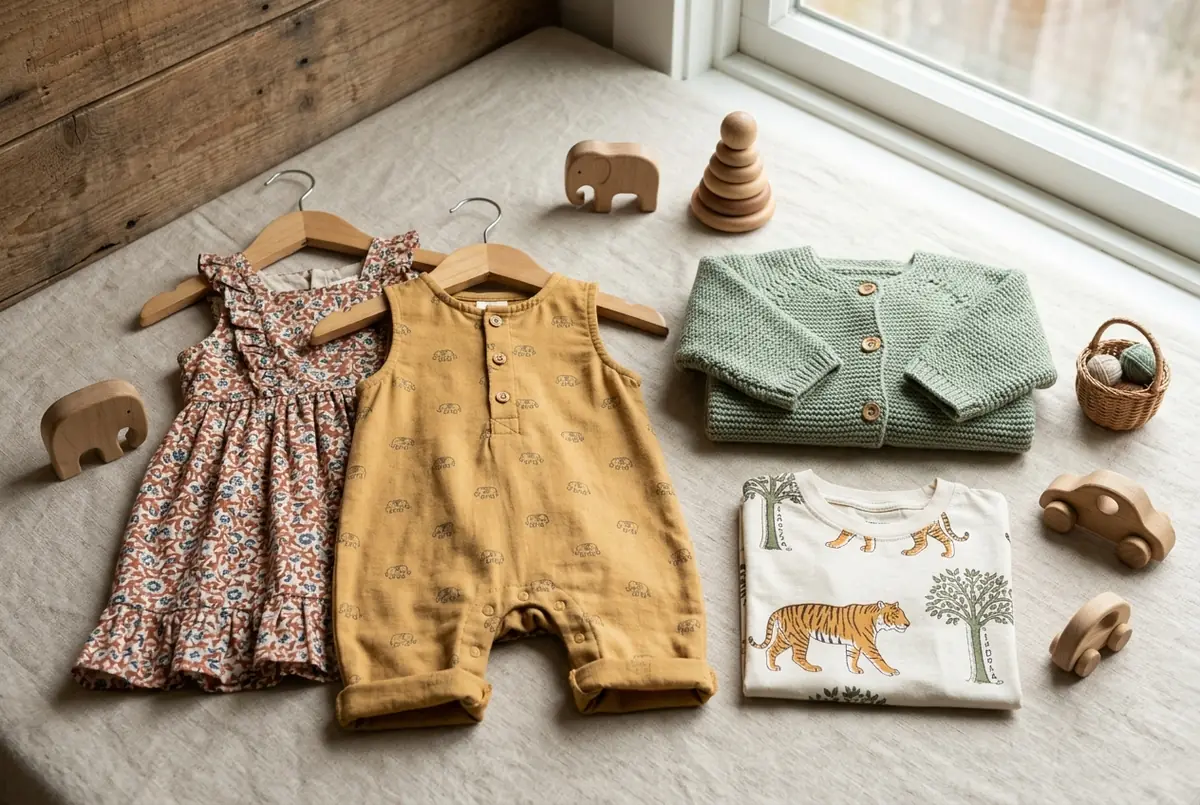
Kidswear product range
T-shirts, sweatshirts, joggers, dresses, shorts, co-ord sets, sleepwear, rompers and bodysuits for babies, and school or occasion wear. Tiruppur is the main source of cotton knit kidswear; Delhi NCR and Jaipur supply woven and printed styles.
Fabrics
Combed and organic cotton jersey, interlock and rib for knits; soft cotton poplin, voile and muslin for wovens. Many buyers choose GOTS-certified organic cotton for baby clothing; the certification must cover the producing factory.
Child safety
Children's clothing has specific safety rules. Cords and drawstrings are restricted on children's garments under European standard EN 14682 and US guidance. Small parts such as buttons and snaps need pull tests, and trims must be secure. Prints and accessories must meet lead and phthalate limits, and children's sleepwear in the US has flammability requirements.
Testing
Plan testing with recognised labs for colour-fastness (including saliva fastness for baby wear), pH, azo dyes, formaldehyde, button pull strength and, in the US, CPSIA lead and phthalates with a Children's Product Certificate prepared by the importer.
Quality inspection
Measurement checks across many small sizes, soft and secure seams, snap and button security, label placement that does not irritate skin, print adhesion, and needle-detection or broken-needle policies for baby wear.
Sourcing tips
Keep fabrics and prints consistent across a size range and use the same base fabric for matching sets. Sizes and colour ratios should be agreed early, because kidswear often has more sizes per style than adult wear.
Costing kidswear
Children's garments use less fabric than adult clothing, but they are not proportionally cheaper: sewing time, trims, safety testing and the larger number of sizes per style all add cost. Costing should be prepared per size band or as a weighted average based on your size ratio. Testing costs are significant for small orders, so grouping styles with the same fabric and trims into one test programme can reduce cost per piece. We provide a breakdown of fabric, cut-make-trim, printing, trims, labels, packaging and testing so that changes can be evaluated quickly.
Size ranges and grading
Kidswear usually spans toddler (2–4 years), kids (4–8) and older children (8–14), each with different proportions. Grading should follow your own body measurements, not scaled adult patterns. Agree size ratios early, because small sizes often sell differently from larger ones and this affects fabric consumption and costing.
Durability for active children
Children's clothes are washed often and worn hard. Reinforce knees and seat on trousers, use bar-tacks at pockets, choose fabrics with good pilling resistance and make sure prints do not crack after repeated washing. Wash-and-wear testing on samples gives a realistic picture of how a garment will perform.
Labelling and tracking
Many markets require permanent tracking information on children's products, such as manufacturer, production date and batch. Care labels should be soft and placed to avoid irritation; printed labels are often preferred. Packaging must carry suffocation warnings where polybags are used.
Licensed and character prints
Character or licensed designs need approval from the licence holder and often a separate factory audit. Confirm licence requirements before sampling, as approvals add time.
How a kidswear sourcing programme runs
- Brief review. We review your tech pack or reference sample, target price, quantity and timeline, and confirm what is realistic in India.
- Factory shortlist. We shortlist factories in the right cluster and verify them on site: legal entity, in-house processes, capacity and compliance.
- Sampling and costing. We manage proto, fit and size-set samples and collect costings broken down by fabric, trims, labour and finishing.
- Pre-production approval. Fabric tests, lab dips, trims and a pre-production sample are approved in writing before bulk cutting.
- Production follow-up. We track cutting, sewing and finishing against the agreed calendar and run inline quality checks.
- Final inspection and shipment. A final random inspection to your AQL, carton and label checks, then handover of documents to your forwarder.
What to include in your kidswear brief
- Size range and size ratio per style
- Fabric composition and weight
- Print and embroidery artwork
- Snaps, buttons and trims with pull-test needs
- Safety rules for your market (cords, small parts)
- Testing plan and lab preference
- Tracking label and care label details
- Target price, quantities and delivery date
Common mistakes when sourcing kidswear
- Scaling adult patterns down instead of using children's body measurements.
- Adding decorative cords, small trims or loose embellishments that fail safety rules.
- Testing only one size or colour when the market expects testing to reflect the product range.
- Forgetting permanent tracking labels required for children's products in some markets.
- Choosing print inks without confirming they are phthalate-free.
- Underestimating the number of sizes per style when planning fabric and costing.
Other apparel categories
Garment sourcing services and guides
Garment sourcing by buyer market
Back to Garments & Apparel sourcing
Buyer questions
Do children's clothes need special testing?
Yes. Safety rules for cords, small parts and chemicals apply, and testing is planned per market.
Is organic cotton available?
Yes, GOTS-certified organic cotton is widely available; verify the certificate scope.
Where is kidswear made in India?
Tiruppur for cotton knits, Delhi NCR and Jaipur for wovens and prints.
Can you source licensed character kidswear?
Yes, from factories approved by the licence holder; approvals add time to the calendar.
How are kidswear prices calculated across sizes?
Usually per size band or as a weighted average based on your size ratio.
Submit your product requirements
Submit your product requirement
Share a photo, reference product or tech pack. We will identify suitable verified manufacturers and explain the next steps — no obligation.
- Phone & WhatsApp
- +91 93684 37527