Garments & Apparel · Knitwear
Knitwear Manufacturing and Sourcing in India
Knitwear is India's largest garment export category. It covers two different industries: cut-and-sew knits made from circular-knitted fabric, such as T-shirts, polos, sweatshirts and leggings, and fully fashioned or flat-knit sweaters knitted panel by panel from yarn. Each needs a different kind of factory.
This page explains how knitwear is made in India and what buyers should specify. For a side-by-side comparison of knit and woven supply chains, see our knitwear and woven garment sourcing guide.
Cut-and-sew knits and flat-knit sweaters
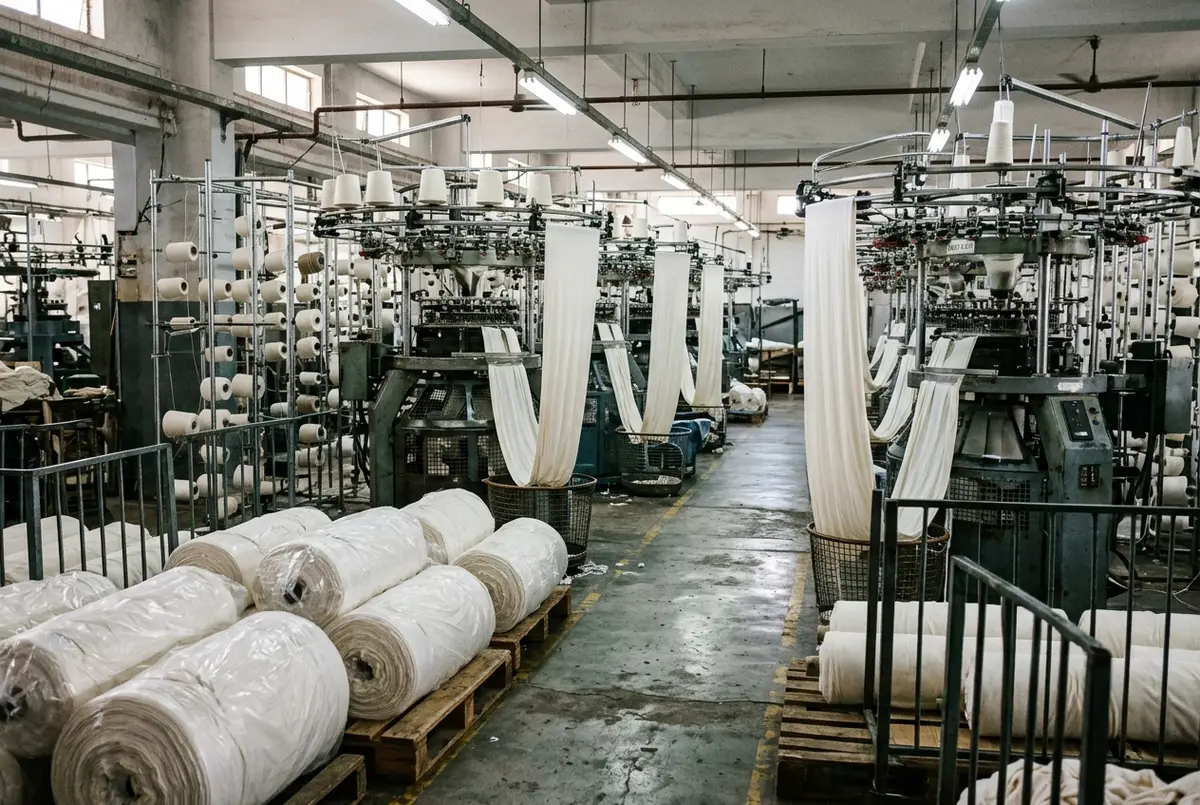
Cut-and-sew knits start with yarn knitted on circular machines into tubular or open-width fabric, which is dyed, compacted and then cut and sewn like any garment. Typical products are T-shirts, polos, henleys, sweatshirts, hoodies, joggers, leggings, nightwear and babywear.
Flat-knit sweaters are knitted on computerised flat-bed machines, often by gauge (for example 3, 7, 12 or 14 gauge), and then linked, washed and finished. Cardigans, pullovers, vests and knitted accessories fall into this group. Some factories offer both, but most specialise.
Knitting clusters in India
Tiruppur is the hub for cotton cut-and-sew knitwear, with spinning, knitting, dyeing, printing and garmenting all within a short distance. Ludhiana in Punjab is the centre for sweaters, acrylic and wool blends and winter knitwear. Kolkata has a large hosiery and innerwear industry, and Delhi NCR has fashion knit units that work with imported and blended yarns.
Fabric constructions
Single jersey for T-shirts and tops, interlock for smooth, heavier garments, 1x1 and 2x2 rib for fitted styles and trims, pique for polos, French terry and brushed fleece for sweatshirts, waffle and slub textures for fashion basics, and elastane blends for leggings and activewear. Specify the yarn count, fabric GSM, composition, compacting and any special finishes such as enzyme washing, silicone softening or peaching.
Yarns and sustainability
Combed and carded cotton, organic cotton, recycled cotton and polyester blends, modal, Tencel lyocell, bamboo viscose and merino or acrylic blends for sweaters are all available. Organic and recycled claims must be supported by GOTS, OCS or GRS certificates and transaction certificates for each shipment.
Common quality issues in knitwear
Spirality (twisting of side seams after washing) is the classic knit defect and is controlled through yarn twist, fabric compacting and correct cutting. Shrinkage, GSM variation, barre (horizontal shade bands), pilling, neck-rib recovery and print cracking are the other main risks. For sweaters, check gauge consistency, linking quality, dimensional stability after washing and pilling resistance.
Testing and inspection
We recommend fabric tests before cutting for GSM, shrinkage, spirality and colour-fastness, followed by inline inspections at the start of sewing. Final random inspection to your AQL covers measurements after a wash test where needed, workmanship, print and embroidery, labels, packing and carton marks. Pilling and bursting-strength tests are useful for fleece and sweater programmes.
Minimums and lead times
Circular-knit fabric is usually dyed in batches, so minimums are often set per colour by the dye house. Stock melange and white fabrics allow small runs. Sweater minimums depend on yarn availability; stock yarn shades make short runs possible, while custom-dyed yarn needs larger lots. Production time after approvals typically ranges from four to eight weeks depending on processes and quantity.
Costing knitwear
The fabric often accounts for half or more of a knit garment's cost, so yarn type and GSM have the largest effect on price. Printing, embroidery, garment washing, special trims and packaging add on top. We share a costing breakdown so you can compare factories on the same basis and decide where to adjust the specification.
How we help knitwear buyers
We shortlist knitters and garment factories that match your product type, verify their in-house processes, manage lab dips and fabric approvals, and coordinate fit and size-set samples. During production we monitor fabric test results, inline quality and the time-and-action calendar, and we inspect before shipment.
Choosing between knit specialists
A good knitwear programme often uses separate suppliers for basics, fleece and sweaters. Grouping styles by fabric base helps reach dye-lot minimums and keeps shades consistent. Where a range must be colour-matched across knits and sweaters, approve lab dips for both against one master standard.
Knit fabric development
New fabrics can be developed with knitters: a new slub texture, a heavier rib or a recycled blend. Development samples take two to four weeks. Always confirm the bulk fabric matches the approved development swatch for weight, hand-feel and shrinkage.
How a knitwear sourcing programme runs
- Brief review. We review your tech pack or reference sample, target price, quantity and timeline, and confirm what is realistic in India.
- Factory shortlist. We shortlist factories in the right cluster and verify them on site: legal entity, in-house processes, capacity and compliance.
- Sampling and costing. We manage proto, fit and size-set samples and collect costings broken down by fabric, trims, labour and finishing.
- Pre-production approval. Fabric tests, lab dips, trims and a pre-production sample are approved in writing before bulk cutting.
- Production follow-up. We track cutting, sewing and finishing against the agreed calendar and run inline quality checks.
- Final inspection and shipment. A final random inspection to your AQL, carton and label checks, then handover of documents to your forwarder.
What to include in your knitwear brief
- Product type: cut-and-sew or flat-knit
- Yarn count, composition and GSM or gauge
- Fabric finish and wash requirements
- Measurement chart with tolerances
- Rib, trims and labels
- Colours and lab-dip standards
- Testing requirements
- Target price, quantities per colour and delivery date
Common mistakes when sourcing knitwear
- Specifying GSM without yarn count and compacting, so the fabric looks right but twists after washing.
- Treating cut-and-sew knits and flat-knit sweaters as one sourcing category.
- Approving lab dips under one light source only, leading to shade complaints in store.
- Skipping pilling tests on brushed fleece and soft blends.
- Mixing dye lots in one carton, so stores receive mismatched pieces.
- Changing yarn supplier between sample and bulk without new approvals.
Other apparel categories
Garment sourcing services and guides
Garment sourcing by buyer market
Back to Garments & Apparel sourcing
Buyer questions
Where is knitwear made in India?
Tiruppur for cotton cut-and-sew knits, Ludhiana for sweaters and winter knitwear, Kolkata for hosiery and innerwear.
What is spirality in knitwear?
A twisting of the garment after washing, caused by fabric construction and cutting; it is controlled with compacting and testing.
Can one factory make T-shirts and sweaters?
Rarely. Cut-and-sew knits and flat-knit sweaters use different machines and skills, so they are usually sourced separately.
What GSM should a T-shirt be?
Basic tees are often 140–180 GSM; premium and heavyweight tees run 200–260 GSM.
Is organic cotton knitwear available?
Yes, widely, with GOTS certification along the chain.
Submit your product requirements
Submit your product requirement
Share a photo, reference product or tech pack. We will identify suitable verified manufacturers and explain the next steps — no obligation.
- Phone & WhatsApp
- +91 93684 37527