Canada · India sourcing and buying house
India Sourcing Agent for Canadian Importers, Retailers and Brands
Canadian importers, retailers, e-commerce brands and distributors use Sourcing India as a buyer-side sourcing agent and buying house in India. We find and verify manufacturers, manage product development and sampling, inspect production and coordinate shipment to Canada.
Canada's bilingual labelling, its own textile and product safety rules and long shipping routes to both coasts make good planning essential. This hub links to our Canada category pages.
Why Canadian buyers source from India
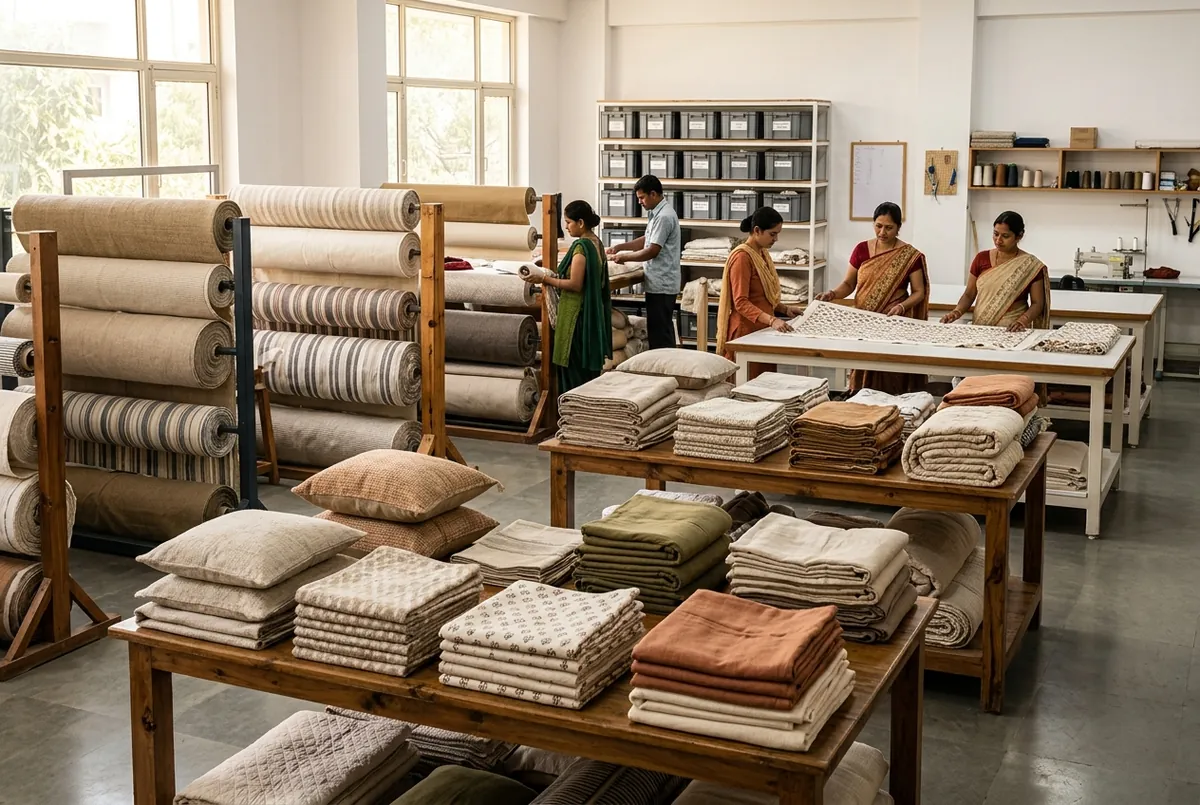
Diversification away from a single sourcing country, India's strength in cotton textiles, home furnishings and stainless steel, competitive moulded plastics, and English-language business communication. Many Canadian buyers already import from India through US intermediaries; sourcing directly gives more control over specification, labels and cost.
Categories that matter most in Canada
Garments, especially cotton knitwear, babywear and workwear; home furnishing textiles, including flannel bedding, throws and kitchen linen; stainless steel kitchenware and cutlery; and plastic household products. Secondary categories include home décor, handicrafts and rugs.
Trade position (as of 19 Nov 2026)
Canada and India do not have a free trade agreement in force. Negotiations on a Comprehensive Economic Partnership Agreement and an Early Progress Trade Agreement were paused in 2023. Indian goods enter Canada at Most-Favoured-Nation rates unless another programme applies. [PLACEHOLDER: current status of Canada–India trade talks and whether India qualifies for any Canadian preferential tariff; source: Global Affairs Canada and CBSA Customs Tariff]
Import rules and authorities
The Canada Border Services Agency (CBSA) administers customs; importers need a Business Number with an import-export account, and many use a licensed customs broker. Health Canada administers the Canada Consumer Product Safety Act and food packaging rules under the Food and Drugs Act. The Competition Bureau enforces the Textile Labelling Act and the Consumer Packaging and Labelling Act. Under CARM, importers register in the CBSA Assessment and Revenue Management portal.
Bilingual labelling
Most consumer product information must appear in English and French. Textile labels need fibre content and a dealer identity or CA number. Products sold in Quebec must also meet Quebec's French-language requirements. We check labels and packaging against your approved artwork at inspection.
Ports, air routes and transit
West-coast shipments usually go via Vancouver or Prince Rupert, then rail inland; east-coast shipments via Montreal or Halifax. Most sailings from Nhava Sheva, Mundra or Chennai tranship at hubs such as Colombo, Singapore or in Europe. Air cargo from Delhi and Mumbai reaches Toronto and Vancouver, usually via one connection. [PLACEHOLDER: typical door-to-port transit times India–Vancouver and India–Montreal; source: carrier schedules]
Incoterms and payment
Canadian buyers usually buy FOB an Indian port and appoint their own forwarder, or CIF/CFR for smaller importers. Payment is commonly a deposit with the balance against a passed final inspection or copy documents; letters of credit are used for some first orders.
Buying calendar
Autumn/winter ranges (outerwear, flannel bedding, throws) are developed early in the year for summer shipping. Back-to-school and Thanksgiving promotions, Black Friday and Christmas drive Q3 and Q4 shipments. Spring/summer ranges are developed in the second half of the year.
Time zones and working hours
IST is 10.5 hours ahead of Eastern Time in winter (9.5 in summer) and 13.5 hours ahead of Pacific Time in winter (12.5 in summer). Early-morning calls in Toronto overlap with late afternoon in India; we schedule weekly reviews to suit your time zone.
Units and spelling
We work in metric units with Canadian bed and garment sizes, and write specifications and reports in Canadian English, with French text supplied for labels and packaging.
Canada category pages
Buyer guides
Other markets
Canadian buyer questions
Is there a free trade agreement between Canada and India?
Not in force as of 19 November 2026. Check Global Affairs Canada for current status.
Do I need a customs broker to import from India?
It is not mandatory but most commercial importers use one, and you need a Business Number with an import-export account.
Do labels need to be bilingual?
Yes, most consumer product information must be in English and French.
Which Canadian ports do shipments from India use?
Vancouver and Prince Rupert in the west, Montreal and Halifax in the east.
Can you consolidate several Indian suppliers into one container?
Yes, we coordinate consolidation in India for mixed containers.
What payment terms are common?
A deposit with balance against a passed inspection or documents; letters of credit for some first orders.
How do you handle time-zone differences?
We schedule calls in your morning, India's afternoon, and send written daily or weekly reports.
Submit your product requirements
Send your Canada sourcing requirement
Share a photo, reference product or tech pack. We will identify suitable verified manufacturers and explain the next steps — no obligation.
- Phone & WhatsApp
- +91 93684 37527