Sourcing India
Garment, home & houseware sourcing from India
About
Global Garment SourcingGarments & Apparel HubGarment Sourcing OverviewIndia Garment SourcingBangladesh Garment SourcingNepal Garment SourcingChina Garment SourcingThailand Garment SourcingVietnam Garment SourcingApparel ManufacturersPrivate Label ClothingFabric & Textile SourcingSustainable ApparelQuality Control & Factory AuditsCountry ComparisonGarment Sourcing Enquiry
What We SourceServicesGlobal MarketsQuality ControlSourcing Stress TestInsightsContactStart a Sourcing Project →

Carpets & Rugs · Buyer-side sourcing in India

Carpet & Rug Manufacturers in India

India is one of the world's largest producers of handmade carpets and rugs. The Bhadohi–Mirzapur belt in Uttar Pradesh is the centre for hand-knotted and hand-tufted rugs, Panipat for flatweaves, dhurries and recycled-fibre rugs, and Jaipur for hand-knotted, block-printed and dhurrie ranges.

Sourcing India works on the buyer's side. We match your construction, fibre and price point to the right weaving cluster, develop samples, inspect production and coordinate export — for retailers, importers, interior brands and e-commerce sellers.

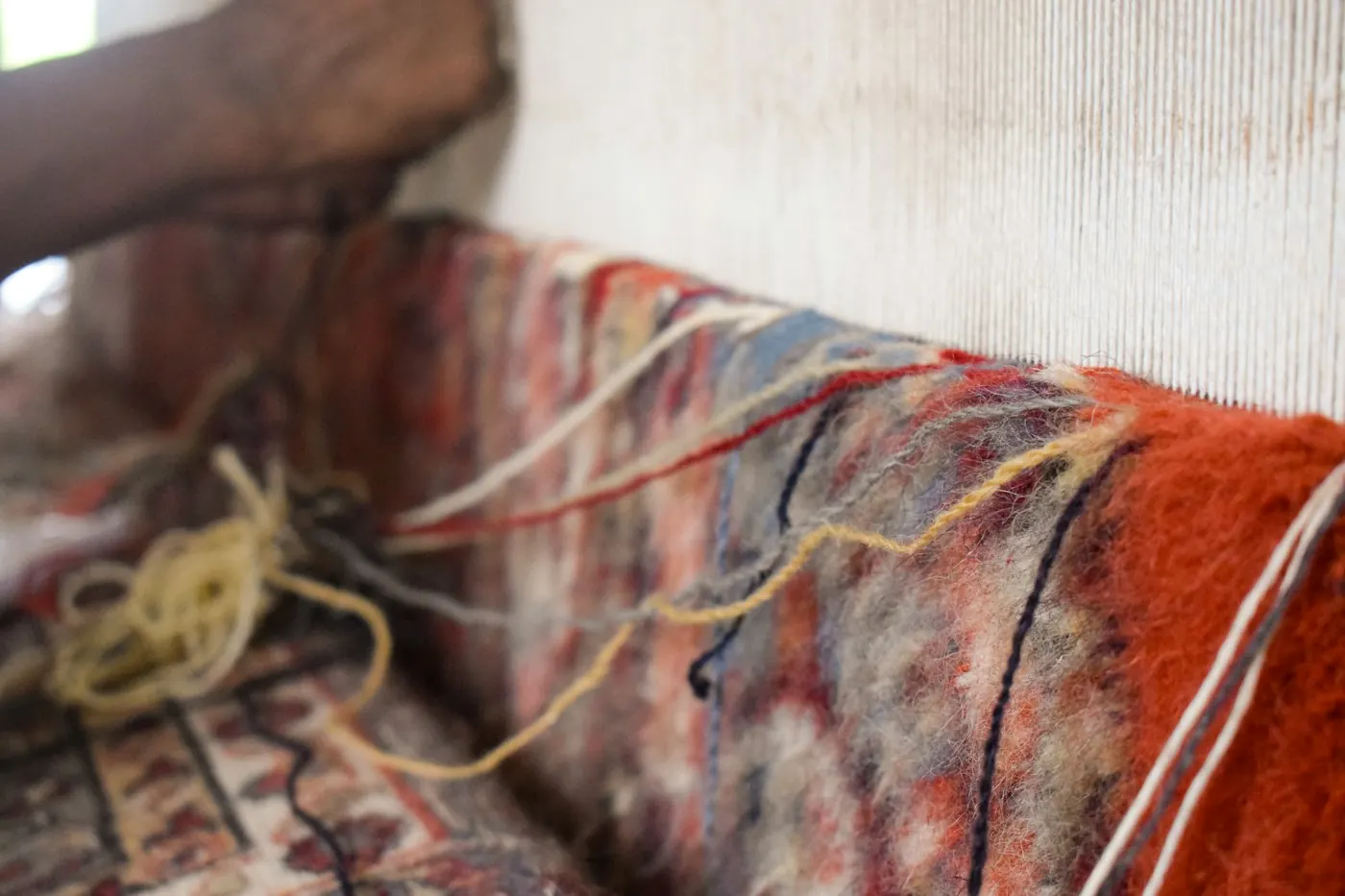
Weaver's hands working on a colourful handmade rug on a loom in India

Rug constructions we source

Hand-knotted carpets

Each knot is tied by hand around the warp, so the pile is locked into the foundation. Hand-knotted rugs are the most durable and the slowest to make; knot count, yarn quality and finishing drive price and lead time.

  • Wool, wool-silk, viscose and bamboo-silk blends
  • Knot density quoted per square inch or per square metre
  • Custom sizes, colours and designs from a CAD or drawing
Hand-knotted carpets guide →

Hand-tufted rugs

Yarn is punched into a cotton primary cloth with a tufting gun, then latex and a secondary backing are applied. Tufting allows bold, contemporary designs and carved high-low effects at a lower price and shorter lead time than knotting.

  • Cut pile, loop pile, cut-and-loop and carved finishes
  • Latex quality and backing adhesion are key QC points
  • Popular for retail, hospitality and contract programmes

Flatweave rugs & dhurries

Flatweaves have no pile — the design is woven into the structure on pit or frame looms. They are light, often reversible and easy to ship, which makes them a strong choice for e-commerce and casual living ranges.

  • Cotton, wool, jute and recycled-fibre dhurries
  • Kilim, herringbone, striped and chindi constructions
  • Panipat, Jaipur and Bhadohi production
Flatweave rugs & dhurries guide →

Wool rugs

Wool remains the benchmark rug fibre: resilient, naturally soil-resistant and good at taking dye. Indian rugs commonly use Indian wool, New Zealand wool or blends, spun by hand or machine depending on the look and budget.

  • Handspun for character, machine-spun for uniformity
  • Shedding and colour fastness checked on samples
  • Knotted, tufted and flatweave constructions
Wool rugs guide →

Jute & natural-fibre rugs

Jute, sisal-look and jute-cotton blends give a natural, textured look at accessible price points. Natural fibres vary in shade and need careful moisture control during packing to avoid odour or mould in transit.

  • Braided, handwoven, chunky loop and boucle styles
  • Jute-cotton and jute-wool blends for softness
  • Natural colour variation agreed at sampling
Jute & natural-fibre rugs guide →

Custom & bespoke rugs

Handmade production allows custom sizes, shapes and colourways for interior designers, hotels and brands. We translate your drawing, Pantone or yarn references into a costed specification, then approve a strike-off before the full piece is woven.

  • Custom sizes, rounds, runners and irregular shapes
  • Pom-pom colour cards and strike-offs before bulk
  • Contract and hospitality specifications

Rug specification guide: what to define before you request a quote

Most rug problems — shedding, curling, colour bleeding, a smell on unpacking — trace back to a specification that was never written down. These are the parameters we fix with the factory before sampling.

Construction
Hand-knotted, hand-tufted, handloom, flatweave or braided. Construction determines durability, price and lead time more than any other choice.
Pile height
Measured in millimetres from the backing to the tip of the pile. Taller piles feel softer but crush and shed more; low piles suit high-traffic areas and doors.
Density / pile weight
For knotted rugs, knots per square inch or metre; for tufted rugs, pile weight in g/m² or oz/sq ft. Density is the clearest indicator of quality at a given price.
Fibre & yarn
Wool grade and origin, wool-viscose ratio, cotton count or jute ply. Ask for the yarn to be named in the spec — not just 'wool'.
Backing
Tufted rugs need a secondary backing (usually cotton canvas) bonded with latex; poor latex causes odour and delamination. Knotted and flatweave rugs have no glued backing.
Colour fastness
Rugs should be tested for colour fastness to rubbing (crocking), water and light. Deep reds, indigos and blacks need particular attention.
Shedding
All new wool rugs shed loose fibre at first; excessive shedding signals short-staple wool or poor finishing. We assess it on the approved sample.
Finishing
Washing, shearing, binding and fringing. Washing affects softness and lustre; binding and fringe quality decide how the edges hold up.
Size tolerance
Handmade rugs are never mathematically exact. Agree an acceptable tolerance on length, width and squareness before production.
Packing
Rolled with the pile inward, poly-wrapped with moisture control, labelled and cartoned or bale-packed to the buyer's spec and channel.
Where Indian carpets and rugs are made

Bhadohi–MirzapurUttar PradeshIndia's main carpet belt. Hand-knotted and hand-tufted wool and blended rugs, plus durries and handloom rugs. A dense network of exporters, weaving contractors, dyers and finishers.
PanipatHaryanaFlatweaves, dhurries, chindi and recycled-fibre rugs, bath mats and handloom rugs, alongside home textiles such as throws and cushions.JaipurRajasthanHand-knotted rugs, cotton dhurries and block-printed rugs, with strong design and colour capability.
Agra & other centresUttar Pradesh and beyondAgra has a long hand-knotting tradition; wool spinning and supply also run through Rajasthan. We use these selectively where a product needs it.

How we source carpets and rugs

01

Brief & specification

Construction, fibre, pile, size, colours and target price become a written spec — the document every sample is judged against.

02

Cluster & factory matching

We shortlist manufacturers by construction, capacity and compliance level, and verify them before any sample is paid for.

03

Strike-off & sampling

Pom-pom colour approval, a strike-off or corner sample, then a full sample checked against the spec.

04

Production follow-up

Loom progress, yarn dyeing and finishing are followed and inspected during production — not just at the end.

05

Final inspection

AQL-based inspection on size, density, colour, finishing, labels and packing before goods leave the factory.

06

Export coordination

Packing list, documentation and freight coordination to your port or warehouse.

Carpet quality inspection: what we check

Dimensions & squareness
Length, width and diagonal measurements against the agreed tolerance.
Density & pile height
Knot count or pile weight and pile height compared with the approved sample.
Colour
Shade against the approved pom-poms and sample under controlled light; abrash only where intended.
Colour fastness
Rubbing and wet tests on deep shades; lab reports where the buyer requires them.
Backing & latex
Adhesion, coverage, stiffness and odour on tufted rugs.
Finishing
Shearing, binding, fringes, edges, labels and the absence of loose yarn or stains.
Packing
Moisture control, roll direction, labelling, carton marks and quantity per bale or carton.

Private label & OEM rug programmes

Most rugs we source are made to the buyer's own design under the buyer's brand. We protect your designs by working on a written-spec basis, approve every colourway before bulk and coordinate branded labels, swing tags, barcodes and retail packaging.

Exclusive designs from your CAD, sketch or referenceWoven labels, law labels, swing tags and barcodesRetail-ready or e-commerce packagingRepeat production matched to the golden sample

Buying Indian rugs for the USA, UK and Europe

Requirements below are practical buying notes, not legal advice — final compliance responsibility sits with the importer, and we confirm the applicable test or document route for each product.

USA

  • Rugs sold in the US must meet the federal flammability standards for carpets and rugs (16 CFR 1630 for large rugs, 16 CFR 1631 for small rugs). We arrange testing at an accredited lab on the approved construction.
  • Fibre content and country-of-origin labelling follow FTC textile rules; we confirm label artwork at sampling.
  • Programmes are usually sized in feet (5×8, 8×10, 9×12, runners 2.5×8); confirm size tolerance in the spec.
Sourcing from India for USA buyers →

UK

  • UK ranges are typically specified in centimetres (e.g. 120×170, 160×230, 200×290 cm) with fibre-content labelling.
  • Retailers commonly ask for anti-slip guidance or underlay recommendations for flatweaves on hard floors.
  • We document dye and chemical information so your compliance team can assess it against UK REACH.
Sourcing from India for UK buyers →

Germany

  • Buyers frequently request OEKO-TEX® or comparable test evidence and azo-dye compliance under EU REACH Annex XVII; we verify certificates directly against the issuing body.
  • Large German importers apply supply-chain due-diligence expectations (LkSG) to suppliers — we collect the factory and sub-contractor information they need.
Sourcing from India for Germany buyers →

France

  • Product documentation and labelling in French are expected for retail; we prepare label and care information at sampling.
  • Decorative and natural-fibre rugs are popular — we brief factories on colour variation tolerances for jute and handspun wool so expectations are clear.
Sourcing from India for France buyers →

Netherlands

  • Many programmes land in Rotterdam for onward EU distribution, so we plan carton marks and pallet configuration for the importer's warehouse.
  • Natural-fibre and recycled-material ranges often need traceable material documentation; we gather it from the mill.
Sourcing from India for Netherlands buyers →

Sweden

  • Nordic buyers often favour wool, jute and undyed or low-impact dyed palettes; we source the fibre and dye route accordingly.
  • Chemical restriction and sustainability questionnaires are common — we complete them with factory-verified answers only.
Sourcing from India for Sweden buyers →

Finland

  • Finnish interiors buyers commonly specify cotton and wool flatweaves and washable rugs; we test wash shrinkage and colour fastness on samples.
  • Shipments usually route via a European transhipment port; we plan packing for longer transit and humidity changes.
Sourcing from India for Finland buyers →

Materials and production methods in India

Constructions

Hand-knotted, hand-tufted, handloom, flatweave and machine-made rugs.

Fibres

New Zealand and Indian wool, cotton, jute, viscose, bamboo silk and recycled PET.

Finishes

Washing, shearing, carving, high-low pile and distressed effects.

Bhadohi and Mirzapur in Uttar Pradesh are India's main carpet belt, Panipat specialises in flatweaves and recycled rugs, and Jaipur in hand-knotted and designer rugs. Production covers yarn dyeing, weaving or tufting, washing, finishing and binding.

Quality control and inspection for rugs and carpets

  • Size and squareness
  • Knot density or tufting density
  • Pile height and weight
  • Colour against poms
  • Backing adhesion for tufted rugs
  • Shedding and colour bleeding

International compliance and export

Labelling

Fibre composition labels; some markets need origin and care labels.

Flammability

Contract and hospitality uses may require fire tests.

Ethical production

Buyers often ask for labour-monitoring programmes in hand-weaving supply chains.

Requirements change and depend on the product and destination, so confirm them with your compliance adviser or customs broker.

Sourcing notes for importers, retailers and brands

Approve colours with physical yarn poms and washed strike-offs, not screen images.

Hand-knotted rugs take longer; mixing constructions in a range helps meet delivery windows.

More buyer questions about rugs and carpets

Where are Indian carpets made?

Bhadohi, Mirzapur, Panipat and Jaipur.

What is the most affordable construction?

Machine-made and flatweave rugs are usually most affordable; hand-knotted are the most expensive.

Can rugs be custom-sized?

Yes, especially hand-tufted and hand-knotted rugs.

Buyer questions

Where are carpets made in India?

The Bhadohi–Mirzapur belt in Uttar Pradesh is the main centre for hand-knotted and hand-tufted rugs. Panipat in Haryana specialises in flatweaves, dhurries and recycled-fibre rugs, and Jaipur in Rajasthan in hand-knotted rugs, dhurries and printed rugs.

What is the difference between hand-knotted and hand-tufted rugs?

In a hand-knotted rug every knot is tied around the warp threads, so the pile is part of the structure and the rug lasts for decades. A hand-tufted rug is made by punching yarn into a backing cloth and fixing it with latex and a secondary backing; it is faster and less expensive to make but less durable.

Can you source custom-size rugs and private label designs?

Yes. Handmade construction allows custom sizes, shapes and colours. We work from your drawing, CAD or reference, approve a strike-off and colour pom-poms, and produce under your own brand with your labels and packaging.

What is the minimum order for rugs from India?

It depends on construction. Handmade rugs can often be produced in small quantities per design, while custom-dyed colours, special sizes and tufted programmes have practical minimums set by dyeing and setup. We confirm minimums with the factory for your specific spec.

How do you control rug quality before shipment?

We inspect during production and before shipment against the approved sample: dimensions, density and pile height, colour, colour fastness, backing adhesion, finishing, labels and packing. Lab testing is arranged where the destination market or the buyer requires it.

Do Indian rugs meet US flammability requirements?

Rugs sold in the US must meet 16 CFR 1630 or 1631. Compliance depends on the specific construction and fibre, so we arrange testing of the approved construction at an accredited laboratory rather than assuming it passes.

Submit your product requirements

Request a carpets & rugs sourcing consultation

Share a photo, reference product or tech pack. We will identify suitable verified manufacturers and explain the next steps — no obligation.

Phone & WhatsApp
+91 93684 37527

Up to 5 files (JPG, PNG, WEBP or PDF), 10 MB each. Files are stored privately.

Required: Name, Email and Product. We reply within one working day.