Garments & Apparel · Womenswear
Womenswear Manufacturing and Sourcing in India
India is known for womenswear with prints, embroidery and hand work, as well as clean everyday basics. We help fashion brands, boutiques and retailers develop dresses, tops, blouses, skirts, co-ord sets and occasionwear with Indian factories.
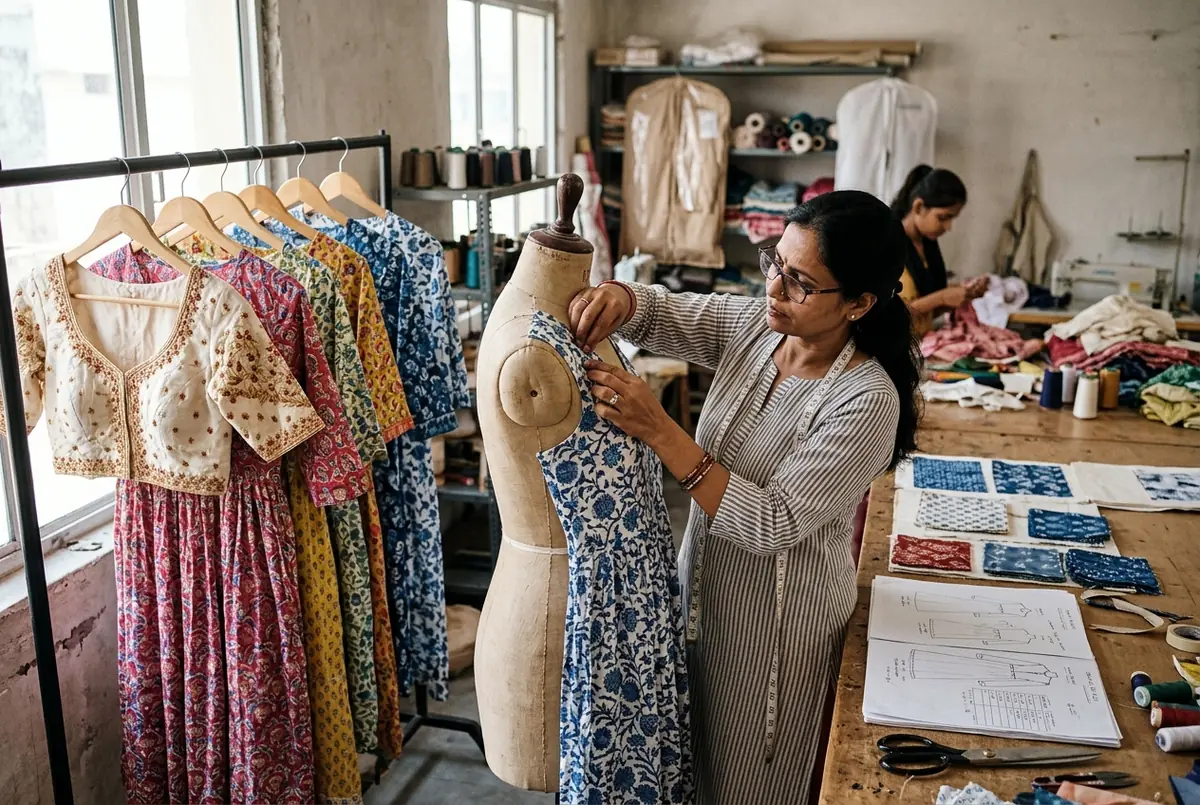
Womenswear product range
Dresses, tops, blouses, shirts, skirts, trousers, co-ord sets, kaftans, resortwear and occasionwear. Delhi NCR and Jaipur are strong in fashion and printed womenswear, Bengaluru in wovens, and Tiruppur in knitted basics and loungewear.
Fabrics, prints and embellishment
Cotton voile, cambric, mulmul, poplin and linen; viscose, rayon and modal crepes and twills; georgette and chiffon; and blends. Prints can be screen, rotary, digital or hand block. Embroidery, smocking, lace insertion, tiers, ruffles and beading are common Indian strengths, but each adds processes and inspection points.
Design development and sampling
Womenswear moves quickly, so sampling needs tight approvals. Approve print strike-offs and embroidery stitch-outs before bulk fabric, then fit on the production fabric. Keep reference samples for hand work, since small variations are expected.
Quality points
Print registration and colour, embroidery density and placement, seam puckering on lightweight fabrics, hem evenness, lining fit, zip and closure quality, and shrinkage after washing, particularly for viscose. Loose threads and fabric snags are common defects on delicate fabrics.
Compliance and sustainability
Fibre-composition and care labels per market, REACH and azo-dye restrictions, and social compliance, including mapping of any home-based embroidery work. Certified viscose, organic cotton and recycled fibres need valid certificates.
Sourcing tips
Group styles by fabric base and print to reach mill minimums, and plan colour stories early. For fast-moving collections, agree a calendar with fixed approval dates so production slots are not lost.
Sustainable womenswear options
Indian mills offer LENZING ECOVERO and other certified viscose, organic and recycled cotton, linen and Tencel lyocell blends, as well as low-impact digital printing that uses less water than conventional printing. Natural and azo-free dyes are available from specialist dye houses. Every sustainability claim should be supported by a valid certificate covering the producing site, and transaction certificates where the standard requires them. For brands building a responsible womenswear range, we recommend starting with one or two certified base fabrics and building prints and colours on top, which keeps both minimums and verification manageable.
Fit across womenswear categories
Womenswear fit varies more than menswear: a fitted shirt, a bias-cut slip dress and a relaxed kaftan each need different pattern skills. Share your size chart, fit model measurements and preferred ease, and approve fits on the production fabric, because a voile and a crepe of the same pattern will hang differently. Petite, tall and plus-size ranges should have their own grading rules, not simple scaling.
Linings, closures and finishing
Many dresses and skirts need linings or slips, invisible zips, hook-and-eye or button closures and narrow rolled hems. Specify lining fabric, how it is attached, and hem finishes. These details affect both comfort and cost, and are common sources of quality complaints if left open.
Working with hand-crafted elements
Hand embroidery, block printing and crochet add value but bring natural variation and longer timelines. We agree an approved reference sample with tolerance notes, book craft capacity early, and map any subcontracted hand work for compliance.
Delivery calendars for fashion collections
Womenswear collections often launch in drops. Agree a time-and-action calendar that includes print strike-offs, embroidery stitch-outs, fit rounds and testing, with fixed approval dates. Missing an approval date usually costs more time in production than it saved in design.
How a womenswear sourcing programme runs
- Brief review. We review your tech pack or reference sample, target price, quantity and timeline, and confirm what is realistic in India.
- Factory shortlist. We shortlist factories in the right cluster and verify them on site: legal entity, in-house processes, capacity and compliance.
- Sampling and costing. We manage proto, fit and size-set samples and collect costings broken down by fabric, trims, labour and finishing.
- Pre-production approval. Fabric tests, lab dips, trims and a pre-production sample are approved in writing before bulk cutting.
- Production follow-up. We track cutting, sewing and finishing against the agreed calendar and run inline quality checks.
- Final inspection and shipment. A final random inspection to your AQL, carton and label checks, then handover of documents to your forwarder.
What to include in your womenswear brief
- Tech pack with measurements, ease and tolerances
- Print artwork with repeat size and colourways
- Embroidery or embellishment placement and density
- Fabric base, weight and composition
- Lining, zip and closure details
- Size range, including petite or plus if needed
- Target price, quantities and launch date
- Market for labelling and chemical compliance
Common mistakes when sourcing womenswear
- Approving prints on paper or screen rather than on the actual base fabric, where colours often look different.
- Not agreeing tolerances for hand embroidery, so natural variation is later treated as a defect.
- Using one pattern for several fabrics with very different drape, such as cotton voile and viscose crepe.
- Ignoring viscose shrinkage until after bulk, instead of pre-washing or adjusting patterns.
- Leaving lining and zip choices open, which causes comfort and quality complaints.
- Missing approval dates in a drop-based calendar and losing booked production slots.
Other apparel categories
Garment sourcing services and guides
Garment sourcing by buyer market
Back to Garments & Apparel sourcing
Buyer questions
Is India good for printed dresses?
Yes, especially cotton and viscose prints, including hand block printing in Jaipur.
Can embroidered pieces be made in volume?
Yes, with machine embroidery for volume and hand work for premium styles, planned in advance.
Do viscose garments shrink?
They can; shrinkage testing and pre-washing are agreed before bulk.
Submit your product requirements
Submit your product requirement
Share a photo, reference product or tech pack. We will identify suitable verified manufacturers and explain the next steps — no obligation.
- Phone & WhatsApp
- +91 93684 37527