Garments & Apparel · T-Shirts & Polos
T-Shirt and Polo Shirt Manufacturing in India
T-shirts and polo shirts are the backbone of many apparel ranges, from fashion basics and streetwear to corporate merchandise. India, and Tiruppur in particular, is one of the world's main sources of cotton T-shirts and polos, with spinning, knitting, dyeing, printing and garmenting concentrated in one region.
We help brands, retailers, merchandise companies and print-on-demand businesses source tees and polos with consistent fabric, fit and colour.
Products
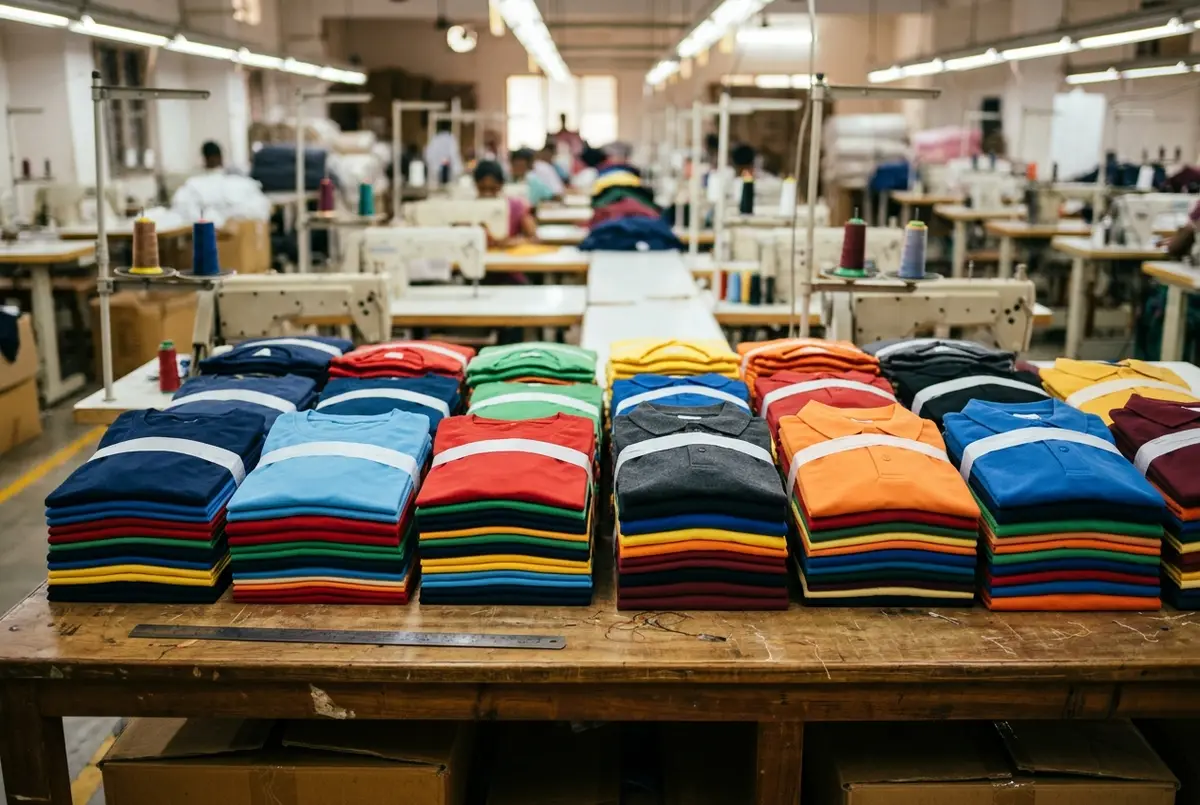
Crew-neck and V-neck tees, longline and oversized tees, heavyweight boxy tees, long-sleeve tees, ringer and raglan tees, pocket tees, tank tops, pique and jersey polos, long-sleeve polos, tipped and jacquard-collar polos, rugby shirts, and children's tees and polos. Blank tees for printing and decorated tees are both possible.
Fabric specification
The key specifications are composition (combed cotton, organic cotton, cotton-polyester, cotton-modal, recycled blends), yarn count (for example 24s, 30s or 40s single), GSM, knit type (single jersey, pique, interlock, slub), and finishing (bio-wash, silicone, compacting). Premium tees often use combed, compacted 30s yarn in 160–200 GSM; heavyweight streetwear tees use 220–260 GSM; polos are usually 200–240 GSM pique.
Why Tiruppur
Tiruppur's cluster allows fast development, competitive pricing for cotton basics and many factories with export experience and audits. Most units specialise in either fabric processing or garmenting, and they work together closely. For premium or heavyweight streetwear tees, a smaller set of factories have the right knitting and finishing set-up.
Construction details
Neck rib type, width and recovery; taped shoulder seams and back-neck tape; twin-needle or coverstitch hems; side seams versus tubular bodies; and label type (sewn, printed tagless or woven). For polos, collar and cuff quality, placket construction, button type and the number of buttons matter. Specify embroidery position for corporate polos.
Printing and decoration
Screen printing (plastisol and water-based), discharge printing, DTG (direct-to-garment), DTF transfers, puff and high-density prints, and embroidery are all available. Water-based and discharge inks give a softer feel on cotton. Approve strike-offs and check wash durability of prints.
Common quality problems
Spirality after washing, neck rib that loses shape, shrinkage, GSM below specification, shade variation between dye lots, barre, print cracking or fading, and uneven hems. Most are prevented by fabric tests before cutting and inline checks.
Testing
Dimensional stability, spirality, GSM, colour-fastness to washing, rubbing and perspiration, pilling for blends and print durability after washes. Organic cotton tees need GOTS or OCS certificates with transaction certificates.
Minimums, timelines and cost
Basic tees in stock fabric colours can be produced in moderate quantities per colour; custom colours depend on dye-house minimums. Production after approvals is often three to six weeks. Fabric (yarn and GSM), print or embroidery and packaging drive cost.
How we help
We shortlist tee and polo factories by quality level, specify and test fabrics, approve fit and prints, and inspect bulk production, including wash-test checks on spirality and shrinkage.
Sustainable T-shirt programmes
Organic cotton, recycled cotton and recycled polyester blends are widely available in Tiruppur, along with certified dye houses and effluent treatment. For tees sold with sustainability claims, check GOTS, OCS or GRS certificates for each stage and request transaction certificates per shipment. Heavier, better-made tees that last longer are often the most credible sustainability story.
Blanks versus finished programmes
Some buyers order blank tees for their own printing; others order fully decorated and packed products. Blank programmes focus on fabric, fit and shade consistency; finished programmes add artwork, decoration quality and retail packaging. We set up checks to match.
Corporate and merchandise polos
Corporate polos need colour consistency over repeat orders, clean embroidery and durable collars. Keep master colour standards and logo specifications on file with the factory.
How a t-shirts & polos sourcing programme runs
- Brief review. We review your tech pack or reference sample, target price, quantity and timeline, and confirm what is realistic in India.
- Factory shortlist. We shortlist factories in the right cluster and verify them on site: legal entity, in-house processes, capacity and compliance.
- Sampling and costing. We manage proto, fit and size-set samples and collect costings broken down by fabric, trims, labour and finishing.
- Pre-production approval. Fabric tests, lab dips, trims and a pre-production sample are approved in writing before bulk cutting.
- Production follow-up. We track cutting, sewing and finishing against the agreed calendar and run inline quality checks.
- Final inspection and shipment. A final random inspection to your AQL, carton and label checks, then handover of documents to your forwarder.
What to include in your t-shirts & polos brief
- Style, neck and sleeve details
- Yarn count, composition and GSM
- Finish and wash requirements
- Measurement chart with tolerances
- Print or embroidery artwork
- Labels and packaging
- Testing requirements
- Target price, quantities per colour and delivery date
Common mistakes when sourcing t-shirts & polos
- Specifying GSM only and receiving a different yarn quality.
- Skipping spirality tests, leading to twisted side seams after washing.
- Ignoring neck rib recovery, so necklines lose shape quickly.
- Approving prints without wash-durability checks.
- Mixing dye lots of the same colour in one delivery.
- Not keeping master colour standards for corporate reorders.
Other apparel categories
Garment sourcing services and guides
Garment sourcing by buyer market
Back to Garments & Apparel sourcing
Buyer questions
What GSM is a good quality T-shirt?
About 160–200 GSM for premium everyday tees; 220–260 GSM for heavyweight styles.
Can you source blank tees for printing?
Yes, in stock or custom colours.
Where are T-shirts made in India?
Mostly in Tiruppur, Tamil Nadu.
How do you prevent T-shirts twisting?
By testing and controlling spirality through yarn, compacting and cutting.
Are organic cotton tees available?
Yes, widely, with GOTS or OCS certification.
Submit your product requirements
Submit your product requirement
Share a photo, reference product or tech pack. We will identify suitable verified manufacturers and explain the next steps — no obligation.
- Phone & WhatsApp
- +91 93684 37527