01
Factory matching
We match your product and volume to factories with relevant lines, and explain realistic minimums.
Global garment sourcing · Vietnam
Vietnam is one of the world's top garment exporters and a major alternative to China for technical and branded apparel. Large, well-run factories, many owned by Korean, Taiwanese and Chinese groups, make outerwear, sportswear and performance garments for global brands.
Our team in Vietnam helps buyers find factories that fit their product and volume, check compliance and origin rules, follow production, and inspect quality before shipment.
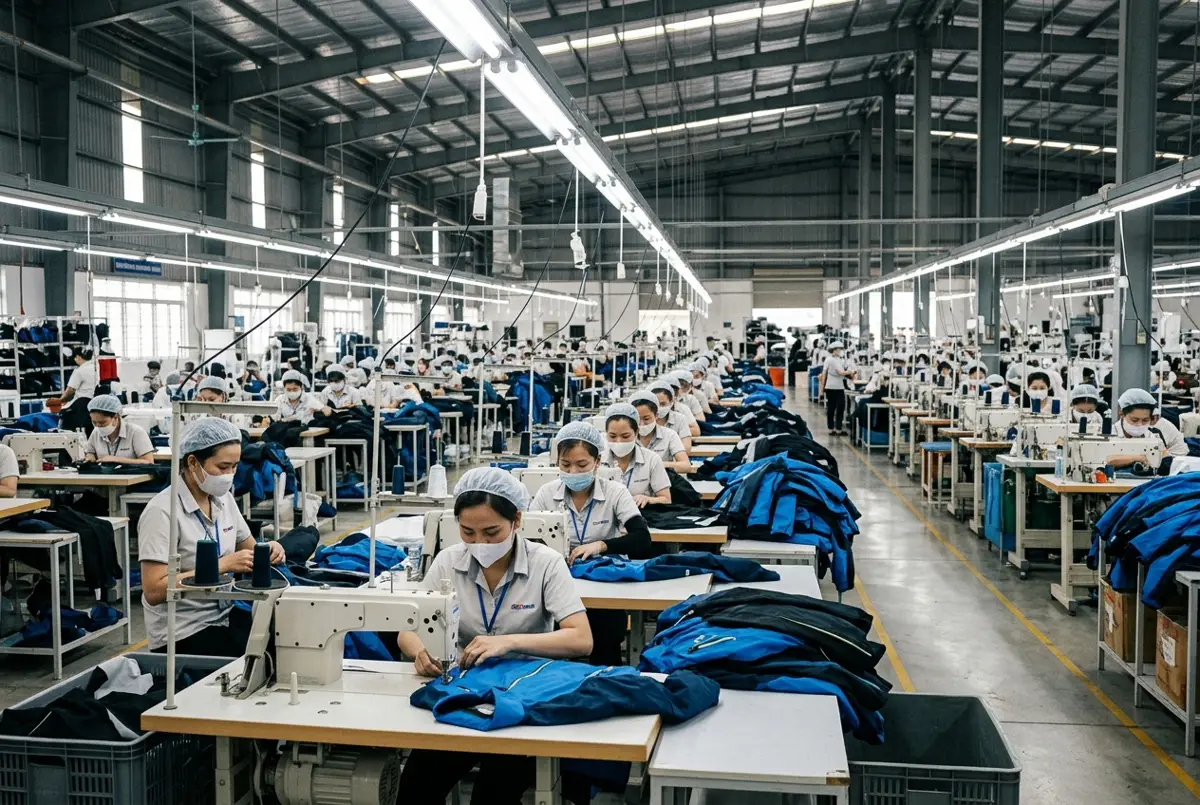
Vietnam's factories combine skilled, disciplined sewing with the management systems of large international groups. They are especially strong in jackets, padded and down outerwear, sportswear, performance knits and trousers, and many already work to the standards of leading sports brands. Vietnam's free trade agreements with the EU, the UK and CPTPP partners give it duty advantages in several markets, provided origin rules are met.
Constraints include reliance on imported fabric for many programmes, minimums suited to established brands, and strong demand that can fill capacity during peak seasons. Changing US tariff policy since 2025 also means buyers should check current rates and transhipment rules.
Vietnam merged many provinces in mid-2025. Binh Duong is now part of Ho Chi Minh City and Nam Dinh part of Ninh Binh province, but the old names are still widely used for industrial areas.
Vietnam's spinning and fabric capacity is growing, but many factories still import fabric from China, Korea and Taiwan, especially technical synthetics and fashion wovens. This affects both lead time and duty: under the EU–Vietnam FTA, garments generally need fabric woven or knitted in Vietnam (or in the EU or certain partner countries, under cumulation rules) to qualify for preference, while CPTPP generally requires yarn-forward origin.
We confirm the fabric source before costing so you know whether a preference can be claimed and how long fabric will take to arrive.
We match your product and volume to factories with relevant lines, and explain realistic minimums.
On-site checks of capacity, subcontracting, social audits and quality systems.
We map fabric and trim origins against FTA rules for your destination market.
Sample, fit and fabric approvals managed with the factory's technical team.
In-line, final AQL and loading inspections with photo reports.
Coordination through Cat Lai, Cai Mep, Hai Phong or Da Nang.
Large Vietnamese factories have experienced technical teams and work well with detailed tech packs and pattern files. Many are used to brand development calendars with fixed sample milestones, which suits buyers with clear seasons.
Where fabric is imported, sample yardage may arrive before bulk fabric, so we confirm that bulk matches the approved sample in colour, hand-feel and performance before cutting.
On outerwear and sportswear, we focus on construction details that are expensive to fix later: seam strength, taping, fill distribution, zip function and logo application. We also check that labels and origin markings match the declared country of origin, which matters for FTA claims and customs.
Vietnamese export factories commonly hold amfori BSCI, SMETA, WRAP, Higg FEM or brand-specific audits, and fabric suppliers offer OEKO-TEX, GRS and bluesign options. The EU–Vietnam FTA (in force since 2020), the UK–Vietnam FTA and CPTPP reduce or remove duty for qualifying garments in the EU, UK, Canada, Australia, Japan and other partners.
The US has no FTA with Vietnam and has applied additional tariffs and transhipment rules since 2025, which have changed several times. Check the current rate and origin rules for your HS code before you cost a programme.
Large Vietnamese factories serving global sports and outdoor brands usually need meaningful volumes per style. Mid-sized and smaller factories, particularly around Ho Chi Minh City and Hanoi, can take smaller programmes, especially with available fabrics. We match your volume to the right tier rather than trying to force a small order into a large factory.
Lead times in Vietnam depend largely on fabric. Programmes using imported fabric must allow for the fabric to be produced and shipped in before cutting, while domestic or nominated fabric already in stock shortens the cycle. Large factories serving global brands book capacity months ahead for peak seasons.
Tet, the Lunar New Year in January or February, is the major holiday. Factories close for one to two weeks or more, and staff turnover after the holiday can affect output. We plan production and shipments around it.
Making costs in Vietnam are generally competitive for technical and sewn products, but imported fabric and trims can be a large share of the price. Order size, factory tier, construction complexity and compliance requirements also affect quotes. Duty in your market, which varies sharply with FTA eligibility, is part of the real cost comparison.
We compare landed costs that include duty and freight, and confirm whether your fabric choice allows an FTA preference before you commit.
Large factories may accept, then deprioritise, small orders. Match your volume to the right tier.
Without the right fabric origin, EU or UK preferences may not apply.
Goods with significant Chinese content can face higher US duties; document origin carefully.
Imported fabric arriving late is a frequent cause of delay.
Production around the Lunar New Year needs early planning to avoid missed deliveries.
Duty and compliance depend on where you sell as much as where you make. These notes summarise the main points; always confirm the current rate and rules for your HS code.
Southern factories ship through Cat Lai or the deep-water Cai Mep terminals, northern factories through Hai Phong, and central factories through Da Nang. Direct services to the US West Coast and Europe are frequent. We agree packing and labelling standards up front and check them at final inspection and loading.
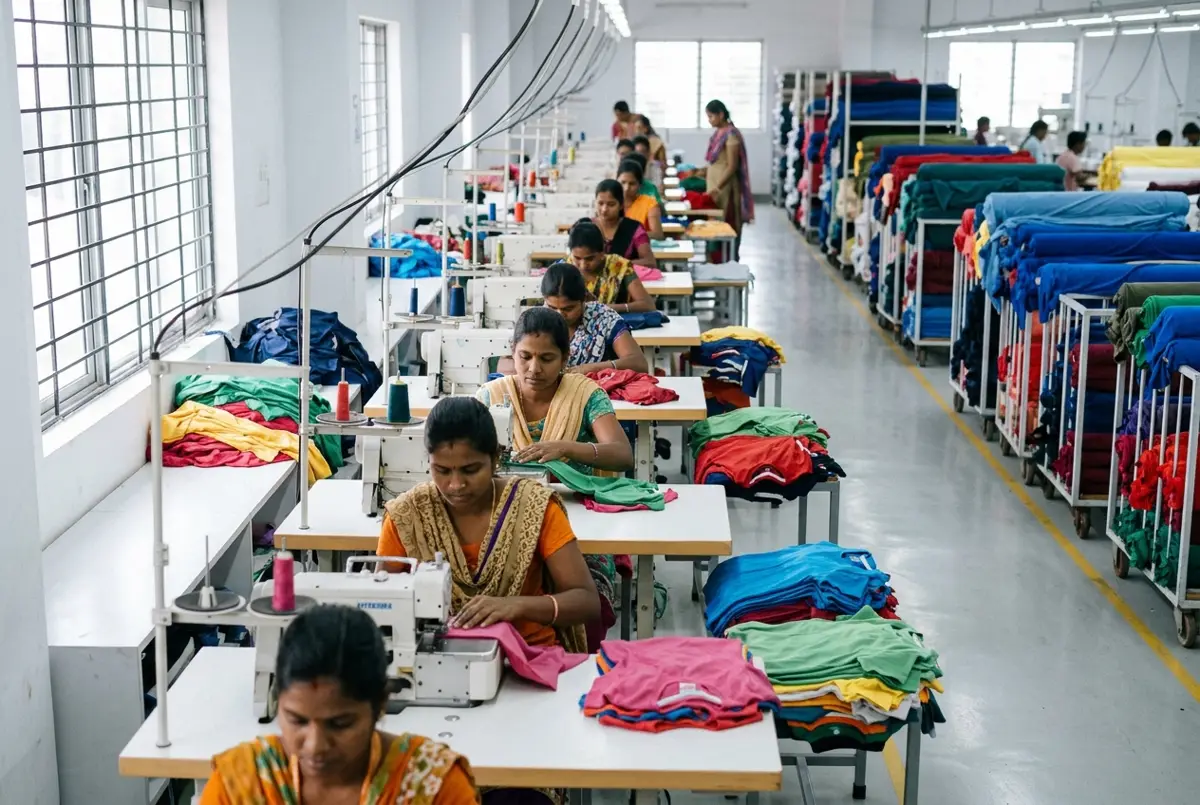
Deep cotton fabric base and handwork; strong for organic and printed programmes.
Garment sourcing in India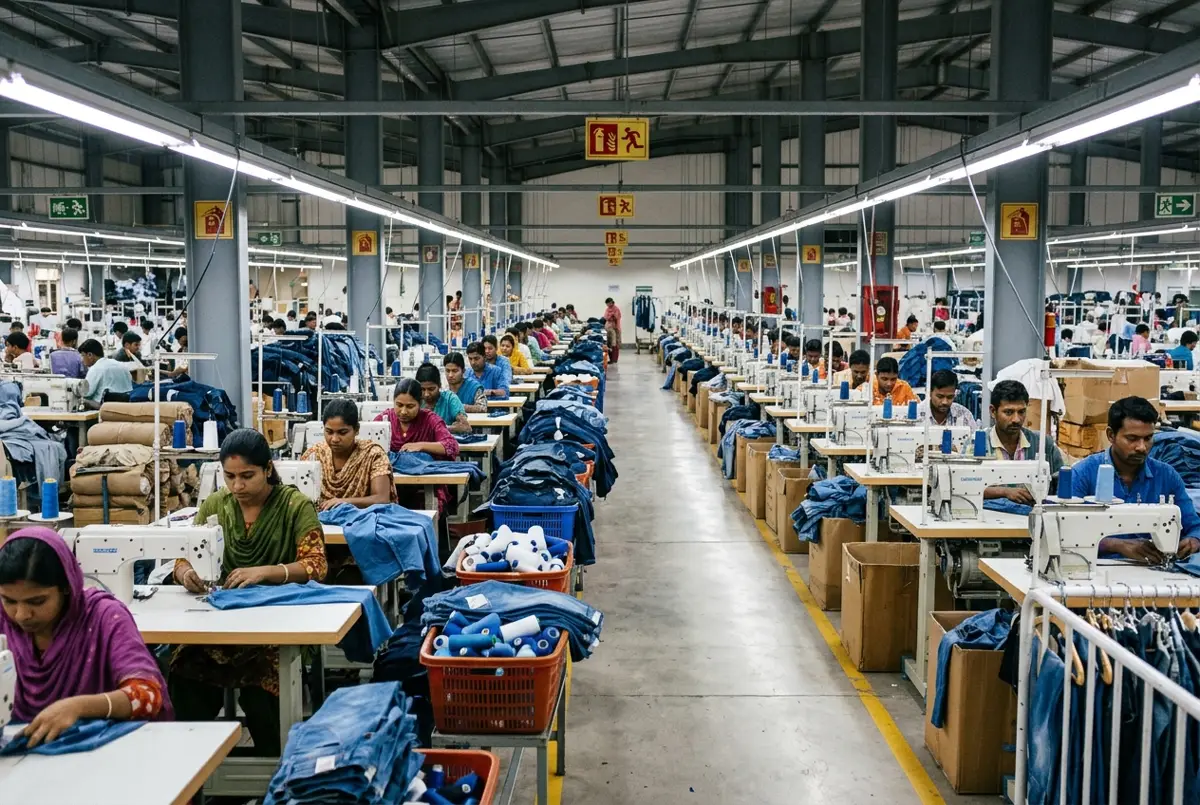
Best value at volume for cotton basics, denim and sweaters.
Garment sourcing in Bangladesh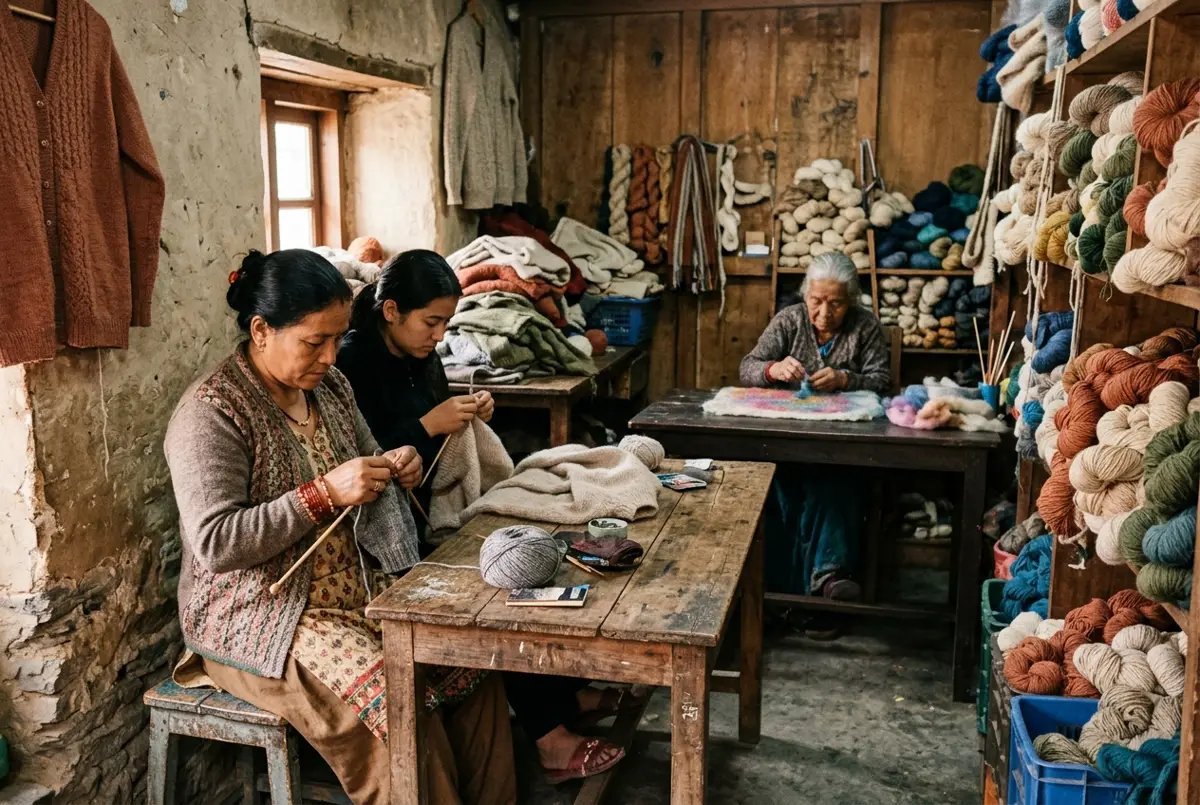
Handmade, small-batch cashmere, knitwear and felt; longer lead times.
Garment sourcing in Nepal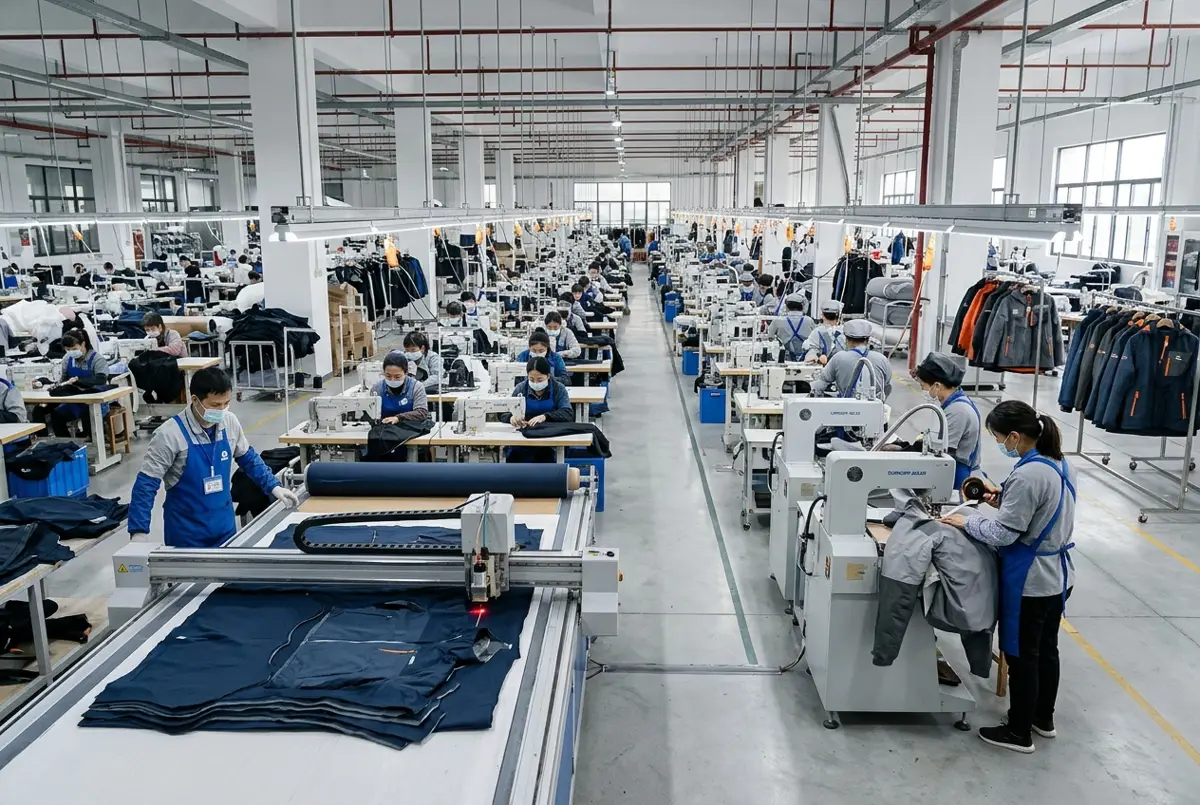
Fastest development and widest fabric choice; check US tariffs and cotton traceability.
Garment sourcing in China
Specialist quality for activewear, swim and intimates; higher unit cost.
Garment sourcing in ThailandOuterwear, sportswear, performance and technical apparel, trousers and knit tops for established brands.
Under the EU–Vietnam FTA, qualifying garments get reduced or zero duty if fabric origin rules are met. We check this at costing stage.
For many sewn products labour is lower, but imported fabric can offset part of the saving. We compare landed costs, not just FOB.
Large factories need higher volumes; smaller factories around Ho Chi Minh City and Hanoi can take smaller programmes. We match you to the right tier.
Yes. Our Vietnam team handles factory verification, production follow-up and inspections.
Yes. EU and UK preferences generally require fabric made in Vietnam or a permitted partner, so we map fabric origin before costing.
Yes. Many of Vietnam's largest garment factories are foreign-owned, and we verify and inspect them in the same way as local factories.
Deposits with balance before shipment, letters of credit, or open account for established buyers are all common.
Smaller factories around Ho Chi Minh City and Hanoi can, particularly with available fabrics.
Global garment sourcing enquiry
Tell us what you want to make and where you are considering. Our teams in India, Bangladesh, Nepal, China, Thailand and Vietnam will recommend the right country and factories, with no obligation.