01
Selection
Shortlist attars by scent, base oil and price.
Fragrance & Wellness · Traditional attars
Attars are traditional Indian perfume oils. In the classic deg-bhapka method, flowers, herbs or baked earth are hydro-distilled in copper stills and the fragrant vapour is collected into a base oil, traditionally sandalwood. Kannauj in Uttar Pradesh is India's best-known attar centre.
We help perfume brands, wellness retailers and specialist importers source attars and perfume oils, separating traditionally distilled attars from blended perfume oils so every product is described accurately.
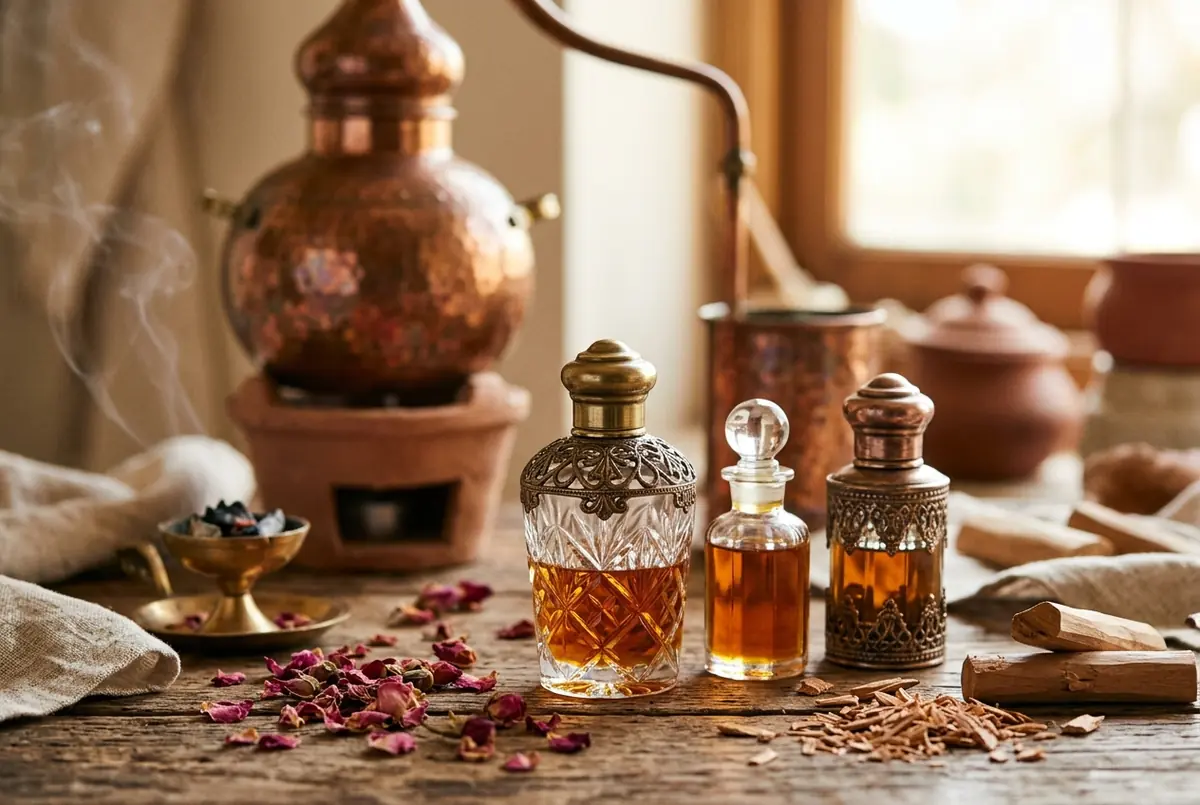
Traditional distillers work in batches, often seasonally, as flowers are harvested. Larger houses also blend perfume oils and fill finished bottles. Ask whether a product is traditionally distilled or a blended perfume oil, because both are sold as attar.
Attars can be selected from a distiller's range or blended to a brief, and filled into roll-ons or decorative bottles with your labels and boxes.
Shortlist attars by scent, base oil and price.
Batch samples kept as reference standards.
Composition information and SDS; allergen declaration where relevant.
Filling, capping and labelling.
Scent match, fill level, leakage and labels.
Some attars depend on seasonal harvests, so availability varies through the year. Plan larger orders around distilling seasons.
Small bottles need secure caps, inner trays and leak-proof packing. Shipping classification depends on the oil and flash point.
We are a buyer-side sourcing company. We find and verify independent Indian manufacturers, manage development and production, and inspect goods before shipment. The factory is your supplier of record; we do not own factories or sell from stock.
Rose, jasmine, kewda, vetiver and mitti attars made by hydro-distillation into a base oil.
Sandalwood is traditional; other carriers are used for lower price points.
Blends such as shamama combine many distilled materials.
In Kannauj, distillers use copper degs and bamboo pipes to pass fragrant vapour into receiving vessels of base oil (bhapka), often over many days. Production follows flower seasons, so availability varies.
Skin-applied attars are cosmetics in the EU, UK and US.
Natural materials contain allergens that may need labelling.
'Natural' and 'traditional' claims must be accurate and documented.
Requirements change and depend on the product and destination, so confirm them with your compliance adviser or customs broker.
Buyers should separate traditionally distilled attars from blended perfume oils in their range descriptions and pricing.
Order seasonal attars in advance of harvest periods.
Treat every attar as a batch product. Keep a sealed sample from each approved batch, and compare new batches against it before filling, because natural materials vary by season and harvest.
Decide early whether your range will be traditionally distilled attars, blended perfume oils, or both, and price and describe them separately. This avoids misleading claims and makes reorders predictable.
Decorative attar bottles are often made separately from the oil. Check bottle and cap quality, leak tests and filling accuracy, and plan gift boxes alongside the oil so the whole set arrives together.
Retailers new to attars often start with a small curated range, such as a rose, a mitti and a vetiver attar, each with clear origin and method information, before expanding to blends.
Distilled attars use large quantities of flowers and costly base oils such as sandalwood.
For many floral attars, yes.
Yes, in roll-ons or decorative bottles.
An attar made in the traditional way, by hydro-distilling natural materials in copper stills and collecting the vapour into a base oil.
No. Many products sold as attar are blended perfume oils. We record which method and base oil are used.
Kannauj in Uttar Pradesh is the best-known centre.
When applied to skin, they are generally treated as cosmetics in the EU, UK and US.
Submit your product requirements
Share a photo, reference product or tech pack. We will identify suitable verified manufacturers and explain the next steps — no obligation.