Sourcing Guide · How it works
Developing an Imitation Jewellery Supply Chain in India
Developing fashion and imitation jewellery with finish and plating quality control.
01 · Overview
What this type of project involves
This guide explains how a imitation jewellery sourcing project in India is typically structured when Sourcing India works on the buyer's side — from defining the requirement to shipment. It describes our method, not a specific client engagement.
- Product development and design sampling
- Factory sourcing for metal and fashion jewellery
- Finish, plating and stone-setting quality inspection
- Production management
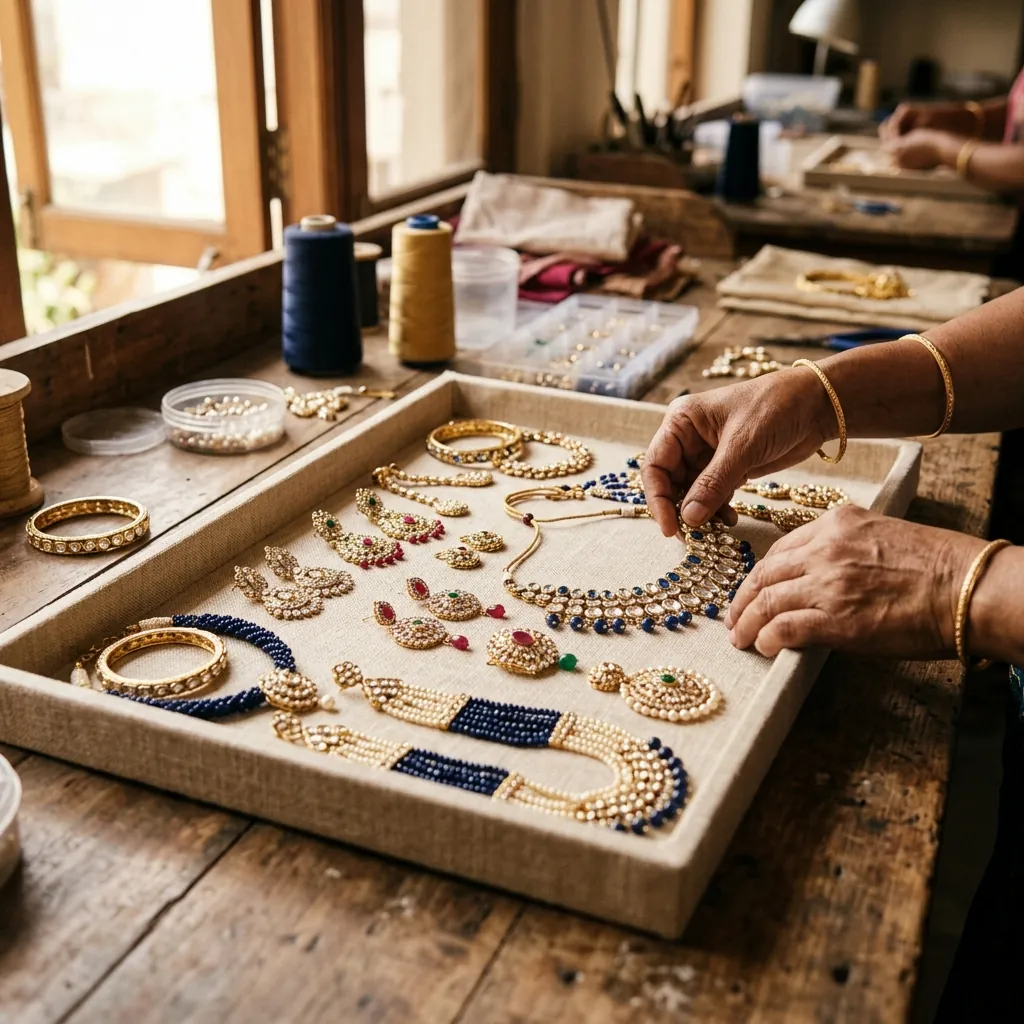
India's fashion and imitation jewellery industry produces brass, alloy and silver-plated pieces with stones, beads, enamel and kundan-style work. Production often involves casting, plating, stone setting and hand assembly in separate workshops.
Plating durability and metal safety are the most important controls, alongside consistent finish across a range.
What to specify
What to include in your brief
- Design drawings or samples with dimensions
- Base metal (brass, alloy) and plating type and thickness
- Stones, beads and findings specification
- Nickel, lead and cadmium limits for the destination market
- Cards, pouches and retail packaging
Category checks
Quality checks specific to this category
- Plating colour and thickness against the approved standard
- Stone setting and secure findings
- Clasp, hook and chain strength
- Nickel release, lead and cadmium testing where required
- Tarnish resistance and finish defects
Cost & lead time
What drives cost and lead time
- Base metal and plating thickness
- Hand-setting of stones and enamel work
- Tooling for new castings
- Packaging and carding
Avoid
Common mistakes to avoid
- Skipping metal safety testing
- Not specifying plating thickness
- Approving a sample without a colour standard for gold or rose tones
Practical notes
Practical notes for buyers
Fashion jewellery is often assembled from parts made in different workshops: castings, plating, stones and findings. Ask the main supplier which steps it does in-house and which it subcontracts, so testing and inspection cover the whole chain.
Plating thickness and the base metal decide how long a piece keeps its colour. Agree a plating specification in writing and keep reference pieces from the approved sample to compare against bulk.
Packaging such as cards, pouches and boxes should be approved with the jewellery, because the presentation is part of what the retailer buys.
02 · Where buyers struggle
Common challenges
- Finding manufacturers whose real capability matches the product, rather than trading companies
- Turning a reference or idea into a written specification factories can quote and sample against
- Keeping colour, size and finish consistent between the approved sample and bulk production
- Catching quality problems while they can still be corrected — not after the container ships
03 · Services involved
What Sourcing India does
04 · The process
Step by step
The requirement is defined, the relevant clusters are searched, factories are evaluated and verified, samples are developed and a golden sample is sealed. Quality and production are then controlled through to export.
06 · Quality control
Five checkpoints, not one inspection
Quality is controlled while the outcome can still change:
- 01Factory Audit
- 02Pre-Production
- 03During Production
- 04Pre-Shipment
- 05Loading
FAQ
Frequently asked questions
Is nickel testing needed for fashion jewellery?
Many markets limit nickel release in items that touch the skin, and restrict lead and cadmium. We coordinate testing per product and market.
What base metals are used?
Brass and zinc alloy are common; the choice affects cost, weight and plating quality.
Can you control plating colour?
Yes, with an approved colour standard and checks on samples and bulk lots.
Have a product you want to source from India?
Tell us what you want to build. A photo, reference product or tech pack is enough to start.
Related guides