Sourcing Guide · How it works
Building a Reliable Garment Supply Chain in India
Developing a dependable apparel supply base across India's knitwear and woven clusters.
01 · Overview
What this type of project involves
This guide explains how a apparel sourcing project in India is typically structured when Sourcing India works on the buyer's side — from defining the requirement to shipment. It describes our method, not a specific client engagement.
- Apparel sourcing across knitwear and woven clusters
- Factory identification matched to product and volume
- Product development, sampling and golden-sample sign-off
- Production management and in-line quality control
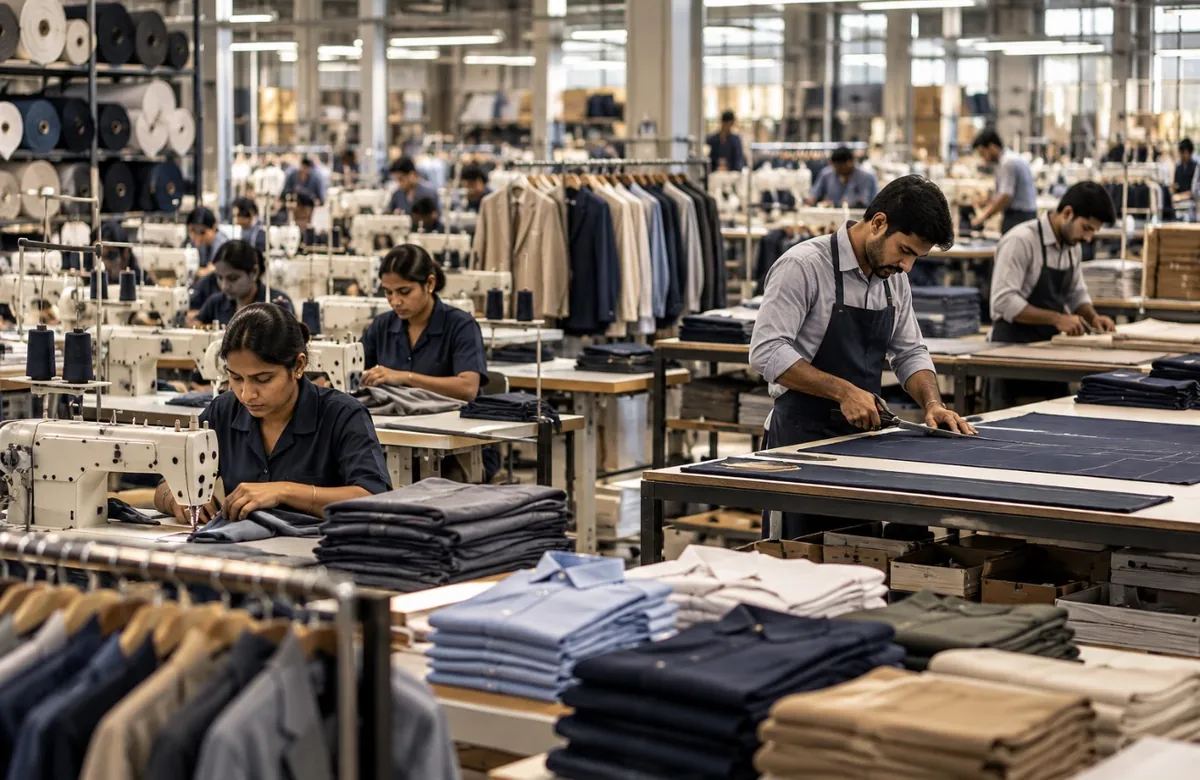
India's garment industry is spread across specialist regions: knitwear such as T-shirts, polos and fleece is concentrated in Tiruppur; winter knitwear and woollens in Ludhiana; woven fashion and export garments in the Delhi NCR belt; and hand-block and printed apparel around Jaipur. A reliable supply chain starts by matching the product to the region that makes it every day.
Most quality and delivery problems in apparel come from an incomplete tech pack, fabric approved too late, or size sets that were never fitted. This guide sets out what to fix before bulk cutting starts.
What to specify
What to include in your brief
- Tech pack with flat sketches, measurements by size and tolerances
- Fabric: composition, GSM or weight, construction, shrinkage and colour-fastness requirements
- Trims list: labels, buttons, zips, threads and packaging with approved suppliers where required
- Size range, ratio and fit model or reference garment
- Target price, order quantity per style and colour, and delivery window
Category checks
Quality checks specific to this category
- Fabric inspection (four-point system) and shrinkage testing before cutting
- Lab dip and strike-off approval for every colourway
- Fit and size-set approval on the actual production fabric
- In-line checks on stitching, seam strength, measurements and print or embroidery placement
- Final random inspection to the agreed AQL, with carton and label audit
Cost & lead time
What drives cost and lead time
- Fabric choice: mill-made or dyed-to-order fabric changes both cost and lead time
- Embellishment such as embroidery, prints and washes adds processes and inspection points
- Minimum quantities per colour at the dyeing and printing stage
- Peak seasons at factories, which affect line availability
Avoid
Common mistakes to avoid
- Approving a sample made from substitute fabric
- Leaving trims and packaging until after the fabric is booked
- Splitting one style across several factories without a common standard
02 · Where buyers struggle
Common challenges
- Finding manufacturers whose real capability matches the product, rather than trading companies
- Turning a reference or idea into a written specification factories can quote and sample against
- Keeping colour, size and finish consistent between the approved sample and bulk production
- Catching quality problems while they can still be corrected — not after the container ships
03 · Services involved
What Sourcing India does
04 · The process
Step by step
The requirement is defined, the relevant clusters are searched, factories are evaluated and verified, samples are developed and a golden sample is sealed. Quality and production are then controlled through to export.
05 · Manufacturing clusters
Where this category is commonly made in India
As general industry geography, this category is commonly manufactured in and around Tiruppur, Ludhiana, Noida, Jaipur. The right region and factory for a specific product are confirmed during sourcing, based on the product, quality level and volume.
06 · Quality control
Five checkpoints, not one inspection
Quality is controlled while the outcome can still change:
- 01Factory Audit
- 02Pre-Production
- 03During Production
- 04Pre-Shipment
- 05Loading
FAQ
Frequently asked questions
Which Indian region is best for knitted T-shirts?
Tiruppur in Tamil Nadu is India's best-known knitwear cluster, with vertically integrated knitting, dyeing and stitching. The right factory still depends on your fabric, volume and compliance needs.
What is a size set?
A set of samples in every size, made on the production fabric, used to confirm grading and fit before bulk cutting begins.
When should garment inspection happen?
At several points: fabric before cutting, in-line during sewing, and a final random inspection when at least 80% of the order is packed.
07 · Go deeper
Related category guide
Garment manufacturers in India — products, materials, clusters, quality checks and buyer FAQs.
Have a product you want to source from India?
Tell us what you want to build. A photo, reference product or tech pack is enough to start.
Related guides