Sourcing Guide · How it works
Developing a Cutlery Supply Chain From India
Developing cutlery and flatware to export finish and quality standard.
01 · Overview
What this type of project involves
This guide explains how a cutlery & flatware sourcing project in India is typically structured when Sourcing India works on the buyer's side — from defining the requirement to shipment. It describes our method, not a specific client engagement.
- Cutlery and flatware development
- Factory sourcing in Moradabad and Mumbai
- Finish, polish and gauge quality assurance
- Production and pre-shipment control
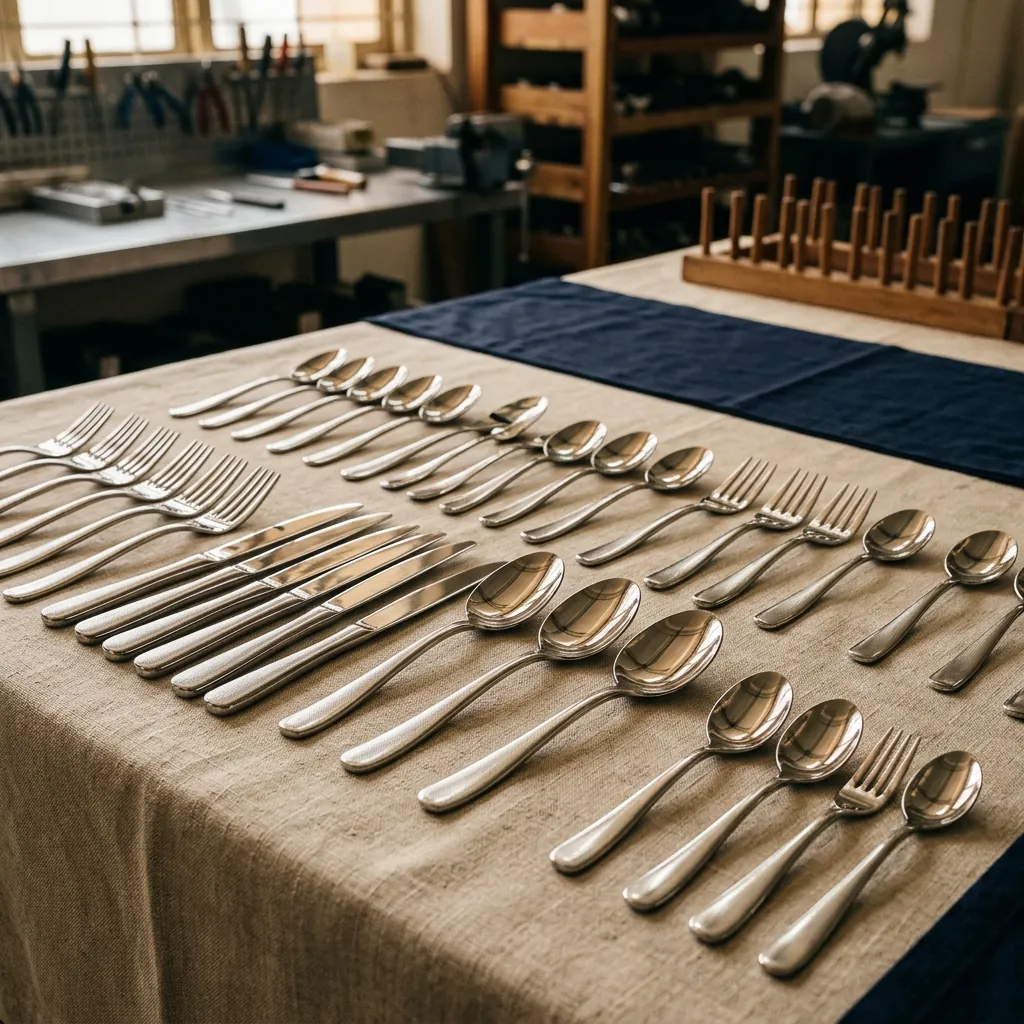
Indian cutlery and flatware is produced in grades such as 18/10, 18/8 and 18/0 stainless steel, with finishes from mirror polish to satin and coloured PVD. Production combines blanking, forging or stamping, grinding, polishing and, for knives, hardening.
Buyers usually judge cutlery by weight, balance and finish, so these need written standards and a sealed sample.
What to specify
What to include in your brief
- Steel grade for each piece (for example 18/10 for spoons and forks, hardened steel for knives)
- Thickness and weight per piece
- Pattern drawings and finish standard
- Set composition and packaging (boxes, sleeves, gift sets)
- Dishwasher and food-contact requirements
Category checks
Quality checks specific to this category
- Grade testing on random pieces
- Weight and thickness checks
- Polish quality, burrs and edge finish
- Knife hardness and serration quality
- Dishwasher and corrosion testing where required
Cost & lead time
What drives cost and lead time
- Steel grade and weight
- Forged versus stamped pieces
- Polishing stages and PVD colour coating
- Gift packaging
Avoid
Common mistakes to avoid
- Not specifying weight per piece
- Approving a polished sample without a finish standard for bulk
- Ignoring knife hardness
Practical notes
Practical notes for buyers
Cutlery sets combine pieces with different steel needs: spoons and forks are commonly made in 18/10 or 18/8, while knives are made in a hardenable steel to hold an edge. Confirm each piece's grade separately, and test random pieces from bulk rather than relying on a declaration.
Gift and retail packaging often sets the minimum order more than the cutlery itself. Plan boxes and inserts at the sampling stage so they are ready when production finishes.
02 · Where buyers struggle
Common challenges
- Finding manufacturers whose real capability matches the product, rather than trading companies
- Turning a reference or idea into a written specification factories can quote and sample against
- Keeping colour, size and finish consistent between the approved sample and bulk production
- Catching quality problems while they can still be corrected — not after the container ships
03 · Services involved
What Sourcing India does
04 · The process
Step by step
The requirement is defined, the relevant clusters are searched, factories are evaluated and verified, samples are developed and a golden sample is sealed. Quality and production are then controlled through to export.
05 · Manufacturing clusters
Where this category is commonly made in India
As general industry geography, this category is commonly manufactured in and around Moradabad, Mumbai. The right region and factory for a specific product are confirmed during sourcing, based on the product, quality level and volume.
06 · Quality control
Five checkpoints, not one inspection
Quality is controlled while the outcome can still change:
- 01Factory Audit
- 02Pre-Production
- 03During Production
- 04Pre-Shipment
- 05Loading
FAQ
Frequently asked questions
What does 18/10 mean?
It refers to roughly 18% chromium and 10% nickel, a premium grade with good corrosion resistance and shine.
Can Indian factories make PVD coloured cutlery?
Yes. PVD finishes such as gold, black and copper are available; colour and coating durability are checked on samples and bulk.
How is cutlery weight controlled?
By agreeing a weight per piece with a tolerance, and weighing random pieces during and after production.
07 · Go deeper
Related category guide
Cutlery manufacturers in India — products, materials, clusters, quality checks and buyer FAQs.
Have a product you want to source from India?
Tell us what you want to build. A photo, reference product or tech pack is enough to start.
Related guides