Sourcing Guide · How it works
From Product Development to Shipment: An India Houseware Sourcing Journey
The end-to-end houseware journey from development to loaded container.
01 · Overview
What this type of project involves
This guide explains how a houseware sourcing project in India is typically structured when Sourcing India works on the buyer's side — from defining the requirement to shipment. It describes our method, not a specific client engagement.
- Product development
- Factory identification and sampling
- Quality control through production
- Pre-shipment inspection and loading
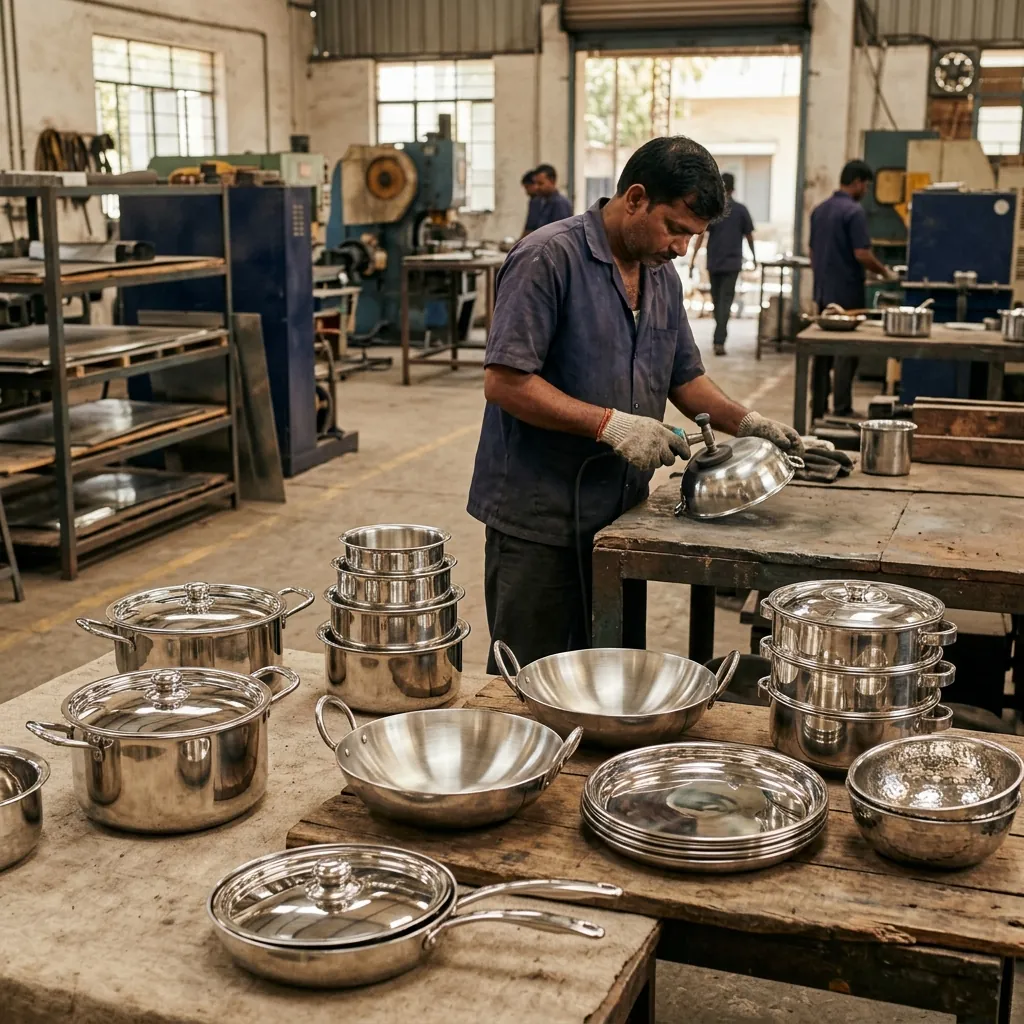
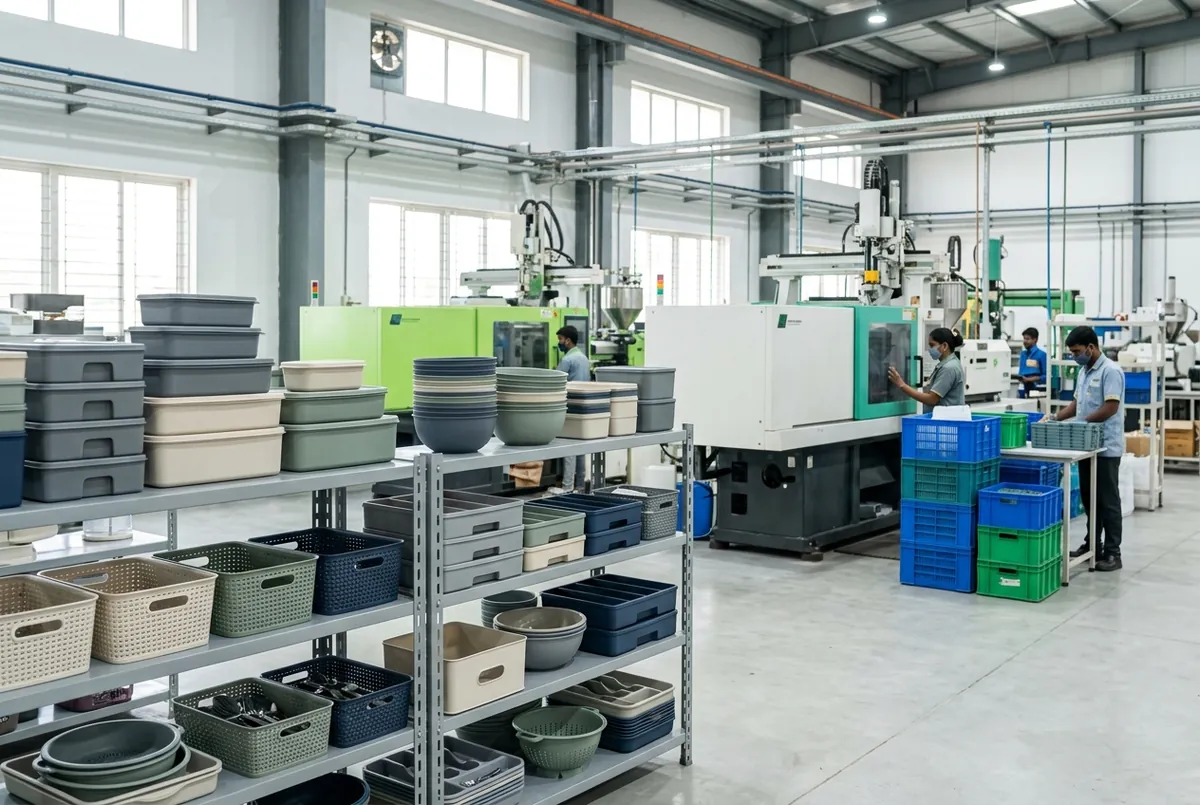
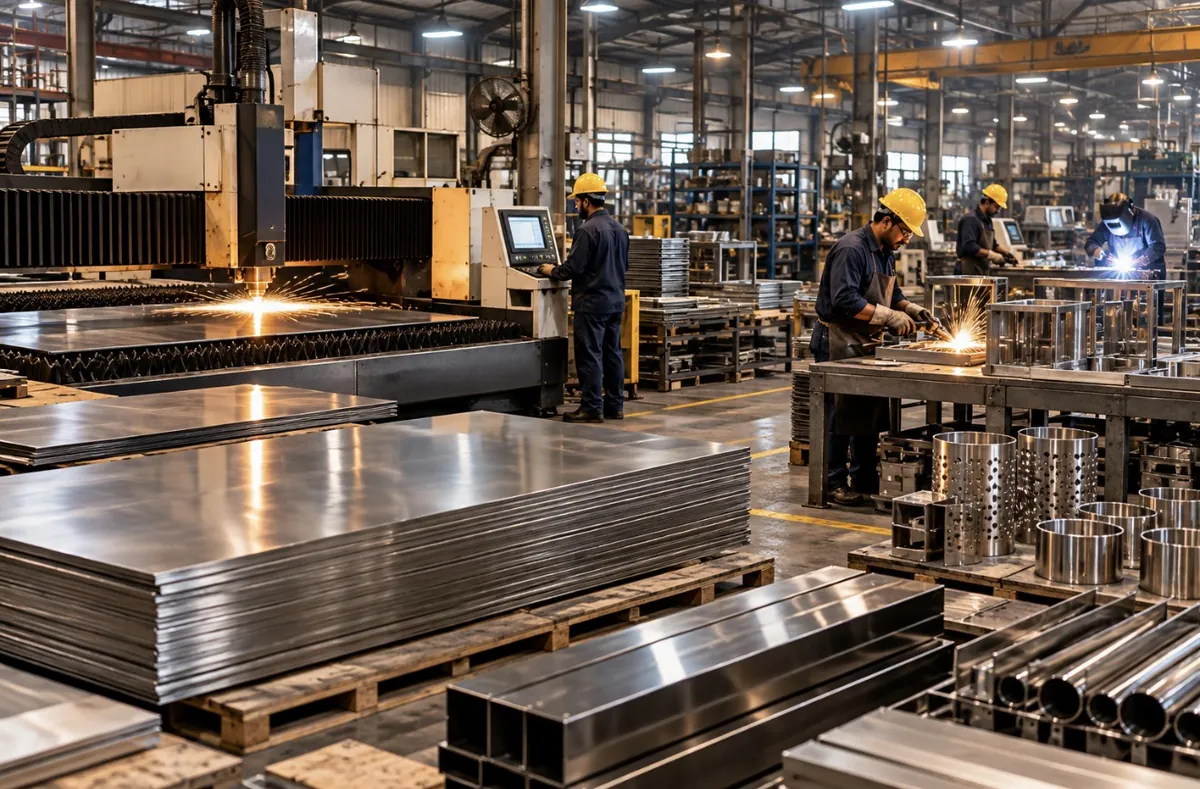
Houseware covers kitchen, dining, storage and cleaning products made in steel, glass, wood, ceramics and plastics. A typical journey runs from development and sampling to production, inspection and loading.
Food-contact rules and packaging for retail are the points most often missed.
What to specify
What to include in your brief
- Product list with materials
- Food-contact requirements
- Retail packaging and barcodes
- Order quantities and delivery
- Testing needs
Category checks
Quality checks specific to this category
- Material verification
- Dimensions and function
- Finish and surface checks
- Food-contact testing where required
- Packaging and drop tests
Cost & lead time
What drives cost and lead time
- Material and grade
- Packaging type
- Testing
- Tooling for new shapes
Avoid
Common mistakes to avoid
- Ignoring food-contact rules
- Under-specifying packaging
- Mixing materials without separate checks
Practical notes
Practical notes for buyers
Houseware ranges often mix steel, glass, wood and ceramics in one order. Each material has its own risks: steel grade and finish, glass breakage and thickness, wood moisture and coating, and ceramic glaze and chipping. Inspection checklists should be written for each material.
Retail packaging is part of the product in houseware. Window boxes, gift boxes and e-commerce packaging all need drop testing and barcode checks.
Food-contact rules apply to many houseware items and differ by destination. Identify which items touch food, plan testing early and keep test reports linked to the approved sample.
Consolidating several houseware suppliers into one shipment keeps freight cost down, but needs a shared calendar so every supplier finishes on time.
After delivery, review returns and customer feedback by item to improve the next order.
02 · Where buyers struggle
Common challenges
- Finding manufacturers whose real capability matches the product, rather than trading companies
- Turning a reference or idea into a written specification factories can quote and sample against
- Keeping colour, size and finish consistent between the approved sample and bulk production
- Catching quality problems while they can still be corrected — not after the container ships
03 · Services involved
What Sourcing India does
04 · The process
Step by step
The requirement is defined, the relevant clusters are searched, factories are evaluated and verified, samples are developed and a golden sample is sealed. Quality and production are then controlled through to export.
06 · Quality control
Five checkpoints, not one inspection
Quality is controlled while the outcome can still change:
- 01Factory Audit
- 02Pre-Production
- 03During Production
- 04Pre-Shipment
- 05Loading
FAQ
Frequently asked questions
Do kitchen products need testing?
Food-contact items usually need testing for the destination market, coordinated per product.
Can mixed-material ranges ship together?
Yes, after each item is inspected to its own checklist.
Who designs retail packaging?
Packaging can be developed to your brand guidelines and approved at sampling.
07 · Go deeper
Related category guide
Houseware manufacturers in India — products, materials, clusters, quality checks and buyer FAQs.
Have a product you want to source from India?
Tell us what you want to build. A photo, reference product or tech pack is enough to start.
Related guides